



Gout is a painful form of arthritis. When your body has extra uric acid, sharp crystals can form in your joints (usually your big toe). Flare-ups of symptoms like pain and swelling come and go in periods called gout attacks. Treatment is usually a combination of symptom management and changing your diet.
Advertisement
Cleveland Clinic is a non-profit academic medical center. Advertising on our site helps support our mission. We do not endorse non-Cleveland Clinic products or services. Policy
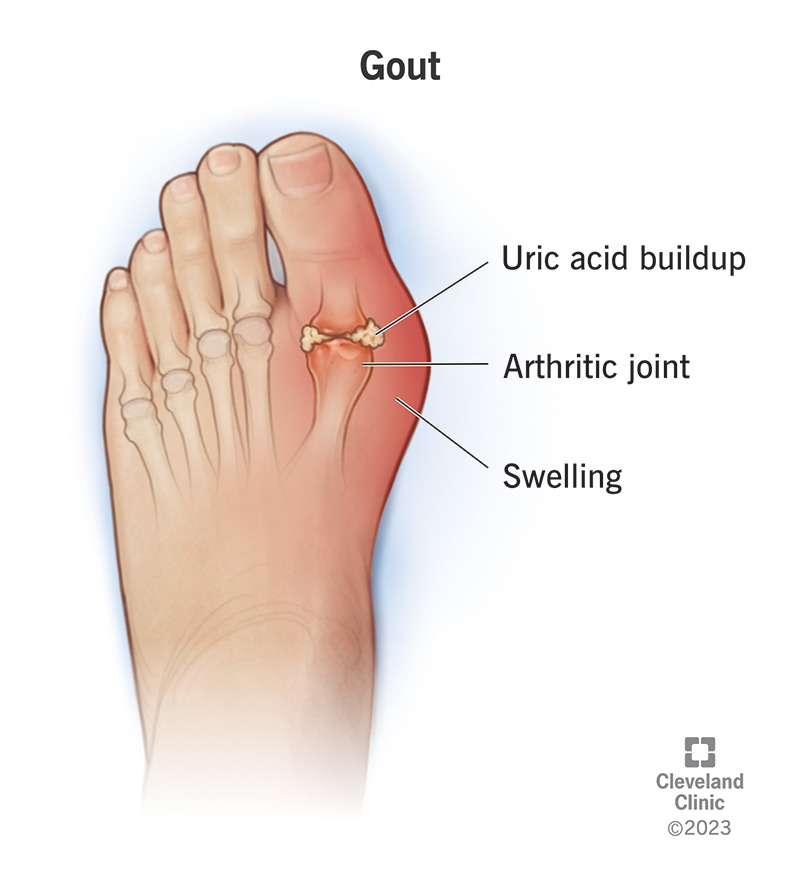
Image content: This image is available to view online.
View image online (https://my.clevelandclinic.org/-/scassets/images/org/health/articles/gout)
Gout is a type of inflammatory arthritis that causes pain and swelling in your joints. It happens when there’s a buildup of uric acid in your body.
Advertisement
Cleveland Clinic is a non-profit academic medical center. Advertising on our site helps support our mission. We do not endorse non-Cleveland Clinic products or services. Policy
Gout most commonly affects your big toe joint. But it can also develop in your:
Gout symptoms come and go. These episodes are called flares or gout attacks. A healthcare provider will suggest medications to lower your uric acid levels. You may have to avoid certain foods and drinks, too. You should have fewer gout attacks once you find treatments that work for you.
Gout attacks are very painful and can happen suddenly. They often develop overnight. It’s common to go from having no symptoms to experiencing severe symptoms all at once.
During a flare, symptoms in your affected joints may include:
Gout attacks usually last a week or two. Some flares last longer than others. And some might cause more severe symptoms. Between attacks, you might not experience any symptoms.
A buildup of excess uric acid in your body causes gout. Your body naturally makes uric acid when it breaks down substances called purines in certain foods and drinks. Your kidneys usually filter uric acid out of your blood. Then, it leaves your body when you pee.
Advertisement
Sometimes, your body makes too much uric acid. Or your kidneys don’t remove it from your blood fast enough. When your body has high levels of uric acid, uric acid crystals can build up and settle into your joints. The sharp crystals clump together and cause sudden episodes of pain, swelling and other symptoms.
You won’t automatically get gout as soon as you have high uric acid levels. In fact, many people have high levels and never experience symptoms. But the longer you have too much uric acid in your body, the more likely it is that you’ll develop gout.
Gout can affect anyone. It’s three times more common in males. Females usually don’t experience gout until after menopause. People with certain health conditions are more likely to develop gout, including:
You’re more likely to experience gout if you:
Untreated gout can lead to permanent joint damage. It can also increase your risk of other issues, including:
A healthcare provider will diagnose gout with a physical exam. They’ll ask you about symptoms you’ve experienced and examine your affected joints. Tell your provider when you first noticed pain, swelling or other issues. Let them know if the symptoms come and go.
Your healthcare provider might use a few imaging tests to take pictures of your affected joints. These tests can also show if gout has caused any changes in your joints. You might need:
Your provider might use blood tests to check how much uric acid is in your blood. They may do a joint aspiration to remove a sample of fluid from inside your joint. They’ll examine the fluid sample for uric acid crystals.
Treating gout is a combination of managing symptoms during a flare and helping reduce how often you have attacks. You’ll probably need to take some medications and reduce how often you consume high-purine foods and drinks.
Your healthcare provider will suggest medications to manage symptoms during a gout flare, including:
Advertisement
You may need medication to help lower your uric acid levels. Common examples include:
Your healthcare provider may suggest you follow a low-purine diet. This is an eating plan that can help you consume fewer foods and drinks with high purine content. It also encourages you to eat some foods that may reduce your uric acid levels.
Talk to your healthcare provider if you’re having more frequent gout attacks. Or if your symptoms are more severe than they used to be.
If you haven’t been diagnosed with gout, visit a provider if you experience sudden, intense joint pain. That’s especially true if your joint is also swollen and your skin is discolored. Gout shares many symptoms with infections that need immediate treatment.
You should expect to have flares of symptoms that come and go. Flares might happen more often if you don’t get gout diagnosed and treated by a healthcare provider.
You may have more frequent gout attacks right after starting medications to lower your uric acid levels. That’s normal. You can reduce this risk by taking colchicine or NSAIDs.
If you notice a flare starting, take the medication that your healthcare provider prescribes to help you manage symptoms right away.
Advertisement
Avoiding foods and drinks high in purines can help you lower your gout risk. Examples of high purine foods and drinks include:
Calling it a gout attack can feel like the exact right name when your joints are suddenly on fire. But gout is treatable. Your healthcare provider will help you find the right medications and an eating plan that works for you. That should reduce how often you experience gout flares. And when they do happen, you’ll have a good plan in place to manage the symptoms.
Advertisement



Sign up for our Health Essentials emails for expert guidance on nutrition, fitness, sleep, skin care and more.
Learn more about the Health Library and our editorial process.
Cleveland Clinic’s health articles are based on evidence-backed information and review by medical professionals to ensure accuracy, reliability and up-to-date clinical standards.
Cleveland Clinic’s health articles are based on evidence-backed information and review by medical professionals to ensure accuracy, reliability and up-to-date clinical standards.
Cleveland Clinic experts can diagnose gout so you can begin treatment to relieve pain. We help alleviate symptoms and prevent future gout flares.
