



The signs of early pregnancy are different for everyone. You may feel your body making changes before you know you’re pregnant or you may not notice any symptoms at all. Symptoms of early pregnancy include a missed period, needing to pee more often, tender breasts, feeling tired and morning sickness.
Advertisement
Cleveland Clinic is a non-profit academic medical center. Advertising on our site helps support our mission. We do not endorse non-Cleveland Clinic products or services. Policy
Video content: This video is available to watch online.
View video online (https://cdnapisec.kaltura.com/p/2207941/sp/220794100/playManifest/entryId/1_dsxehpqa/flavorId/1_5f3sgelj/format/url/protocol/https/a.mp4)
Answers to commonly asked questions about pregnancy.
There are many ways to know you’re pregnant. You may notice early signs, or you may not realize you’re pregnant at all. Everyone is different.
Advertisement
Cleveland Clinic is a non-profit academic medical center. Advertising on our site helps support our mission. We do not endorse non-Cleveland Clinic products or services. Policy
The most common signs of early pregnancy are:
Advertisement
Remember, testing is the only way to know for sure that you’re pregnant. You can take a pregnancy test or have your healthcare provider order a blood test.
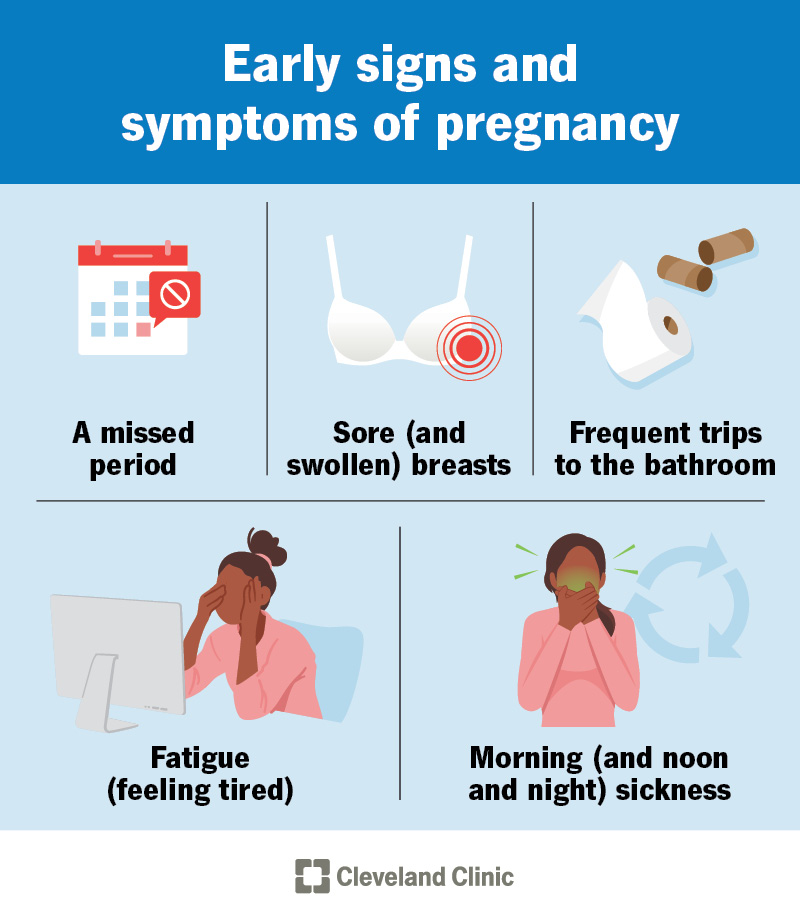
Image content: This image is available to view online.
View image online (https://my.clevelandclinic.org/-/scassets/images/org/health/articles/9709-pregnancy-am-i-pregnant)
You may not have signs or symptoms of pregnancy. If you do, you could have a missed period, tiredness or sore breasts.
There are some signs of early pregnancy that aren’t as common. Just like with the most common symptoms, these signs of pregnancy may or may not happen to you.
Less common signs of early pregnancy can include:
It varies. You may feel some symptoms as soon as you miss your period. Still, others may not feel pregnant until several weeks after a positive pregnancy test. Pregnancy symptoms vary between people and even between pregnancies.
You can take a home pregnancy test as soon as you miss your period. Some tests say you can take it before you miss your period. But taking a test too soon can lead to a false negative. This means the test says you aren’t pregnant, but you are.
Call a pregnancy care provider if you miss your period and get a positive pregnancy test. They’ll want to see you for your first prenatal appointment. This usually happens between the sixth and eighth week of pregnancy. If you aren’t taking a prenatal vitamin with folic acid, you should start one when you find out you’re pregnant.
Everyone experiences pregnancy differently. Things like missing your period, sore breasts and feeling extra tired are common symptoms of early pregnancy. You might even have symptoms of pregnancy before you miss your period. Take an at-home pregnancy test if you think you might be pregnant. They’re available at most grocery stores and pharmacies, and are highly accurate when used correctly. Call a healthcare provider if you get a positive result. Early prenatal care is important for keeping you and your baby healthy.
Advertisement
Advertisement



Sign up for our Health Essentials emails for expert guidance on nutrition, fitness, sleep, skin care and more.
Learn more about the Health Library and our editorial process.
Cleveland Clinic’s health articles are based on evidence-backed information and review by medical professionals to ensure accuracy, reliability and up-to-date clinical standards.
Cleveland Clinic’s health articles are based on evidence-backed information and review by medical professionals to ensure accuracy, reliability and up-to-date clinical standards.
From routine pelvic exams to high-risk pregnancies, Cleveland Clinic’s Ob/Gyns are here for you at any point in life.
