



Anorexia is an eating disorder that involves limiting how much food you eat. It’s often because of an intense fear of gaining weight. It’s a complex condition that has mental, behavioral and physical symptoms. Treatment for anorexia is essential due to its life-threatening complications.
Advertisement
Cleveland Clinic is a non-profit academic medical center. Advertising on our site helps support our mission. We do not endorse non-Cleveland Clinic products or services. Policy
Anorexia nervosa is an eating disorder and mental health condition that makes you limit how much you eat. People with anorexia restrict food to keep their body weight as low as possible. They’re afraid to gain weight and may obsess over being thin. Anorexia can affect people of all body sizes and body types.
Advertisement
Cleveland Clinic is a non-profit academic medical center. Advertising on our site helps support our mission. We do not endorse non-Cleveland Clinic products or services. Policy
“Anorexia” means not wanting to eat, but the condition is much more than that. It’s a serious mental health disorder that develops from negative thoughts and feelings about eating, weight and body image. These thoughts take over your whole life. They can cause you to think, feel and act in extreme ways to avoid eating food.
Over time, anorexia can lead to malnutrition and a severely low BMI. This can have serious health consequences. Without recognition and treatment, it can be life-threatening. This is why it’s important to seek help if you’re noticing the signs of anorexia in yourself or a loved one.
There are two main types of anorexia nervosa:
Atypical anorexia is anorexia in someone who isn’t (yet) underweight. It’s usually harder to recognize.
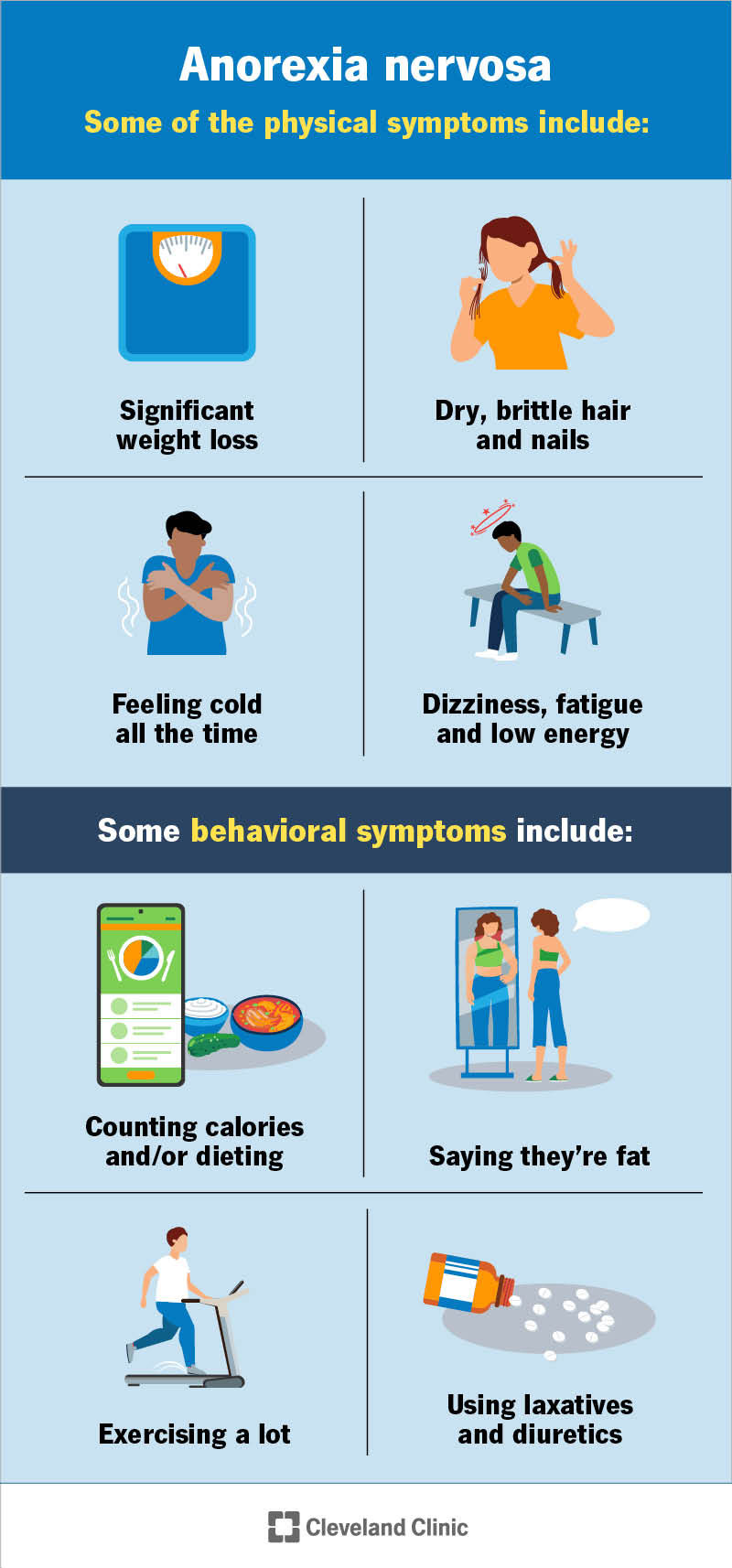
Image content: This image is available to view online.
View image online (https://my.clevelandclinic.org/-/scassets/images/org/health/articles/9794-anorexia-nervosa.jpg)
The signs and symptoms of anorexia can affect both your mind and body.
Some of the emotional and behavioral symptoms include:
Advertisement
Physical symptoms of anorexia include:
There’s no single cause of anorexia nervosa. Healthcare providers believe it involves many factors:
Women and teen girls are most at-risk for anorexia. That doesn’t mean men or boys can’t have it, though. Other risk factors include having:
Malnutrition (or starvation) can affect nearly every organ and tissue in your body. Severe organ damage may be irreversible, even after you’ve recovered from anorexia. Anorexia can also be devastating to your relationships and your emotional health. These effects can take time to heal, even after treatment begins.
Untreated anorexia can lead to:
If you’re having suicidal thoughts, call the Suicide and Crisis Lifeline at 988. Someone will be available to talk with you anytime, day or night.
Healthcare providers diagnose anorexia based on the criteria listed in the Diagnostic and Statistical Manual of Mental Disorders (DSM-5). The three criteria include:
Advertisement
If you have signs and symptoms of anorexia, a provider will do a physical exam and take a complete medical history, including your mental health history. Then, they’ll ask you detailed questions about your eating habits, exercise routines, use of weight loss medications, and related feelings and beliefs.
Your provider might order tests to evaluate the physical effects that anorexia is causing. Tests might include:
Treatment for anorexia nervosa is specific to the person being treated. The biggest challenge in treating someone with anorexia is helping them recognize and accept that they have a serious illness.
The goals of treatment include:
Advertisement
Your healthcare providers will design a custom treatment plan that involves both nutritional therapy and psychotherapy. Treatment could involve staying in a hospital or a clinic that specializes in eating disorders.
You may need to stay in a hospital if you have severe malnutrition, severe mental health issues or other serious health issues. Healthcare providers can monitor vital signs, provide nutrition through feeding tubes or give IV fluids. Hospital care also allows for close support from mental health professionals.
Some clinics or treatment centers focus on recovery from eating disorders. This can also be an option. In these settings, you stay for several days to several weeks at a time. The main goal of these programs is to offer a safe setting where you can focus on changing your thoughts, beliefs and actions related to food and body image.
Psychotherapy, or talk therapy, helps change thinking and behavior patterns associated with eating disorders. It can help you develop healthier attitudes toward food, weight and body image. It can also help you learn better techniques for dealing with negative thoughts.
Treatment could include:
Advertisement
There are no medications that treat anorexia. Nutrients through food are often the best “medicine.” A registered dietitian will help establish healthy eating patterns. It’s not just about beginning to eat again. It’s about meeting your body’s nutritional needs in a safe way. They can also provide education and support for someone recovering from anorexia.
Complications of treatment for anorexia
The most serious complication of treating anorexia is refeeding syndrome. This can happen when someone who is malnourished starts eating again. Your body may pull nutrients from the blood too quickly, which can cause serious complications. For this reason, refeeding should always be done under medical supervision.
Recovery from anorexia is different for everyone, and some parts of your treatment may take longer than others. The important thing to remember is that healing is possible. With the right support, progress can happen, and you can overcome the disease.
Talk to a healthcare provider if you notice signs of anorexia in yourself or someone you care for. This includes drastic weight loss, obsession with body image and changes in eating habits. Early help can make a big difference. The sooner someone gets support, the better their chances of recovery.
Experiences with anorexia can depend on factors like:
Anorexia gets worse the longer it goes untreated. So can the physical and mental health effects that come with it. People with anorexia may not always see that they need help. This can make getting treatment more difficult.
Without treatment, anorexia nervosa is life-threatening. It’s one of the deadliest mental health conditions, and people with anorexia are at a higher risk of dying by suicide. With the right support and treatment, recovery is possible. Long-term care and the support of loved ones can make a big difference.
There’s a risk of relapsing. So, finding a good support network is key to long-term recovery.
It’s common to feel shame, embarrassment or fear about having an eating disorder. But please know, it’s OK to ask for help. Seeking care for anorexia, or any mental health condition, is just as important as seeking care for any other health condition. And though it may not feel like it right now, it’s possible to recover and feel better.
If you’re concerned that someone you know might have anorexia, you may not know how to help. Lean on medical professionals for guidance. They can provide you with resources and strategies for listening and appealing to your loved one. The sooner they can get a diagnosis and treatment, the better.



Sign up for our Health Essentials emails for expert guidance on nutrition, fitness, sleep, skin care and more.
Learn more about the Health Library and our editorial process.
Cleveland Clinic’s health articles are based on evidence-backed information and review by medical professionals to ensure accuracy, reliability and up-to-date clinical standards.
Cleveland Clinic’s health articles are based on evidence-backed information and review by medical professionals to ensure accuracy, reliability and up-to-date clinical standards.
Your mental well-being is just as important as your physical well-being. Cleveland Clinic’s mental health experts can help you live life to the fullest.
