



Handwashing is one of the easiest ways to protect your health and help prevent germs from spreading. Use soap and running water, scrub every part of your hands for at least 20 seconds then dry them well.
Advertisement
Cleveland Clinic is a non-profit academic medical center. Advertising on our site helps support our mission. We do not endorse non-Cleveland Clinic products or services. Policy
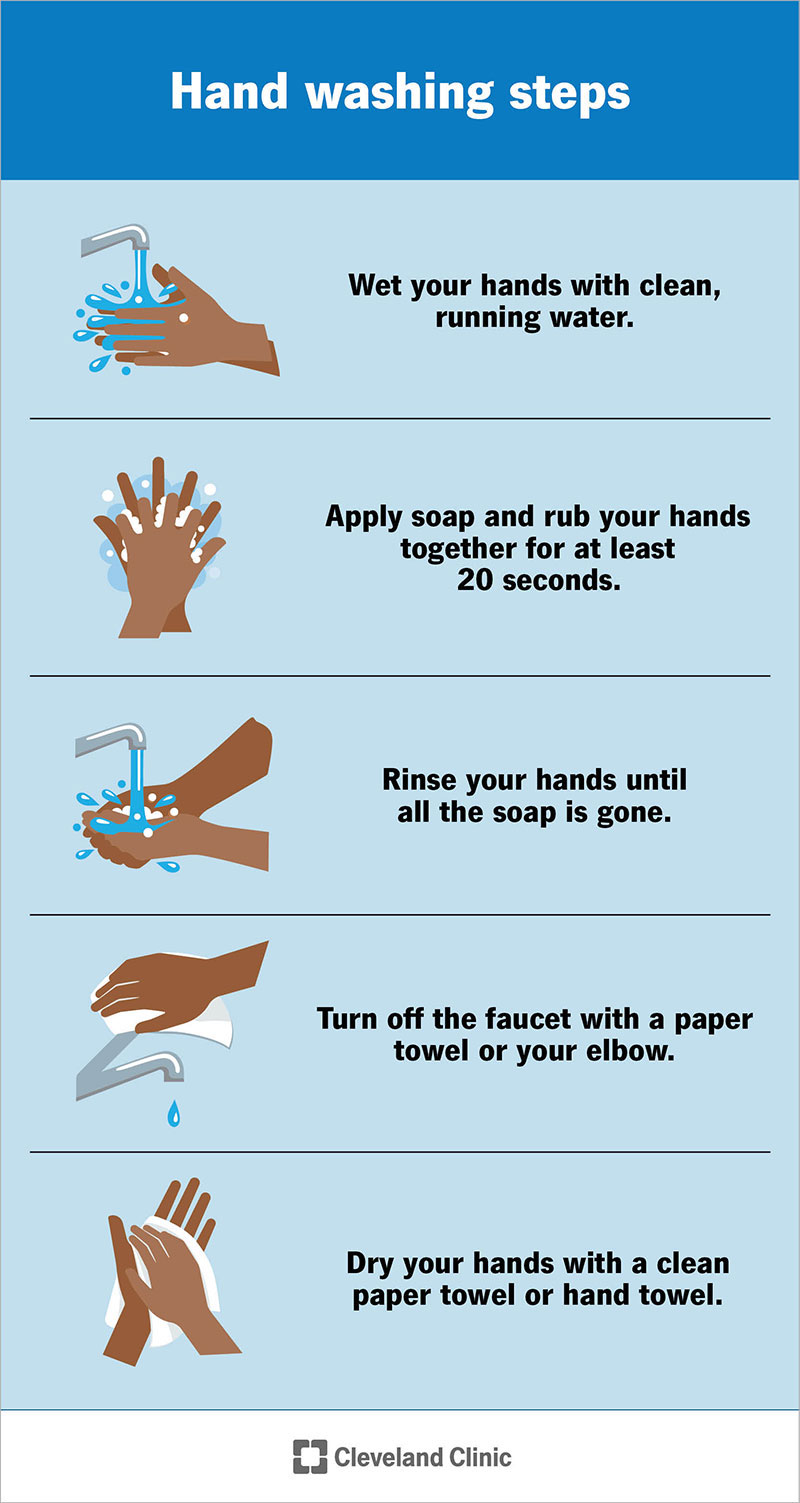
Image content: This image is available to view online.
View image online (https://my.clevelandclinic.org/-/scassets/images/org/health/articles/hand-washing.jpg)
Handwashing involves cleaning your hands with soap and running water, then drying them afterward. Proper handwashing means scrubbing all areas of your hands for at least 20 seconds before rinsing. This includes the backs of your hands, between your fingers and under your nails. It’s important to wash your hands throughout the day, especially before eating and after using the bathroom, coughing or sneezing.
Advertisement
Cleveland Clinic is a non-profit academic medical center. Advertising on our site helps support our mission. We do not endorse non-Cleveland Clinic products or services. Policy
You might think handwashing is simple. After all, you’ve been doing it since childhood. But proper technique can slip when you’re in a hurry or don’t realize why each step matters.
Washing your hands thoroughly and consistently can help keep you healthy. And if you do get sick, good handwashing can help prevent germs from spreading to others. Good hand hygiene and handwashing habits can benefit you, your loved ones and even people you never meet.
Handwashing is one of the best ways to stop germs from making you and others sick. That’s because your hands easily carry germs from place to place.
Think of your hands like a bus for germs. They hop on when you touch a contaminated surface. Then, if you touch your eyes, nose or mouth, the germs can enter your body through your mucous membranes. Once inside, they can multiply and make you sick.
Handwashing helps stop that process. Instead of reaching your body, germs get washed down the drain. Some may hang on, but washing your hands long enough and using the right technique removes most germs before they can cause illness.
Research shows that keeping your hands clean can prevent 1 in 3 illnesses that cause diarrhea and 1 in 5 respiratory infections.
Advertisement
If you do get sick, washing your hands helps prevent the spread of germs to others.
Wash your hands with soap and running water for at least 20 seconds. Many people think they already wash their hands that long. But during a busy day, it’s easy to rush. Research shows that most people don’t wash their hands long enough for handwashing to be fully effective.
Try setting a timer. You may notice that 20 seconds feels longer than expected. It’s about the amount of time it takes to quietly hum the “Happy Birthday” song twice. The more you practice washing for 20 seconds, the more natural it will become. Soon, it’ll be a habit.
Think fast: What’s the first step in handwashing? If you said applying soap, you’re close — but first, you should wet your hands with clean, running water. Water helps soap lather and lift away germs, dirt and other contaminants more effectively.
Follow these proper handwashing steps to improve hand hygiene:
You should wash your hands often throughout the day — at home, at work and in public. But during a busy day, it’s easy to miss important moments. One way to remember when to wash your hands is to think of FACES, which stands for:
Each category includes situations when you should wash your hands.
Here’s a closer look at what FACES means.
Food itself can contain germs. Or germs may travel from your hands to the food you’re preparing or eating. Because of this, you should wash your hands:
Animals, including pets, can spread germs. Wash your hands after:
Whether you’re caring for a child, parent or someone else, it can be easy to pick up germs. Help lower your risk by washing your hands after:
Advertisement
Body fluids can carry many germs. Wash your hands:
Life doesn’t always fit into tidy categories. The situations above cover many of the most important times to wash your hands. But there are other times when you should wash up or, if soap and water aren’t available, use hand sanitizer. These include:
If you have questions about when or how often to wash your hands, talk to a healthcare provider. They can offer guidance based on your medical history, family needs and work environment.
Advertisement
No. Regular soap and water are enough to remove germs. For most people, antibacterial soap isn’t more effective at preventing illness than ordinary soap and water. Healthcare workers may follow different guidelines depending on the situation.
Yes. Any type of soap can help remove germs from your hands, including body wash. Just be sure to follow the handwashing steps above. Keep in mind that some body washes contain strong fragrances that may linger on your hands afterward.
It depends. Soap and water and hand sanitizer work differently to support hand hygiene. Soap and water remove germs and harmful substances from your hands. Hand sanitizer kills certain germs.
Whenever possible, choose soap and water. It works better than hand sanitizer for:
However, hand sanitizer can be useful in some situations, including:
Advertisement
Choose a hand sanitizer that contains at least 60% ethyl alcohol or 70% isopropyl alcohol to effectively kill germs, including the virus that causes COVID-19.
Yes, it’s possible to overdo handwashing. Washing your hands at important times is healthy, but washing too often can:
If you need to wash your hands often for work or other reasons, using a moisturizer with emollients may help soothe and protect your skin. You can also talk to a healthcare provider about ways to prevent irritation and keep your skin healthy.
Like brushing your teeth or washing dishes, handwashing is often something you do on autopilot. You’ve done it countless times, so you may not think much about your technique. But it’s worth checking in now and then to see if there’s room for improvement.
Maybe that means scrubbing for a few extra seconds or making sure you fully dry your hands with a clean towel. Small changes to your handwashing routine can go a long way toward helping keep you and your family healthy.



Sign up for our Health Essentials emails for expert guidance on nutrition, fitness, sleep, skin care and more.
Learn more about the Health Library and our editorial process.
Cleveland Clinic’s health articles are based on evidence-backed information and review by medical professionals to ensure accuracy, reliability and up-to-date clinical standards.
Cleveland Clinic’s health articles are based on evidence-backed information and review by medical professionals to ensure accuracy, reliability and up-to-date clinical standards.
Cleveland Clinic’s primary care providers offer lifelong medical care. From sinus infections and high blood pressure to preventive screening, we’re here for you.
