



Tension headaches are the most common headache type. Healthcare providers may call them tension-type headaches. They feel like pressure on your forehead and temples. At-home treatments often help occasional headaches. Healthcare providers may prescribe medication and other therapies if you have frequent or long-lasting headaches.
Advertisement
Cleveland Clinic is a non-profit academic medical center. Advertising on our site helps support our mission. We do not endorse non-Cleveland Clinic products or services. Policy
A tension headache feels like there’s a tight band wrapped around your head, putting pressure on your forehead and temples. It’s the most common type of primary headache. Other names for it include:
Advertisement
Cleveland Clinic is a non-profit academic medical center. Advertising on our site helps support our mission. We do not endorse non-Cleveland Clinic products or services. Policy
Many factors cause tension headaches, and you can’t prevent all of them.
Home remedies like pain relievers and relaxation often help provide relief. If they don’t, your healthcare provider may suggest medications and other therapies to ease the pain.
Healthcare providers classify tension-type headaches based on how often you have them:
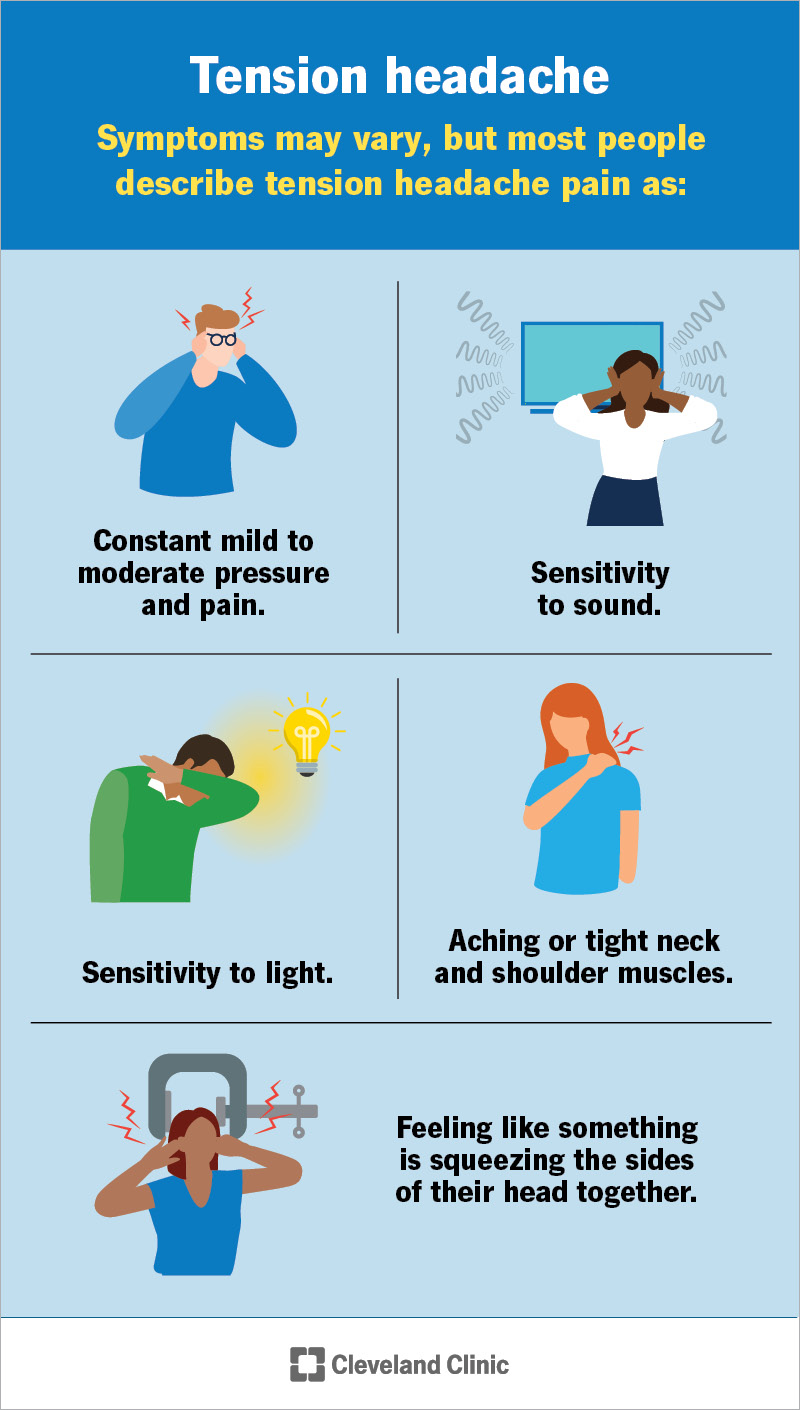
Image content: This image is available to view online.
View image online (https://my.clevelandclinic.org/-/scassets/images/org/health/articles/8257-tension-headaches)
Tension headaches may come on slowly. They can last from 30 minutes to a week. But the average duration is four to six hours.
Symptoms can include:
Tension headaches are usually better in the morning and worse in the evening. They typically don’t get worse with light physical activity, like walking or climbing stairs. They also don’t involve extreme sensitivity to light or sound, like migraines often do.
If you have chronic tension headaches, you may feel as if you’re always dealing with headache pain and pressure.
Advertisement
Researchers don’t know the exact cause of tension headaches. Some believe they start when muscles between your head and neck knot up, eventually tightening your scalp muscles.
Factors that may trigger a tension-type headache include:
Tension headaches tend to affect females more than males. They’re more common in adults than in children. Most people will experience this type of headache at some point in their lives.
Chronic tension-type headaches that last for weeks and months may affect your quality of life. Ongoing pain may make it hard for you to focus on your work or family responsibilities.
Tension headaches can become worse if you overuse pain medicines for them. Overuse can cause rebound headaches, which are very hard to treat.
Healthcare providers typically diagnose tension headaches by asking about your medical history and symptoms. They may ask:
Providers only do tests, like blood tests and imaging tests, if there are red flags of a more serious underlying condition.
Treatments vary based on the tension headache type.
For episodic headaches, your provider may recommend taking over-the-counter pain relievers, like:
You should limit pain reliever use to 10 days in any given month. Using these medicines more than this increases your risk of overuse headaches.
Managing stress is also key. Regular physical activity and quality sleep can go a long way toward helping. Therapies like massage therapy, acupuncture and meditation may help, as well.
If you have chronic tension headaches, your provider may suggest:
True tension-type headaches aren’t dangerous. But certain signs can mean a headache is part of a more serious medical issue. Talk to a healthcare provider if you have a headache and:
Advertisement
You should also see your provider if headaches feel different or happen more frequently than usual. Especially if you have cancer or an autoimmune disease.
Pain relievers and relaxation techniques, like massage, can relieve tension headaches that happen every once in a while. And practicing better posture may help prevent headaches in the future.
If you have frequent headaches, turn to your healthcare provider for help. Especially if the pain affects your ability to function.
Tension-type headaches are very common. But that doesn’t mean you have to put up with them. These headaches can be really annoying — and sometimes overwhelming. If you’re battling frequent or long-lasting tension headaches, see a healthcare provider. They can help you find relief.
Advertisement



Sign up for our Health Essentials emails for expert guidance on nutrition, fitness, sleep, skin care and more.
Learn more about the Health Library and our editorial process.
Cleveland Clinic’s health articles are based on evidence-backed information and review by medical professionals to ensure accuracy, reliability and up-to-date clinical standards.
Cleveland Clinic’s health articles are based on evidence-backed information and review by medical professionals to ensure accuracy, reliability and up-to-date clinical standards.
Do you have headaches that won’t go away? Or ones that come back regularly? Cleveland Clinic’s headache and migraine experts are here to help.
