



Fibromyalgia is a long-term condition that causes widespread muscle pain, fatigue and brain fog. It happens when your nervous system becomes more sensitive to pain signals. There isn't a cure. But lifestyle changes, therapy and medication may help you manage flare-ups and improve daily life.
Advertisement
Cleveland Clinic is a non-profit academic medical center. Advertising on our site helps support our mission. We do not endorse non-Cleveland Clinic products or services. Policy
Fibromyalgia is a long-term condition that causes widespread musculoskeletal pain, ongoing fatigue and sleep problems. You may also have memory or focus issues, often called “fibro fog.”
Advertisement
Cleveland Clinic is a non-profit academic medical center. Advertising on our site helps support our mission. We do not endorse non-Cleveland Clinic products or services. Policy
Research shows it involves changes in how your central nervous system processes pain. This system becomes more sensitive and amplifies pain signals. This means your body feels pain more strongly.
Symptoms often come and go in periods called flare-ups. There isn’t a cure, but treatment could help manage symptoms.
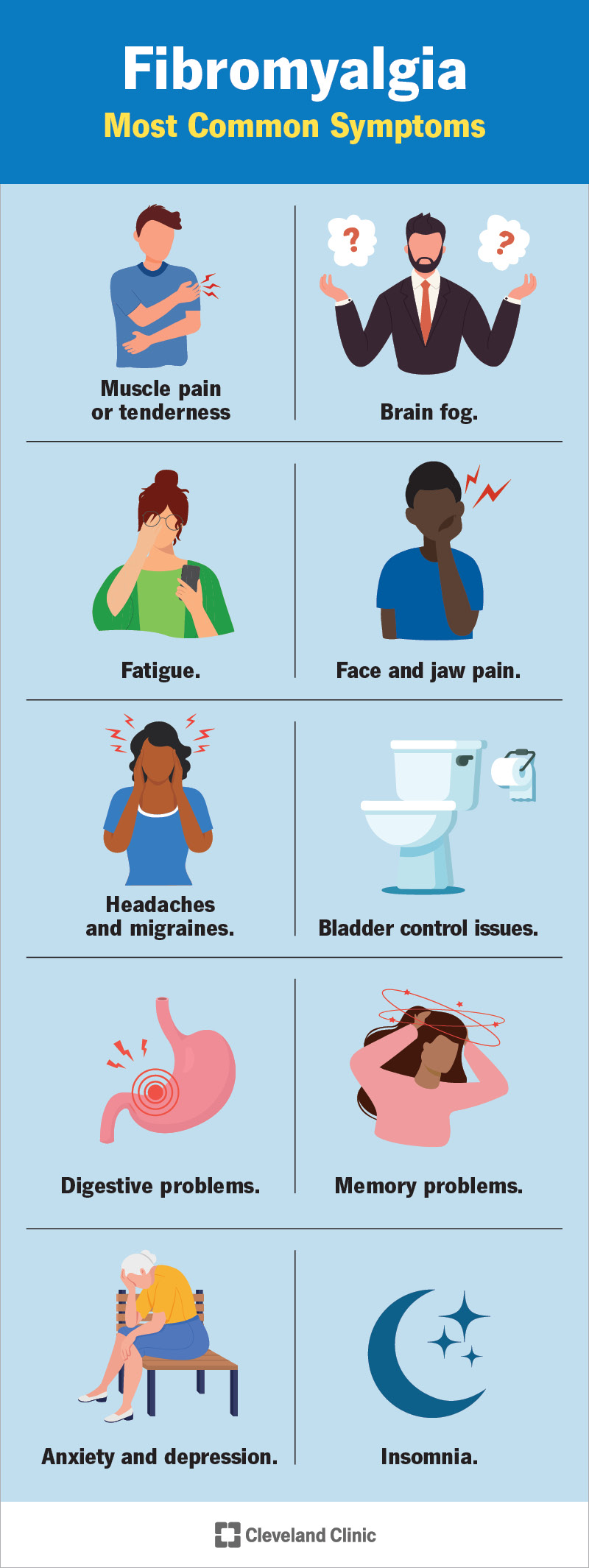
Image content: This image is available to view online.
View image online (https://my.clevelandclinic.org/-/scassets/images/org/health/articles/4832-fibromyalgia.jpg)
Symptoms may feel worse during a flare-up. A flare-up is a period when your symptoms suddenly get stronger or harder to manage. At other times, symptoms may feel milder and easier to handle. Common symptoms include:
Fibromyalgia can cause mental and emotional symptoms, including:
People commonly describe widespread fibromyalgia pain as:
Fatigue and sleep problems can make daily life harder. You may have unrestful sleep. This means you wake up feeling tired even after sleeping all night. You might also have trouble falling asleep, staying asleep or waking up refreshed. This can make your day feel long and draining.
Advertisement
Many people also describe feeling “fibro fog” or “brain fog.” This is when you have trouble concentrating, remembering things or thinking clearly.
Experts haven’t found one single cause of fibromyalgia. Many researchers think fibromyalgia affects how your brain and spinal cord (central nervous system) process pain. Your central nervous system becomes more sensitive. This is called central sensitization. It means your body amplifies pain signals, so you feel pain more strongly than expected.
Because experts don’t know the exact cause, there’s no known way to prevent it.
In general, anything that increases stress on your body or mind could trigger a flare-up. Common triggers include:
Triggers vary from person to person. Something that causes symptoms for someone else may not affect you the same way. Learning your personal triggers may help you plan ahead and manage symptoms more effectively.
Fibromyalgia can run in biological families. This suggests a genetic link. If you have a close family member who has this condition, you have a higher risk of developing it. Researchers continue to study specific genes that may increase risk.
Anyone can develop this condition. You may have an increased risk of developing it if you:
Children can get fibromyalgia, too, but it's less common than in adults.
Fibromyalgia could lead to other health and life challenges over time. These may include:
If you’re struggling physically or emotionally, talk with your healthcare provider. Support and treatment are available.
A healthcare provider diagnoses fibromyalgia based on your symptoms, medical history and a physical exam. During the exam, they’ll check for tenderness in different areas of your body.
Your provider may order basic blood tests to rule out other conditions, like thyroid disease or inflammatory arthritis. Lab tests help rule out other causes.
There isn’t a single blood test or scan that confirms fibromyalgia. The blood tests that you may see advertised for this condition aren’t accurate enough for most people. For that reason, insurance often doesn't cover them.
Many healthcare providers use the American College of Rheumatology diagnostic criteria to make a diagnosis. You must have:
Advertisement
Your provider may also use symptom scoring tools. These measure:
There are different treatment options available to manage symptoms. You may need to try a combination of lifestyle changes, medications and therapies to find what works best.
Your healthcare provider might recommend the following as a first line of treatment:
If symptoms are moderate to severe, your provider may recommend medication, including:
Advertisement
Several therapies may help manage this condition alongside other treatment options. Your provider may recommend:
Your provider can help you decide which therapies may work best for you.
When a flare-up happens, focus on small, steady steps. The goal is to calm symptoms without stopping all activity. Try to:
Advertisement
Sometimes, healthcare providers talk about treatment in “stages.” These aren’t strict steps. They’re general areas of care that help manage symptoms. This condition doesn’t follow a set pattern. Symptoms don’t happen in a certain order, and everyone’s experience is different.
The four main parts of treatment include:
Your provider will tailor treatment to how you feel, your physical function and what you need at different times.
Fibromyalgia is a real condition that has a real impact on your life. It doesn’t damage your joints or organs, and it isn’t life-threatening. But it’s long-term, and it can affect your daily life.
You can expect symptoms to come and go. Some days, you might function fairly well. Other days, even simple tasks might feel draining. The unpredictability might feel frustrating.
This condition can also affect your mood. Living with ongoing pain and fatigue may feel isolating at times. It’s common to feel anxious or down. Know that support is available.
There isn’t a cure available right now. But fibromyalgia is treatable. Many people learn ways to manage their energy, improve sleep and reduce stress. In some cases, symptoms may reduce over time.
Living with fibromyalgia can feel confusing and exhausting. Your pain is real, even though it won’t show up on a scan or lab test. Some days you may look “fine” on the outside while feeling achy, foggy or completely drained on the inside. That disconnect can be hard to explain to others.
Treatment isn’t one-size-fits-all. It often takes time and patience to find the right mix of movement, therapy, medication or relaxation techniques. You may need to adjust your plan as your symptoms change. Even though there isn’t a quick fix, you don’t have to ignore your pain or push through it alone.
If you notice changes in your mood or feel persistent brain fog, tell your healthcare provider. Your emotional health matters just as much as your physical health, and both deserve care and attention.



Sign up for our Health Essentials emails for expert guidance on nutrition, fitness, sleep, skin care and more.
Learn more about the Health Library and our editorial process.
Cleveland Clinic’s health articles are based on evidence-backed information and review by medical professionals to ensure accuracy, reliability and up-to-date clinical standards.
Cleveland Clinic’s health articles are based on evidence-backed information and review by medical professionals to ensure accuracy, reliability and up-to-date clinical standards.
Comprehensive pain recovery treatment plans can help you manage your pain levels and symptoms more easily.
