



A speculum is a medical tool that makes it easier for your provider to see inside hollow parts of your body, like your vagina. A vaginal speculum widens your vaginal walls so your provider can examine your vagina and your cervix. It’s most commonly used during pelvic exams and Pap smears. It’s used in many other gynecological procedures, too.
Advertisement
Cleveland Clinic is a non-profit academic medical center. Advertising on our site helps support our mission. We do not endorse non-Cleveland Clinic products or services. Policy
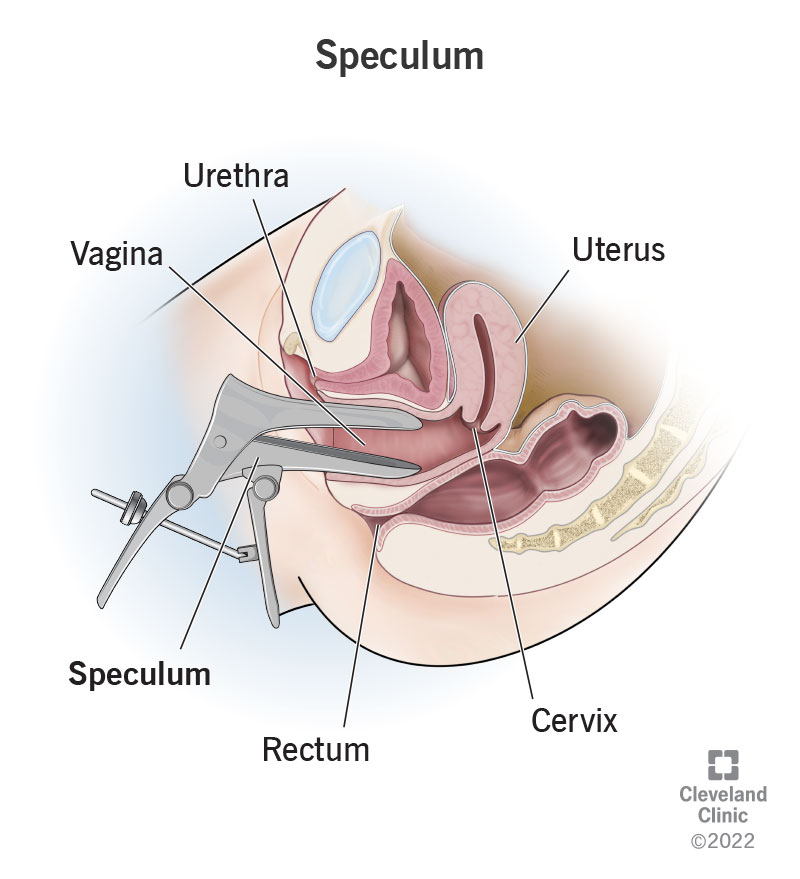
Image content: This image is available to view online.
View image online (https://my.clevelandclinic.org/-/scassets/images/org/health/articles/24238-speculum)
A speculum is a tool a healthcare provider uses to look inside hollow openings in your body. It’s most often used in your vagina during pelvic exams and Pap smears. A speculum widens your vaginal walls just enough for your provider to see your vaginal canal and your cervix. It also allows your provider to check for growths, take samples for testing and do certain procedures through your vagina.
Advertisement
Cleveland Clinic is a non-profit academic medical center. Advertising on our site helps support our mission. We do not endorse non-Cleveland Clinic products or services. Policy
Speculums come in different designs based on what they’re used for.
You’ll most likely see one with two arms joined by a hinge. The arms look like a duck’s bill. The duck bill part goes into your vagina. When your provider opens the arms, they spread your vaginal walls so your provider can see inside. It only spreads your vaginal walls about one inch.
Speculums can be made of stainless steel or plastic. Some plastic ones have a small light to help your provider see your vagina and cervix better.
Speculums come in different sizes. Your provider will choose a size that fits your body and keeps you comfortable. During an exam, they usually start with the smallest speculum that still lets them see your vagina and cervix.
Common types of vaginal speculums include:
Advertisement
You’ll most likely see a speculum during a routine pelvic exam or Pap smear. This is where they’re most common.
Speculums are also used for certain gynecological procedures, like:
It’s normal to feel some pressure or mild discomfort when your provider inserts and widens the speculum. But it shouldn’t be painful. If it does feel painful, your body may be tensing up. Tight muscles can make the exam more uncomfortable. Slow, steady breathing can help your body relax.
Some health conditions can also make the exam painful. These conditions include:
It’s important to let your healthcare provider know if you have these conditions. They can take extra steps to make your exam more comfortable.
Yes. Speculums have been used for many years to help diagnose and treat conditions. Speculums are sterilized before providers use them.
You don’t need to worry about your vagina being stretched. Any widening during the exam is temporary. Your vagina will return to its usual shape after your exam.
If you’re comfortable doing so, talk to your provider about:
You can also ask your provider to:
A speculum is a small device that can play a big role in keeping you healthy. A speculum helps your provider perform tests that detect conditions early so you can receive the treatment you need. In the meantime, be proactive when it comes to your comfort. Tell your provider about your pain threshold. Don’t be afraid to ask for things you need, including a walk-through of what to expect.
Advertisement
Advertisement



Sign up for our Health Essentials emails for expert guidance on nutrition, fitness, sleep, skin care and more.
Learn more about the Health Library and our editorial process.
Cleveland Clinic’s health articles are based on evidence-backed information and review by medical professionals to ensure accuracy, reliability and up-to-date clinical standards.
Cleveland Clinic’s health articles are based on evidence-backed information and review by medical professionals to ensure accuracy, reliability and up-to-date clinical standards.
From routine pelvic exams to high-risk pregnancies, Cleveland Clinic’s Ob/Gyns are here for you at any point in life.
