



Tree person syndrome, or epidermodysplasia verruciformis, is an extremely rare condition that causes wart-like or scaly patches on your skin, often after an HPV infection. These growths can resemble tree bark. Treatment is available with removal, medications or regular skin care. But growths may return after treatment.
Advertisement
Cleveland Clinic is a non-profit academic medical center. Advertising on our site helps support our mission. We do not endorse non-Cleveland Clinic products or services. Policy
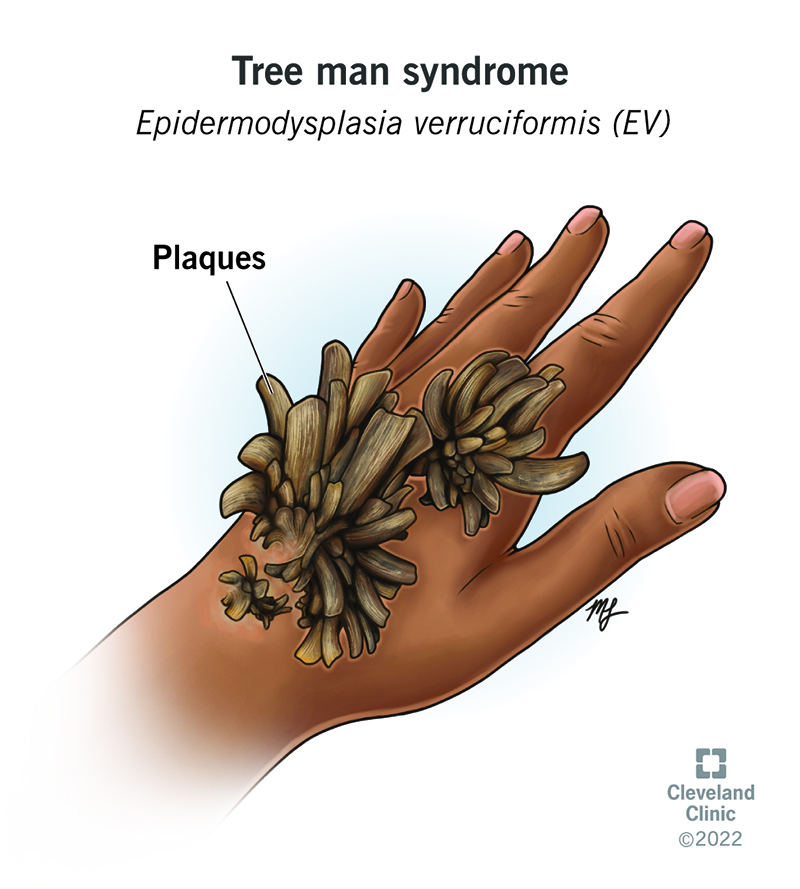
Image content: This image is available to view online.
View image online (https://my.clevelandclinic.org/-/scassets/images/org/health/articles/tree-man-syndrome-illustration)
Tree person syndrome is a rare inherited condition that causes wart-like growths or brown, scaly patches (plaques) to form on your skin. These plaques can build up in layers that look like tree bark. They usually appear after a human papillomavirus (HPV) infection.
Advertisement
Cleveland Clinic is a non-profit academic medical center. Advertising on our site helps support our mission. We do not endorse non-Cleveland Clinic products or services. Policy
The condition is often called “tree man syndrome.” But healthcare providers no longer use that name, as it can affect anyone, not just males. You might also hear it called human tree disease. The medical name for this condition is epidermodysplasia verruciformis (EV).
Tree person syndrome is extremely rare. There have been just over 500 reported cases worldwide in medical history.
There are two types based on the cause:
Signs of tree person syndrome include:
The skin growths may hurt because they reach below the surface of your skin and press on nearby nerves.
Symptoms can affect any part of your body with skin. But it most often affects your:
It usually affects parts of your skin that get a lot of sun exposure.
Tree person syndrome happens when your body can’t control certain types of human papillomavirus (HPV). These HPV types (mainly HPV 5, 8 and related strains) are different from the ones that cause common warts or genital warts. Most people’s immune systems can stop these viruses. But with this condition, your skin’s defenses don’t work the way they should. This lets the virus grow and form wart-like patches.
Advertisement
Some people are born with a genetic change that causes this condition. It’s passed down in families when both biological parents carry the same gene change.
Other people develop it later in life because their immune systems become weak. This can happen with conditions like HIV, or after organ transplants or cancer treatments. Sometimes, skin growths can appear after an injury or infection if your immune system isn’t working well.
While HPV infections are very common, tree person syndrome only develops in people whose immune systems can’t defend these skin-specific viruses.
You’re more at risk of developing this condition if the genetic variant that causes it runs in your biological family history. Sometimes, the condition happens without a known genetic history. In this case, you’re more likely to develop it if you have a weakened immune system.
People with this condition have a higher risk of developing non-melanoma skin cancer, especially squamous cell carcinoma. These cancers often appear on parts of your skin that get a lot of sun. They usually develop between the ages of 30 and 40.
Because the growths can be hard to manage and often appear in visible areas, they can also affect your emotional well-being. You may feel anxious, depressed or want to avoid social situations because of skin symptoms.
A healthcare provider can diagnose this condition with a physical exam to review your symptoms. They’ll also ask about your personal and family medical history. To confirm the diagnosis, your provider may order tests like:
There isn’t a cure for this condition yet, but your healthcare provider can help you manage symptoms and lower your risk of complications. They may recommend:
Your provider may also suggest:
Advertisement
See a healthcare provider if you notice new skin changes, like warts or growths that don’t go away.
If you have this condition, you’ll need regular follow-up visits with a dermatologist. Visits usually happen at least once a year, or more often if needed. Your provider will monitor your skin and adjust your treatment as necessary. Contact your provider sooner if you notice severe pain or any new or worsening symptoms between visits.
It’s normal to have a lot of questions. Your provider can help you answer them. Here are a few to get started:
This condition generally has a good outlook because it affects only your skin, not your internal organs. But it’s a lifelong condition. And symptoms can come back after removal. While there’s no cure, treatment can help manage symptoms and improve your comfort.
Your care team will monitor your skin regularly and teach you what to watch for between visits. Let your provider know right away if you notice any new or changing growths. Catching skin cancer early makes it easier to treat.
Advertisement
Living with this condition can also take an emotional toll. It’s completely understandable to feel frustrated or isolated. Talking with a mental health professional can help you cope and find ways to feel supported.
Tree person syndrome (epidermodysplasia verruciformis) is extremely rare. And living with a visible and uncomfortable condition might feel lonely at times. But with the right care and support, there are ways to manage the condition and help you get through each day.
With regular check-ins and a personalized care plan, your provider can help treat symptoms, lower your risk of skin cancer and support your overall well-being.
If it ever feels like a lot to handle, talking with a mental health professional can help you process what you’re going through and find strategies that support you. Your care should focus on your whole health — not just your skin.
Advertisement



Sign up for our Health Essentials emails for expert guidance on nutrition, fitness, sleep, skin care and more.
Learn more about the Health Library and our editorial process.
Cleveland Clinic’s health articles are based on evidence-backed information and review by medical professionals to ensure accuracy, reliability and up-to-date clinical standards.
Cleveland Clinic’s health articles are based on evidence-backed information and review by medical professionals to ensure accuracy, reliability and up-to-date clinical standards.
Do certain health conditions seem to run in your family? Are you ready to find out if you’re at risk? Cleveland Clinic’s genetics team can help.
