



Pyromania is a rare behavioral condition that involves repeated, strong desires to deliberately set fires. It’s a type of impulse control disorder. You might set fires for no other reason than to release built-up tension. While few people seek help for pyromania, it’s treatable with therapy and medication.
Advertisement
Cleveland Clinic is a non-profit academic medical center. Advertising on our site helps support our mission. We do not endorse non-Cleveland Clinic products or services. Policy
Pyromania is a rare behavioral condition where you have a repeated, strong urge to set fires. It’s a type of impulse control disorder (ICD). ICDs are a group of mental health conditions that make it difficult to control your actions or reactions.
Advertisement
Cleveland Clinic is a non-profit academic medical center. Advertising on our site helps support our mission. We do not endorse non-Cleveland Clinic products or services. Policy
Setting fires is a common behavior. And many people are fascinated by fire. For example, children often set fires out of boredom or for entertainment. But pyromania doesn’t happen for those reasons.
If you have pyromania, you know that fires are harmful. But you can’t control the desire to start one. You may set a fire to release built-up inner emotional tension. A healthcare provider can help you manage this condition.
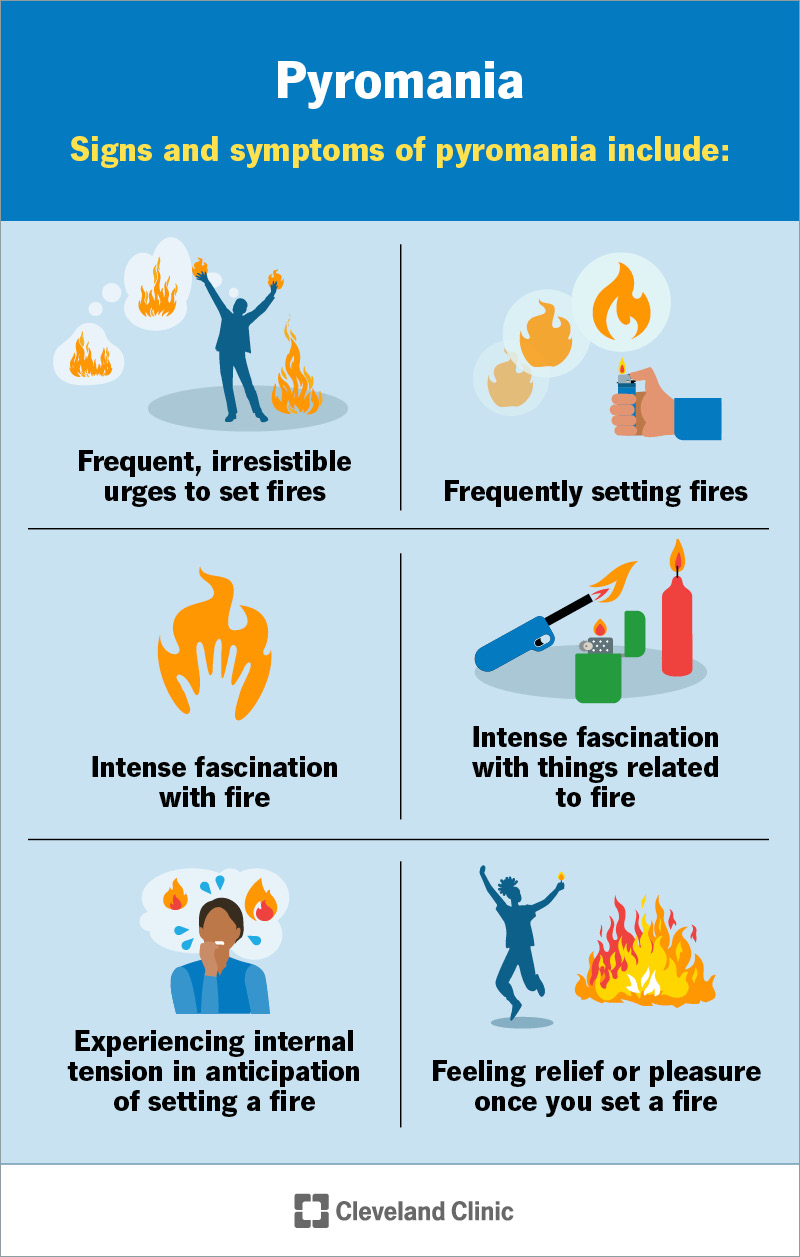
Image content: This image is available to view online.
View image online (https://my.clevelandclinic.org/-/scassets/images/org/health/articles/pyromania)
Signs and symptoms of pyromania include:
Other behaviors that may occur with pyromania include:
It’s important to seek medical help or start a conversation with a loved one if you notice these behaviors.
The cause of pyromania isn’t well known. This is in part because it’s rare. Like other impulse control disorders, the cause is a combination of factors, like genetics, your environment or your biology.
Advertisement
Scientists think it may happen due to miscommunication between the emotional control center of the brain and the planning and rational thought part of the brain.
Pyromania can affect children and adults. It most often develops around the age of 18.
Studies show that people with pyromania are more likely to:
Mental health professionals diagnose pyromania based on the criteria in the American Psychiatric Association’s Diagnostic and Statistical Manual of Mental Disorders (DSM-5-TR). These criteria include:
Adults and children who have signs of pyromania will likely need to see a psychologist or psychiatrist. Experts use interview and assessment tools to check for mental health and behavioral conditions.
Talk therapy (psychotherapy) is the main approach to managing pyromania. Medications may be somewhat beneficial as an add-on treatment to talk therapy.
Cognitive behavioral therapy (CBT) is a type of psychotherapy. Through CBT, you can unlearn negative thoughts and behaviors and learn to adopt healthier thinking patterns and habits.
Other options include family therapy or multisystemic therapy. These help support you and create a safer environment.
Medications that may help you manage pyromania include:
Unfortunately, people who have pyromania rarely seek treatment. Without treatment, pyromania is typically chronic (lifelong). Frequent fire setting can lead to personal injury, legal issues (like arson) and time in prison. It can also affect your personal relationships. In some cases, pyromania can be life-threatening if the fire you set can’t safely be put out.
Advertisement
It’s possible to treat pyromania, so it’s important to seek help if you or a loved one has signs of the condition.
No, pyromania isn’t a symptom of attention-deficit/hyperactivity disorder (ADHD). Pyromania can be a condition that happens alongside ADHD, called a co-occurring condition. ADHD can affect your impulse control (acting without thinking about the consequences), which may make you more at risk of developing pyromania.
It’s normal to be curious about fire. However, a frequent and uncontrollable desire to start fires may be a sign of pyromania. Treatment can help you calm these urges. The first step is talking with a healthcare provider or mental health professional. Don’t be afraid to ask your provider questions. They’re available to help.
Advertisement



Sign up for our Health Essentials emails for expert guidance on nutrition, fitness, sleep, skin care and more.
Learn more about the Health Library and our editorial process.
Cleveland Clinic’s health articles are based on evidence-backed information and review by medical professionals to ensure accuracy, reliability and up-to-date clinical standards.
Cleveland Clinic’s health articles are based on evidence-backed information and review by medical professionals to ensure accuracy, reliability and up-to-date clinical standards.