



Natural changes as your child develops can cause knock knees (genu valgum). Kids grow and change quickly. And that includes their bones. That’s why most cases of knock knees don’t need any treatment. Even if your child does, they should have no long-term issues once their bones straighten out.
Advertisement
Cleveland Clinic is a non-profit academic medical center. Advertising on our site helps support our mission. We do not endorse non-Cleveland Clinic products or services. Policy
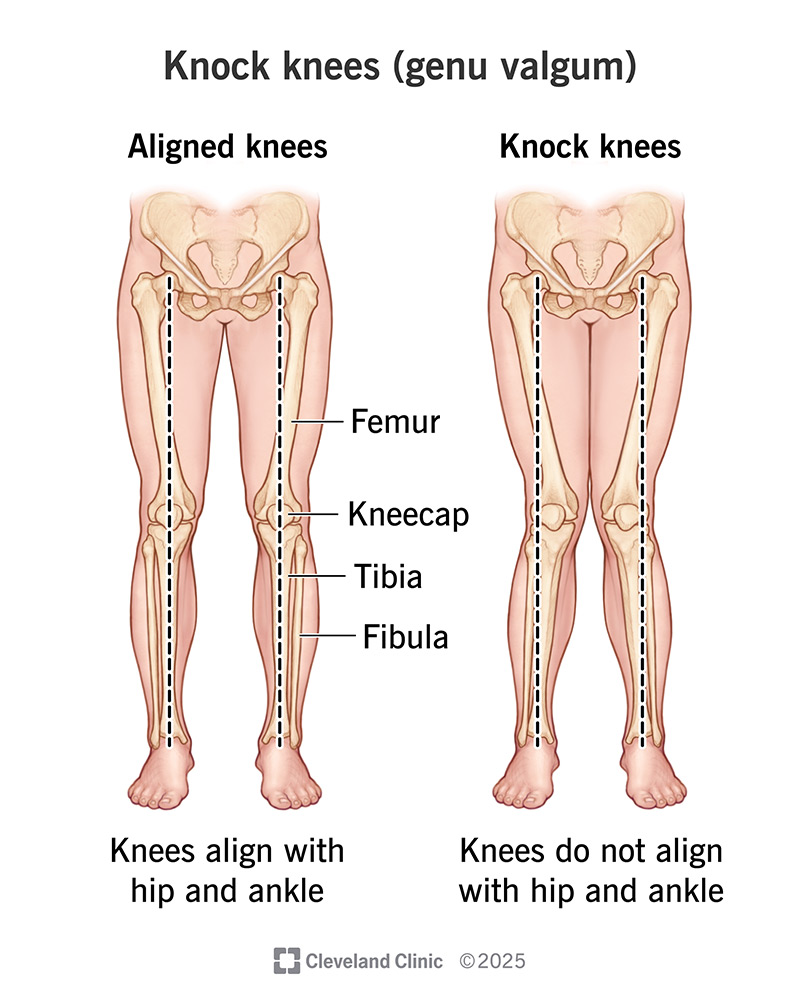
Image content: This image is available to view online.
View image online (https://my.clevelandclinic.org/-/scassets/images/org/health/articles/knock-knees-genu-valgum)
Knock knees are when a child’s legs angle inward. Their knees may touch together with a gap between their ankles when they’re standing straight. The medical name for it is genu valgum.
Advertisement
Cleveland Clinic is a non-profit academic medical center. Advertising on our site helps support our mission. We do not endorse non-Cleveland Clinic products or services. Policy
It’s very common for young children to have knock knees. Most kids grow out of it naturally as they get older. Your child might need treatment when they’re older if having knock knees causes pain or makes it hard for them to move.
The way your child’s knees angle together is the most obvious symptom. It usually develops in kids between the ages of 3 and 5.
Nobody’s legs are perfectly straight. But normally, your knees and ankles will be the same distance apart when you stand with your legs together. If your child has genu valgum, their knees will touch, and there will be a noticeable gap between their ankles.
Knock knees usually happen because of natural variations in your child’s leg bones. It’s usually a normal part of their growth process. In most cases, there isn’t a specific cause.
It’s much less common, but health conditions that affect your child’s bones can lead to knock knees. Other causes can include:
A healthcare provider will diagnose knock knees with a physical exam. They’ll examine your child’s legs and knees. Tell your provider if your child has any pain or trouble moving. Knock knees usually doesn’t cause symptoms like these. But they can be a sign of other issues that can affect your child’s bones.
Advertisement
Your provider may measure the natural angle of your child’s legs. This will tell them whether your child’s thigh bones or shin bones have an unusual shape. They might order X-rays or other imaging tests to take pictures of your child’s bones. But these aren’t always needed.
Most of the time, knock knees don’t need any treatment. Your child will probably grow out of them as they naturally develop. This usually happens by the time kids turn 7.
Your healthcare provider will keep an eye on your child’s growth. They might suggest treatments if your child has severe knock knees that cause pain or make it hard to move. Your child may need:
Your child may need other treatments for a specific condition that causes knock knees. Your provider will tell you how to manage these issues.
Visit a healthcare provider as soon as you notice any changes in how your child stands or walks. Knock knees are almost always a temporary issue. But it’s still important for a provider to diagnose them. That way, you can start tracking your child’s progress as they age.
You should expect your child to have no long-term complications. Knock knees are common and almost always nothing to worry about. If your child needs specific treatments, you’ll have to help them understand why. Explain why they need to do their physical therapy exercises or wear their brace. Your provider can help.
Your child probably won’t need treatment for knock knees. But it’s still important for a healthcare provider to track their growth and development. Visit your provider as often as they suggest. This will help them keep an eye on any changes in your child’s legs and bones.
Don’t be afraid to ask lots of questions when you see your provider. Even if knock knees are common, you deserve to understand everything about your child’s health. Your provider will help you understand what to watch for and when you might consider treatments.
Advertisement



Sign up for our Health Essentials emails for expert guidance on nutrition, fitness, sleep, skin care and more.
Learn more about the Health Library and our editorial process.
Cleveland Clinic’s health articles are based on evidence-backed information and review by medical professionals to ensure accuracy, reliability and up-to-date clinical standards.
Cleveland Clinic’s health articles are based on evidence-backed information and review by medical professionals to ensure accuracy, reliability and up-to-date clinical standards.
As your child grows, you need healthcare providers by your side to guide you through each step. Cleveland Clinic Children’s is there with care you can trust.
