



Hormone receptor-positive breast cancer needs estrogen or progesterone to grow. This means you can treat it by targeting those hormones. Your healthcare provider will test your breast cancer for hormone receptor status to find out whether hormone therapy is a treatment option. They’ll do this with a biopsy and an immunohistochemistry test.
Advertisement
Cleveland Clinic is a non-profit academic medical center. Advertising on our site helps support our mission. We do not endorse non-Cleveland Clinic products or services. Policy
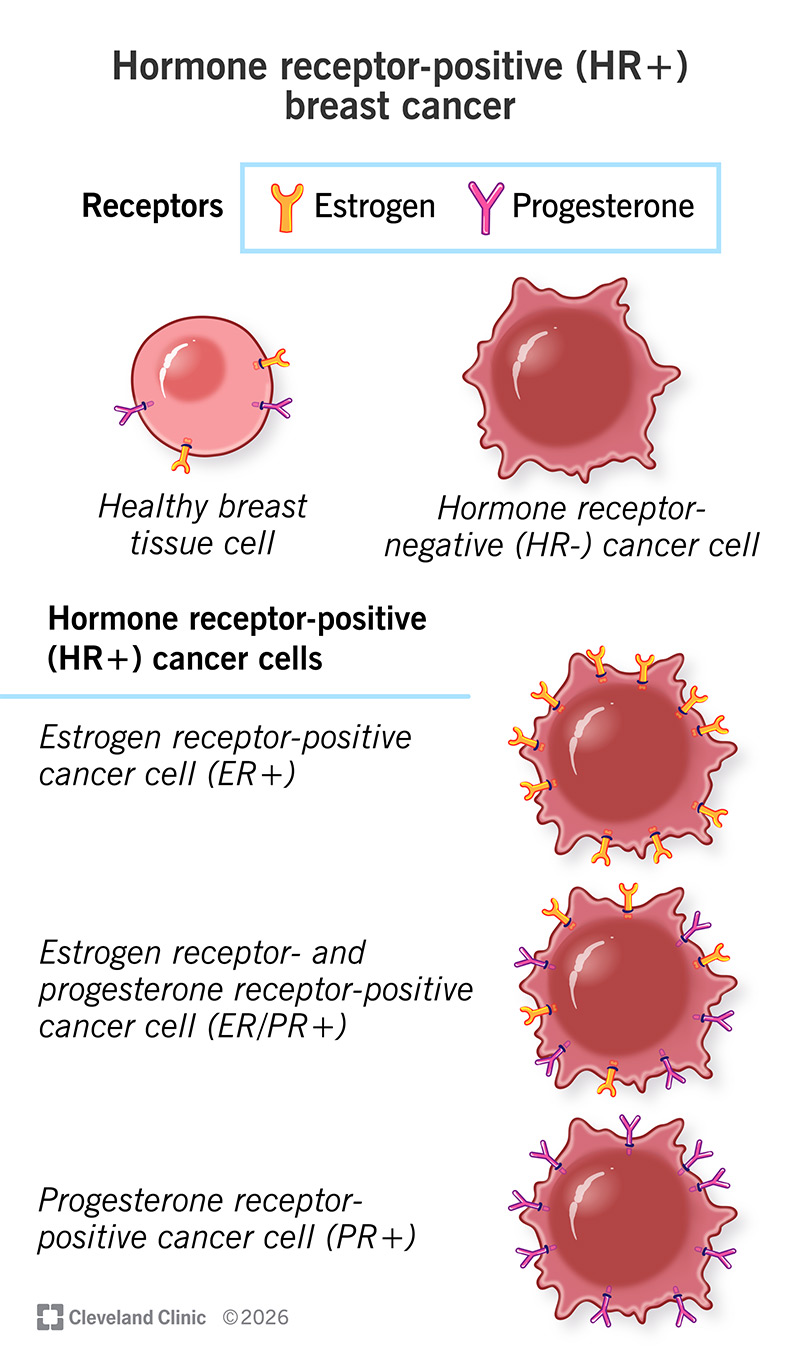
Image content: This image is available to view online.
View image online (https://my.clevelandclinic.org/-/scassets/images/org/health/articles/hormone-receptor-positive-breast-cancer)
When breast cancer is hormone receptor positive (HR+), it means the cancer cells have receptors on them that attach to certain hormones in your body. This matters because cancer cells with hormone receptors may attach to those hormones to grow.
Advertisement
Cleveland Clinic is a non-profit academic medical center. Advertising on our site helps support our mission. We do not endorse non-Cleveland Clinic products or services. Policy
HR-positive breast cancer grows more slowly than hormone receptor-negative breast cancer because it needs to complete this extra step. And if you can prevent the cancer cells from binding to these hormones, you can prevent the cancer from growing.
Hormone receptor-positive breast cancer may bind to estrogen, progesterone or both. Types include:
Hormone receptor-positive breast cancer doesn’t cause different symptoms from hormone-negative breast cancer. Testing the cancerous tissue is the only way to tell if your breast cancer is hormone receptor positive. General breast cancer symptoms include:
Advertisement
Breast cancer cells may have hormone receptors because normal breast cells do. Normal cells in your breast tissue respond to hormones by growing or changing, especially during female reproductive cycles. And breast cancer cells are abnormal breast cells.
While the hormones estrogen and progesterone play a larger role in female anatomy, they also exist in smaller amounts in males. This is why male breast cancer can also be hormone receptor-positive. (You only need 1% of cancer cells with hormone receptors to be HR+.)
But having more of these hormones may raise your risk. Cancers that depend on estrogen to grow are more likely to occur when you have more estrogen in your body. Things like hormone replacement therapy, pregnancy and obesity can raise your estrogen and your risk.
To test breast cancer for hormone receptors, your healthcare provider must first take a sample of the cancer. This is called a biopsy. They’ll send the sample to a lab for testing. The lab will do an immunohistochemistry test (IHC test) to look for hormone receptors.
An IHC test checks for important proteins in cancer cells. Hormone receptors are one type of protein it looks for. Others include HER2 and KI-67. Your pathology report will tell you whether the cancer you have is positive or negative for any of these proteins.
Having hormone receptor-positive breast cancer means your provider can treat it with hormone therapy (endocrine therapy). This is a category of cancer treatment that works by blocking the hormones that the cancer needs to bind to in order to grow.
Hormone therapy for breast cancer includes several types of medications that work in different ways:
Surgery is another form of hormone therapy for cancer. In some cases, your provider might recommend removing your ovaries to manage estrogen levels.
The types of hormone therapy your provider recommends will depend on the type of breast cancer you have, the stage and how it responds. Your personalized treatment plan will likely also include other common breast cancer treatments, like:
Advertisement
In general, hormone receptor-positive breast cancer has a better prognosis (outlook) than hormone receptor-negative breast cancer. That’s because hormone therapy offers ways to slow the cancer down. The more treatment options you have, the better your prognosis is.
You can successfully treat hormone receptor-positive breast cancer. But many different factors can influence your prognosis, including the cancer type and stage. Your healthcare provider is the best person to ask about what you should expect from treatment.
Yes, it can. Sometimes, breast cancer that previously had no hormone receptors develops some over time. And others, breast cancer that was previously hormone receptor-positive loses its receptors over time. Changes occur in an estimated one-third of cases.
If your breast cancer progresses — or comes back after going away (recurrence) — your provider might want to test it again. Changes to your hormone receptor status will affect your treatment plan going forward, and maybe your outlook.
Hormone receptor status is one factor healthcare providers use to learn about your breast cancer and design your treatment plan. If your cancer is hormone receptor-positive, that means they can treat it with hormone therapy — one more tool in the toolbox.
Advertisement
There are other things you will learn about your breast cancer. But being hormone receptor-positive is good news overall for your treatment plan. The next step will be to find out which types of hormone therapy — and other treatments — might work best.
Advertisement



Sign up for our Health Essentials emails for expert guidance on nutrition, fitness, sleep, skin care and more.
Learn more about the Health Library and our editorial process.
Cleveland Clinic’s health articles are based on evidence-backed information and review by medical professionals to ensure accuracy, reliability and up-to-date clinical standards.
Cleveland Clinic’s health articles are based on evidence-backed information and review by medical professionals to ensure accuracy, reliability and up-to-date clinical standards.
A breast cancer diagnosis can turn your world upside down. At Cleveland Clinic, we offer expertise, compassion and personalized treatment plans.
