



Dwarfism is a medical term, but it isn’t always a health condition. Short stature might affect you even though you’re healthy and don’t have any underlying medical issues. But it could also affect you because of a health condition. Your healthcare provider can help you understand how it can happen and when it’s a cause for concern.
Advertisement
Cleveland Clinic is a non-profit academic medical center. Advertising on our site helps support our mission. We do not endorse non-Cleveland Clinic products or services. Policy
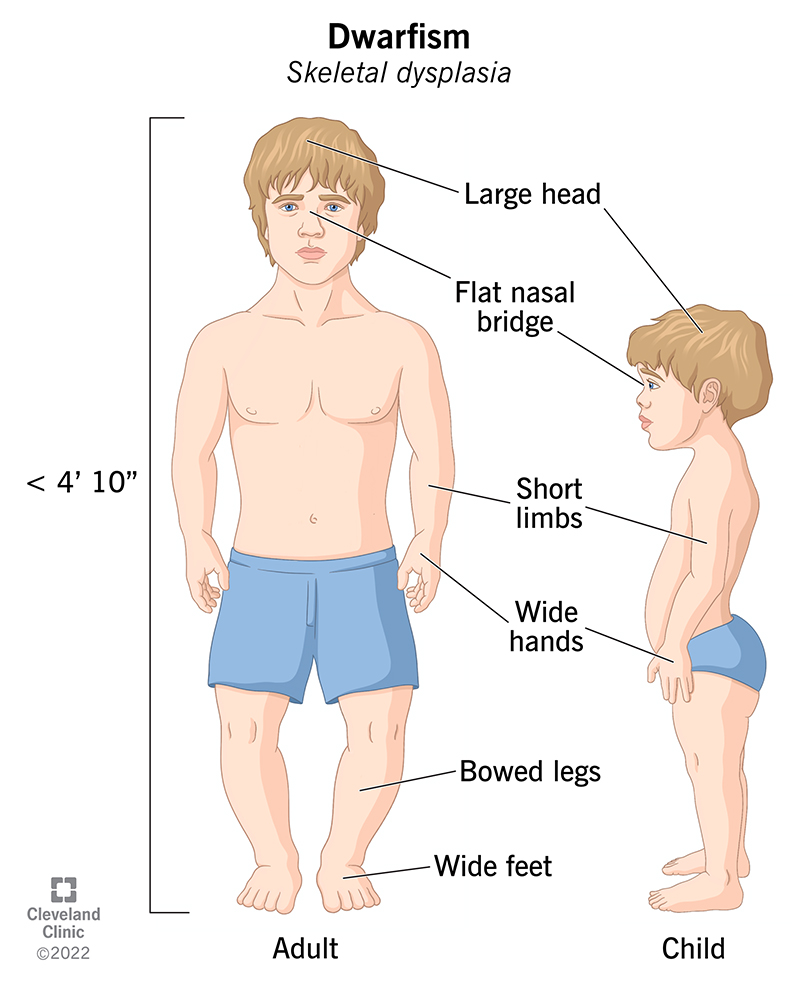
Image content: This image is available to view online.
View image online (https://my.clevelandclinic.org/-/scassets/images/org/health/articles/17862-dwarfism)
Dwarfism is the medical term for having very short stature. In adults, it means having a height of under 4 feet, 10 inches (147 centimeters). Dwarfism isn’t a disease on its own. But there are hundreds of causes, including diseases. Healthcare providers usually diagnose dwarfism in childhood.
Advertisement
Cleveland Clinic is a non-profit academic medical center. Advertising on our site helps support our mission. We do not endorse non-Cleveland Clinic products or services. Policy
Dwarfism is a medical term, but it’s offensive to call someone who has it a dwarf. The preferred terms are little person/little people. Other slang terms like midget are also offensive. Medical experts also use the terms “short stature” and “restricted growth” instead of dwarfism.
Dwarfism has two main forms:
The main effect of dwarfism is having a very short height for your age. Healthcare providers usually diagnose dwarfism in newborns or young children.
Symptoms of dwarfism include differences in the:
Other symptoms or effects can happen, depending on which form of dwarfism you have or why you have it. Your healthcare provider can tell you more about what to expect.
Hundreds of medical conditions can cause short stature and dwarfism. They usually fall under the following types:
Advertisement
Some people have short stature even though they don’t have a disease or condition causing it. While their height meets the definition of dwarfism, their body developed as expected.
Some examples of ways this might happen include:
The complications of dwarfism depend partly on why you have it.
Some conditions that cause dwarfism can also cause a variety of complications, ranging from minor to severe. Some examples of disease-specific complications include:
Other complications may also be possible, depending on your specific case. Your healthcare provider can tell you more about what you might face.
Healthcare providers may first suspect dwarfism based on fetal ultrasound imaging during pregnancy. Some of the differences that happen with dwarfism are visible on those scans.
Advertisement
After birth, providers can start the diagnosis process with a simple physical exam. It’s common for dwarfism to cause body size and structure differences that are visible at birth or shortly after. They’ll likely begin by taking detailed measurements to check for clear differences or issues.
Once your provider suspects dwarfism, they’ll use diagnostic testing to try to find the specific cause. Some examples of tests they will likely use include:
Other tests are possible, depending on your symptoms and health history. Ask your provider if you have questions about the tests they recommend.
Dwarfism has several possible treatments. But they can vary, depending on the type of dwarfism you have or what caused it. Many people with dwarfism don’t need treatment because it isn’t causing them any harm. And some people with dwarfism may not want treatment because they don’t feel the benefits outweigh the possible drawbacks.
For those who do want or need treatment, the following may be options:
Advertisement
What you can expect from dwarfism varies widely. Many with dwarfism live just as long as people without it and have little or no negative health effects. But some with dwarfism have it because of conditions that affect other body systems, and that could impact your life expectancy. Your healthcare provider is the best person to tell you what to expect in your case.
Many countries consider dwarfism a disability. That means people who have it have certain legal protections. And they may also qualify for support services and care.
Your child’s pediatrician will take regular measurements during well visits and checkups. During your child’s first few years of life, they’ll look for any signs of growth delays. But as your child gets older, you might start to notice differences between your child and others their age. If you have questions about your child’s growth, you can call their pediatrician or schedule an appointment. Their pediatrician can check your child’s growth and tell you if there’s any cause for concern. And if they do find an issue, they can guide you on what to do about it.
Dwarfism and short stature are the same thing. They both apply to someone whose height is significantly lower than expected for their age. For adults, that’s having a height of 4 ft, 10 in (147 cm) or less.
Advertisement
Dwarfism and short stature can look very different from person to person. Some people with short stature live lives that are virtually the same as people with average height. Others with dwarfism may face more issues and complications. People with dwarfism also live in a world that isn’t designed for their height. And it’s still common for them to face offensive terms and labels like midget instead of the preferred term, little people.
Healthcare providers often spot signs of dwarfism either before birth or in early childhood. But sometimes, dwarfism’s signs might not appear until later in childhood. If you’re concerned about your child’s growth, talk to their pediatrician. They can check for any issues and offer guidance.



Sign up for our Health Essentials emails for expert guidance on nutrition, fitness, sleep, skin care and more.
Learn more about the Health Library and our editorial process.
Cleveland Clinic’s health articles are based on evidence-backed information and review by medical professionals to ensure accuracy, reliability and up-to-date clinical standards.
Cleveland Clinic’s health articles are based on evidence-backed information and review by medical professionals to ensure accuracy, reliability and up-to-date clinical standards.
Cleveland Clinic’s primary care providers offer lifelong medical care. From sinus infections and high blood pressure to preventive screening, we’re here for you.
