



Cuboid syndrome happens when an ankle sprain or another injury pulls the small cuboid bone in your foot out of alignment. The bone isn’t fully dislocated, but it can cause pain if it doesn’t settle back into its usual place. A healthcare provider will pop the bone back where it belongs with a treatment called physical manipulation.
Advertisement
Cleveland Clinic is a non-profit academic medical center. Advertising on our site helps support our mission. We do not endorse non-Cleveland Clinic products or services. Policy
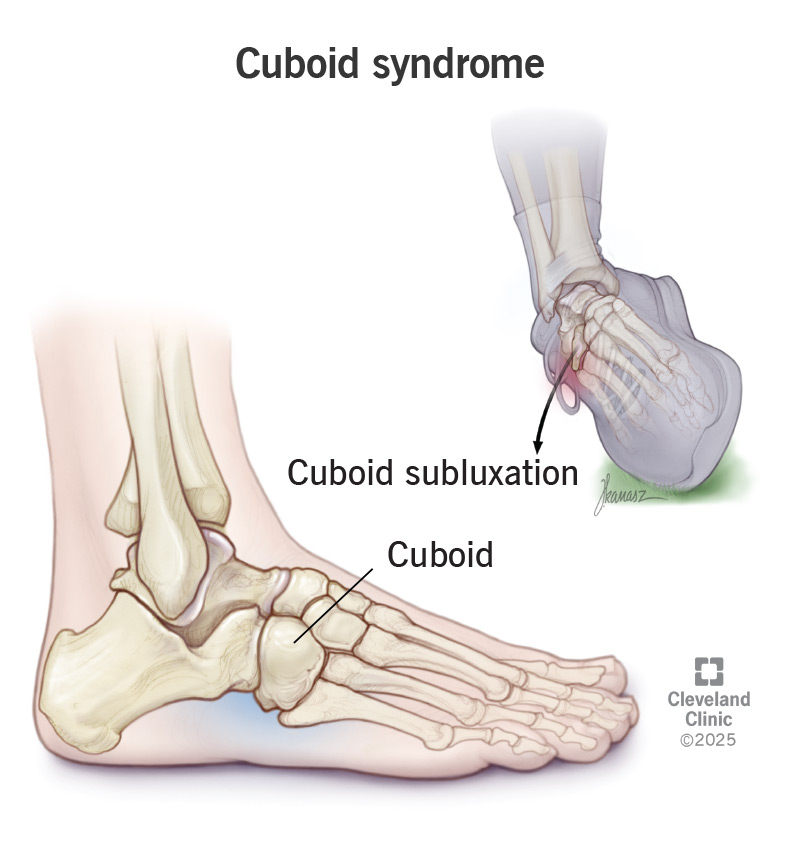
Image content: This image is available to view online.
View image online (https://my.clevelandclinic.org/-/scassets/images/org/health/articles/cuboid-syndrome)
Cuboid syndrome happens when something pushes the cuboid bone in your foot out of alignment and it doesn’t slide back into place correctly.
Advertisement
Cleveland Clinic is a non-profit academic medical center. Advertising on our site helps support our mission. We do not endorse non-Cleveland Clinic products or services. Policy
There are lots of small, complex bones and joints in your feet. They move, shift and flex to help you keep your balance and move. The cuboid is a small bone shaped like a wedge in the middle of your foot. It’s close to the bump on the outside edge of your foot.
The bones in your foot fit together like a 3D puzzle. They shift and flex as you move and use your foot. The cuboid is part of that puzzle. But if something upsets that balance, the cuboid might squeeze out of its usual place.
Healthcare providers call this a cuboid subluxation. It’s the medical name for a partial dislocation. Your bone isn’t completely dislocated, but it’s not aligned correctly inside your foot. That’s what leads to pain and other symptoms.
Pain in the middle of your foot is the main cuboid syndrome symptom. The pain is usually concentrated near your cuboid bone on the outside edge of your foot.
The pain can feel like a sharp pinch or stab, especially when you’re using that foot. Or it may be like a constant, dull ache. It might get better when you rest or take pressure off your feet.
Cuboid syndrome can make it hard to move your foot as far or as comfortably as normal. This is called a limited range of motion.
Ankle sprains and repetitive strain injuries are the most common causes of cuboid syndrome.
Advertisement
Ankle sprains happen when a sudden slip, fall or sports injury puts too much force on ligaments in your ankle. If you sprain ligaments attached to your cuboid bone, the extra force can pull the bone out of place. If it doesn’t slide back into its spot, the sprain can lead to cuboid syndrome.
Repetitive strain injuries cause cuboid syndrome in the same way. But they happen over time instead of all at once. Using your foot for the same motions too often without giving your body time to rest can turn small stress on your ligaments and bones into a larger problem. Running, doing ballet and playing basketball can all cause these kinds of injuries.
If something about the way you work, train or practice puts a lot of pressure on your feet and ankles, it can lead to irritation. That irritation becomes inflammation. There’s not a lot of extra space between the tiny bones in your feet. So, any swelling can push your cuboid out of place and keep it from settling back where it belongs.
A healthcare provider will diagnose cuboid syndrome with a physical exam. They’ll examine your foot and ask about pain or other symptoms you’ve noticed. Tell your provider when you first felt pain, and if any activities or movements make it worse. Let them know what the pain feels like. This can help them understand where it’s coming from and what might be causing it.
Your provider might hold your ankle steady and put your foot into a few different positions. This will help them feel the bones and joints moving. They should be able to notice anything out of place.
Providers can usually diagnose cuboid syndrome based on the symptoms and by feeling your foot. But your provider might order X-rays or other tests to check for broken bones or other damage inside your foot.
Your healthcare provider will treat cuboid syndrome by helping your bone get back to its usual place. They’ll physically press on your foot to push it into alignment. This is called manipulation.
The cuboid whip is the most common treatment. It’s a technique that lets your provider realign your cuboid. You’ll lie face down on an exam table with your knee bent and your lower leg relaxed. Your provider will grip your foot and ankle. They’ll place their thumbs on the bottom of your foot and their fingers around your cuboid. Then, they’ll quickly pull your leg down at an angle while pressing on your cuboid. This will pop the bone back into place. You may even hear or feel it pop when it goes back in.
The cuboid squeeze is another technique. It’s similar to the whip. But your provider will press from the top of your foot with their thumbs. They’ll gently flex your foot and ankle as far as they can go to open space around your cuboid. When they feel the right amount of space, they’ll press the bone back into place from the top.
Advertisement
These procedures can sound jarring to read about. But they’re both quick and safe. Ask your provider any questions you have. They can show you what they’ll do before actually pressing on your bone. You might feel some discomfort. But that will go away as soon as your provider realigns your cuboid.
Never try the cuboid whip or squeeze on yourself. And don’t let anyone other than a trained healthcare provider do them to you. If someone other than an expert tries these procedures, they could make a small injury worse.
Your provider might also suggest following the RICE method. This can help relieve pain and reduce inflammation. You might need other treatments to manage a specific injury. Your provider will tell you what to expect.
Visit a healthcare provider if you have foot pain that doesn’t get better after a few days of rest. See a provider right away if you can’t walk or move your foot.
Your provider will tell you if you’ll need follow-up exams after treating cuboid syndrome. They’ll make sure the bone has stayed in place and that inflammation in your foot improves.
Cuboid syndrome is usually a temporary issue. You should be able to resume your usual activities once the bone is realigned and you don’t have pain or other symptoms.
Advertisement
You may need to tweak your routine if a repetitive strain injury causes cuboid syndrome. Your provider will suggest ways to protect your feet and ankles. It could be as simple as changing the kind of shoes you wear. Or adjusting your posture for certain activities.
Don’t ignore pain in your feet, especially if it’s in the same spot all the time. Everyone has the occasional ache or pain. But you shouldn’t feel constant pain that makes it hard to go through your day. Visit a healthcare provider. They’ll help you understand what caused the cuboid syndrome, and what you’ll need to get back up and on your feet again.
Advertisement



Sign up for our Health Essentials emails for expert guidance on nutrition, fitness, sleep, skin care and more.
Learn more about the Health Library and our editorial process.
Cleveland Clinic’s health articles are based on evidence-backed information and review by medical professionals to ensure accuracy, reliability and up-to-date clinical standards.
Cleveland Clinic’s health articles are based on evidence-backed information and review by medical professionals to ensure accuracy, reliability and up-to-date clinical standards.
An aching foot or heel can bring your favorite activities to a halt. Cleveland Clinic’s foot pain experts are here to help you heal and get back on your feet.
