



Alcohol-related neuropathy is nerve damage from years of heavy drinking and poor nutrition. It can cause pain, numbness, weakness, balance issues and more. Stopping alcohol and getting treatment early may help you recover and prevent worsening symptoms.
Advertisement
Cleveland Clinic is a non-profit academic medical center. Advertising on our site helps support our mission. We do not endorse non-Cleveland Clinic products or services. Policy
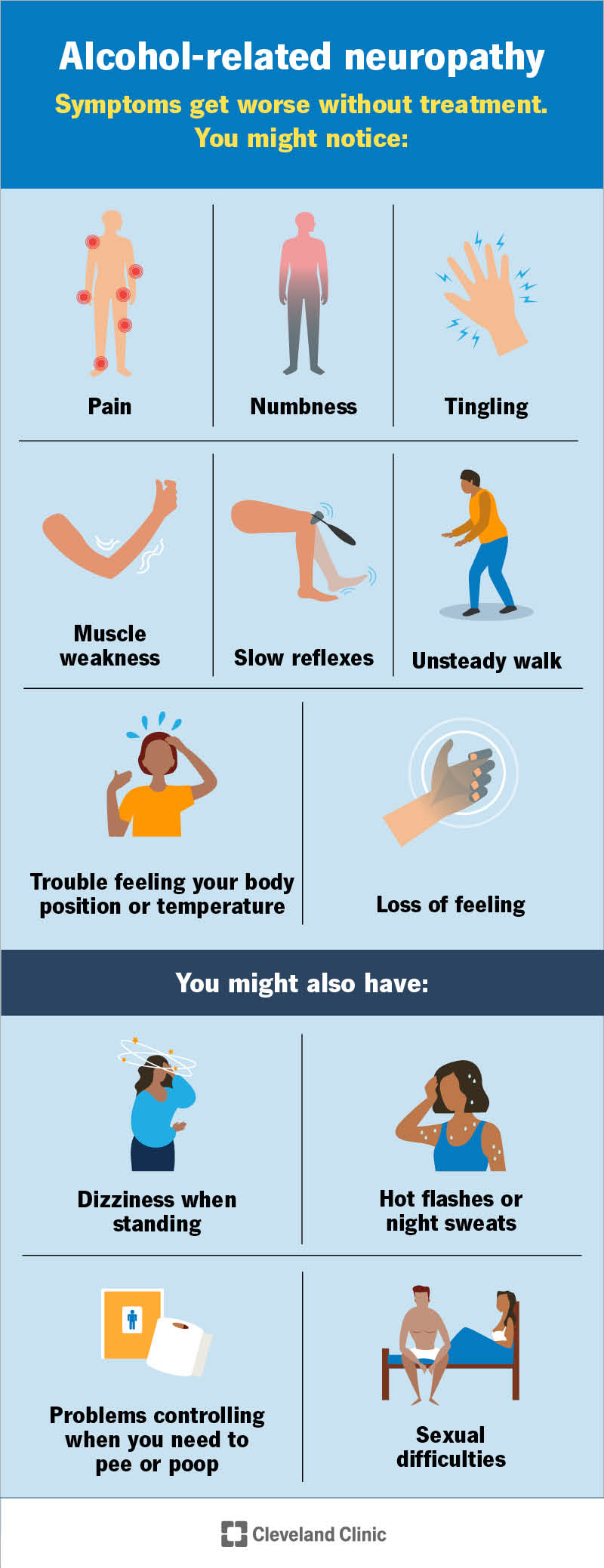
Image content: This image is available to view online.
View image online (https://my.clevelandclinic.org/-/scassets/images/org/health/articles/alcohol-related-neuropathy)
Symptoms may start in your lower legs, but they can affect your arms, too. They progressively get worse without treatment. You might notice:
There isn’t an official staging system for this condition. But symptoms often follow a pattern.
Early on, you might feel pain in your toes or feet. The pain may come and go.
As the condition gets worse, symptoms become more constant. You might feel numbness in your feet or legs. It may feel like you’re wearing socks when you’re not. The pain can move up your legs.
Advertisement
Later on, you could lose all feeling in your legs and feet. It might affect your arms and hands, too. You may have trouble lifting your foot or keeping your balance. Walking can become very hard without help.
Drinking a lot of alcohol over a long time can lead to alcohol-related neuropathy. It’s a complication of alcohol use disorder (AUD).
Two main factors cause this condition:
There isn’t a set amount of time that’s the same for everyone. In most cases, it can take years to decades to develop. But this varies based on the amount of alcohol you drink each day.
Your risk is higher if you have AUD. You may also be more at risk if a biological family member had this condition.
It’s also more common for women to develop symptoms sooner than men. Their symptoms may also be more severe.
This condition can lead to several complications, including:
Getting treatment may reduce your risk of these.
To diagnose this condition, your provider will ask about your health, offer an exam and run tests. They may:
It’s normal to feel nervous when talking about how much alcohol you drink. But your provider isn’t there to judge you. Their job is to help you feel better. Being honest is very important. It helps your provider figure out if you have this condition or something else.
Typically, a provider can make a diagnosis based on a thorough history and examination. Testing may not be necessary. If needed, tests can help your provider rule out other conditions with similar symptoms. They may do:
Treatment focuses on helping you manage alcohol use disorder. Stopping alcohol use safely may reduce symptoms over time.
Advertisement
Because quitting suddenly can cause withdrawal symptoms, your provider may suggest starting with inpatient rehab. This is 24/7 supervised care. After that, you may join an outpatient program. During outpatient treatment, you may have several hours of treatment, but you get to go home at the end of the day.
Behavioral therapy will be a big part of your treatment plan. You’ll meet with a therapist to address the thoughts and behaviors that lead to alcohol use. You’ll also learn practical skills to manage cravings, cope with stress and make healthier choices.
Talk to your provider about which options might work best for your situation.
They may also recommend:
Tell your provider if you notice pain, numbness or tingling in your toes, legs or arms. As part of their exam, they may ask questions about your drinking habits. Being honest about your habits can help them make an accurate diagnosis and get you the right treatment faster. Don’t ignore these symptoms. Addressing them early gives you the best chance to improve your health.
Recovery takes time, and it’s different for each person. Stopping alcohol can be hard and emotional. It may change many parts of your life. But caring for your health and well-being is worth it.
Advertisement
Your provider may suggest treatments that fit your needs and help you stay on track. Recovery isn’t easy. You might relapse, which means drinking again after stopping for a while. This is common with AUD, especially if it’s been part of your life for many years. A relapse isn’t a failure. It’s a setback you can work through.
Having strong support from family, friends or a group can help you get through tough times and keep moving forward.
It depends on how severe the condition is and how long you’ve had symptoms. You might start to notice improvements within a few months. Full recovery can take several years. Mild cases often get better faster than severe ones. Improvement is possible for everyone, but it happens slowly. Don’t lose hope if you don’t see results right away.
Quitting alcohol can stop neuropathy from getting worse. But it doesn’t guarantee the symptoms will go away completely. You may feel much better when you stop drinking and get the missing nutrients your body needs. How much you recover depends on the severity of nerve damage and how long you’ve had it.
Typically, if symptoms have been present for years, then some amount of irreversible nerve damage has taken place. Getting diagnosed and treated early gives you the best chance to get back lost nerve function.
Advertisement
Even though alcohol can numb some symptoms, it’s important to pay attention to the small ones you do feel. A slight tingling in your toes today can turn into bigger problems later. Share these early symptoms with your healthcare provider so you can address them before they get worse.
Changing long-standing habits can feel overwhelming, but each step you take matters. Your care team will work with you to manage alcohol use and improve your nutrition. As your body heals, you may start to feel relief. Progress can be slow, and there may be tough moments, but that’s part of the process.
Every effort you make is moving you forward. Your care team is there to guide you, and you can reach out to them whenever you need extra support.



Sign up for our Health Essentials emails for expert guidance on nutrition, fitness, sleep, skin care and more.
Learn more about the Health Library and our editorial process.
Cleveland Clinic’s health articles are based on evidence-backed information and review by medical professionals to ensure accuracy, reliability and up-to-date clinical standards.
Cleveland Clinic’s health articles are based on evidence-backed information and review by medical professionals to ensure accuracy, reliability and up-to-date clinical standards.
Neuropathy, or nerve pain, can make daily life challenging. We can treat the causes of nerve pain and get you back to living life as pain-free as possible.
