



Acne fulminans is a sudden outbreak of painful nodules that extend deep into your skin. This type of acne can cause scarring. Traditional acne treatments don’t work well. A provider can help you manage it, but it may take several weeks to months before the acne goes away completely.
Advertisement
Cleveland Clinic is a non-profit academic medical center. Advertising on our site helps support our mission. We do not endorse non-Cleveland Clinic products or services. Policy
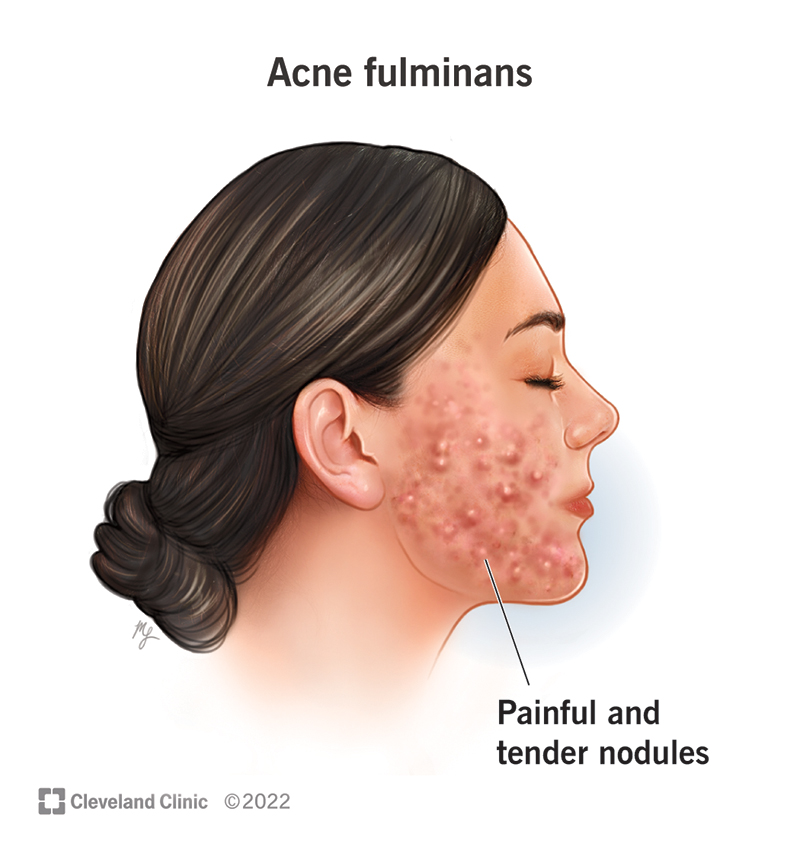
Image content: This image is available to view online.
View image online (https://my.clevelandclinic.org/-/scassets/images/org/health/articles/acne-fulminans)
Acne fulminans is a rare and severe form of acne. It causes a sudden breakout of painful, swollen nodules on your skin. This condition most often affects males between ages 13 and 22 who are going through puberty. It’s linked to high levels of testosterone in your body.
Advertisement
Cleveland Clinic is a non-profit academic medical center. Advertising on our site helps support our mission. We do not endorse non-Cleveland Clinic products or services. Policy
It’s a type of acne conglobata. This is another severe form. Acne conglobata causes deep bumps that join under your skin. These form large cysts. In acne fulminans, the bumps are also deep and painful, but they usually don’t join together.
Acne fulminans can be especially frustrating because typical acne treatments don’t work. Early care is important to limit skin damage, reduce scarring and support your physical and emotional well-being.
You may notice a sudden outbreak of very inflamed acne that’s:
You may also have other symptoms, like:
Acne fulminans most often affects your:
Acne fulminans happens when your immune system reacts too strongly to severe acne.
The tiny openings that hold hair and oil (hair follicles and oil glands) can become very swollen and break open. When this happens, inflammatory acne material spills into your surrounding skin. Even though acne bacteria normally live on your skin, acne fulminans isn’t caused by an infection. Instead, your immune system overreacts to these acne-related substances.
Advertisement
Because the inflammation is so severe, acne can quickly turn into painful open sores that bleed or ooze. Healing can take longer, and without quick treatment, permanent scarring is more likely.
Common triggers of acne fulminans include:
This condition can affect anyone. But certain factors may raise your risk. You might be more likely to develop it if you:
Acne fulminans can lead to serious complications because of how intense and sudden the inflammation is. Common complications may include:
You may need hospital care, especially if you have strong, body-wide symptoms. This allows for close monitoring and faster relief.
A healthcare provider will diagnose this type of acne mainly by looking at your symptoms and asking how quickly they started.
During the visit, your provider will closely examine your skin. They’ll ask about your acne history, including whether your symptoms worsened quickly or didn’t respond to usual treatments.
Next, your provider will check for symptoms that affect the rest of your body. They may ask if you’ve had a fever or any pain. They’ll also look for physical signs that suggest widespread inflammation.
Your provider may order blood and culture tests to check for signs of inflammation or infections in your body. If you have joint pain, imaging tests may look for inflammation.
You don’t treat acne fulminans the same way as regular acne. Your provider may first focus on calming the inflammation, then slowly treating the acne to protect your skin and prevent scarring.
Here’s what your treatment plan might look like:
Advertisement
If you can’t use steroids or isotretinoin or they don’t work well, providers may consider other medicines that reduce inflammation. These may include:
These treatments may help in specific cases. They require close medical supervision.
Gentle cleansing and wound care help protect your healing skin. After the condition improves, providers may recommend treatments to reduce scarring — like prescription creams, laser therapy or other procedures.
Early treatment matters. Starting the right care quickly may help manage symptoms, protect your skin and lower the risk of permanent scars.
See a healthcare provider if you:
Acne fulminans often starts suddenly and can worsen quickly, so it’s important to see a healthcare provider as soon as symptoms don’t improve with usual acne treatments. A provider or dermatologist will guide your care and help manage the inflammation.
Advertisement
Treatment can take several weeks to months before your skin improves. After acne heals, you may notice scarring or changes in skin color, like lighter patches.
Acne can also affect how you feel about yourself. It’s common to feel upset, embarrassed or want to avoid social situations. If these feelings become overwhelming, talking with a mental health professional may help you cope and feel more supported during recovery.
Acne fulminans can feel overwhelming — not just because of the pain or sudden changes to your skin, but because it’s so different from typical acne. It shows up fast, often during an already challenging time in your life (puberty), and doesn’t respond to usual treatments.
Still, with the right care, you can manage the inflammation. Treatment takes time. And some days may feel harder than others. But you don’t have to go through it without support. Your provider can help manage symptoms, reduce scarring and connect you with resources that care for your skin — and your mental health, too.
Advertisement



Sign up for our Health Essentials emails for expert guidance on nutrition, fitness, sleep, skin care and more.
Learn more about the Health Library and our editorial process.
Cleveland Clinic’s health articles are based on evidence-backed information and review by medical professionals to ensure accuracy, reliability and up-to-date clinical standards.
Cleveland Clinic’s health articles are based on evidence-backed information and review by medical professionals to ensure accuracy, reliability and up-to-date clinical standards.