



An accessory navicular bone is an extra bone in your foot that forms by mistake. There are three types. Most never cause issues. But if yours does, you can usually manage pain and other symptoms with conservative treatments like medication, shoe inserts or wearing a walking boot.
Advertisement
Cleveland Clinic is a non-profit academic medical center. Advertising on our site helps support our mission. We do not endorse non-Cleveland Clinic products or services. Policy
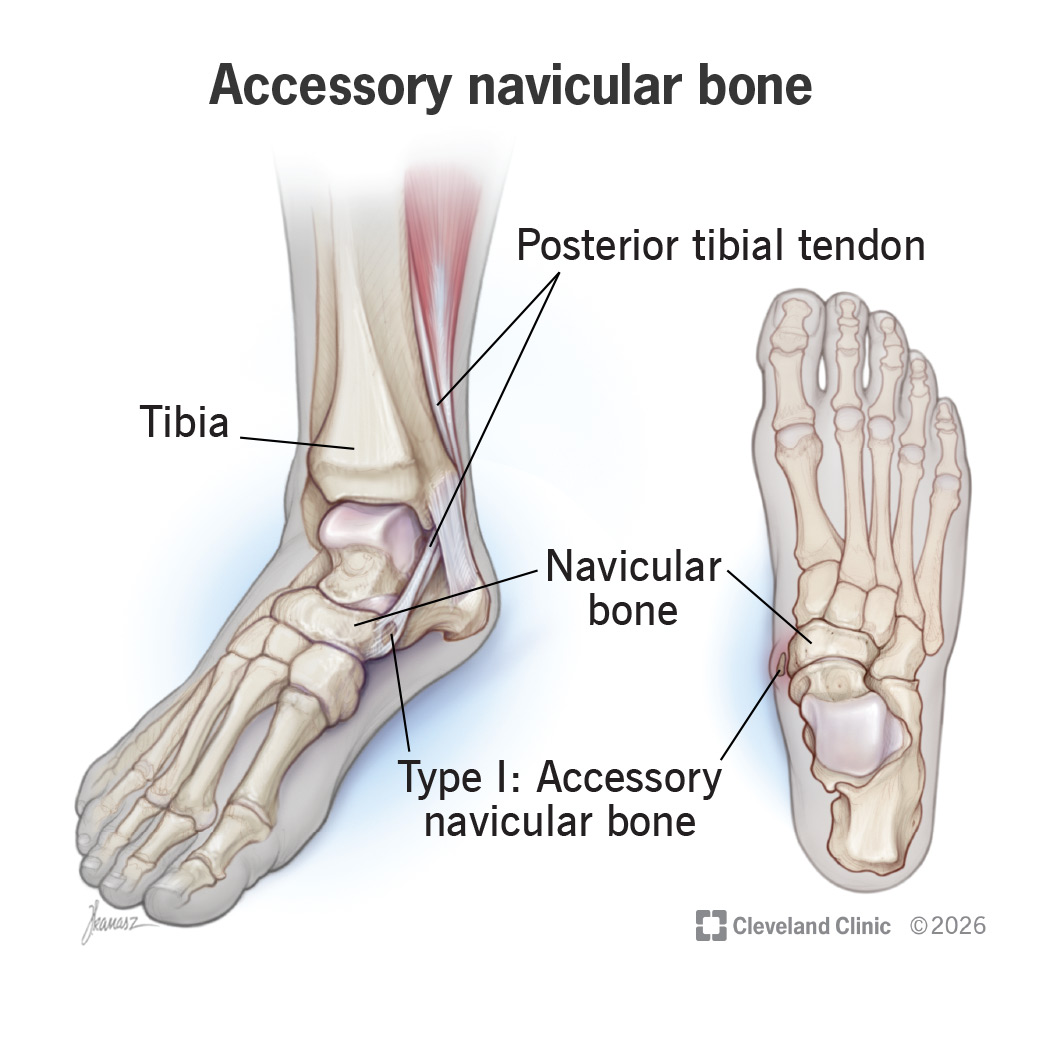
Image content: This image is available to view online.
View image online (https://my.clevelandclinic.org/-/scassets/images/org/health/articles/accessory-navicular-bone)
An accessory navicular is an extra bone that forms in your foot. Healthcare providers sometimes call it by its Latin medical names, os naviculare or os tibiale externum.
Advertisement
Cleveland Clinic is a non-profit academic medical center. Advertising on our site helps support our mission. We do not endorse non-Cleveland Clinic products or services. Policy
Accessory is the medical term for something extra or unnecessary. The navicular bone is a small bone between your ankle and the top of the arch of your foot. So, an accessory navicular bone is an extra bone that grows near your navicular bone.
You might never know you have an accessory navicular. It often doesn’t cause pain or other symptoms. But they sometimes put extra pressure on the tendons or bones around them. This can make your foot hurt and increase your risk of some injuries.
Accessory navicular bones form when your body mistakenly creates an extra bone near your actual navicular bone in the arch of your foot, near your ankle.
All of your bones start as cartilage when you’re a baby. That cartilage hardens into bone tissue as you grow and develop. If your body makes extra cartilage in your foot when you’re developing, it might harden into an accessory navicular.
Accessory naviculars can be genetic. That means if one of your biological parents has one, there’s a chance you will, too.
Healthcare providers classify them into three types based on their size and where they form:
Advertisement
Having an accessory navicular usually won’t cause issues. But if it’s big enough or forms at the wrong angle, it can damage your posterior tibial tendon. Healthcare providers call this accessory navicular syndrome. If it constantly stretches or forces the tendon to move in an unusual way, the tendon can tear (rupture). But this is very rare.
Accessory navicular syndrome symptoms can include:
Accessory navicular syndrome can happen on its own, but you may be more likely to develop it after an injury like a foot or ankle sprain. Overusing your feet and ankles for physical work, sports or physically demanding hobbies can also increase your risk. Wearing shoes that are too tight can put extra pressure on an accessory navicular and lead to pain and other symptoms.
You can develop symptoms at any age. But accessory navicular syndrome usually affects teens. Your body changes quickly during adolescence. And that includes your bones. These rapid changes can increase the odds of issues near an accessory navicular bone.
If you never experience pain or other symptoms, you’ll never need treatment. If you do, a healthcare provider may suggest:
Advertisement
Your feet are very complex. So complex, your body might have added an extra bone when you were developing. That’s what an accessory navicular bone is — an extra growth of cartilage that hardened into bone.
Most people never experience issues from having an accessory bone. But even if you do, the pain and other symptoms are manageable. The occasional ache or pain after a long day is normal. But you don’t have to live in constant pain. Visit a healthcare provider if you’re having foot pain more often than not.
If you have an accessory navicular, your provider can see it on an X-ray and will help you understand what you’ll need to do to feel better.
Advertisement



Sign up for our Health Essentials emails for expert guidance on nutrition, fitness, sleep, skin care and more.
Learn more about the Health Library and our editorial process.
Cleveland Clinic’s health articles are based on evidence-backed information and review by medical professionals to ensure accuracy, reliability and up-to-date clinical standards.
Cleveland Clinic’s health articles are based on evidence-backed information and review by medical professionals to ensure accuracy, reliability and up-to-date clinical standards.