Ear infections (otitis media) happen when bacteria infect fluid that’s trapped behind your child’s eardrum. It can cause unpleasant symptoms, like ear pain that may cause your child to be especially fussy or irritable. Infections usually go away on their own in about three days. Sometimes, children need antibiotics to clear the infection.
Advertisement
Cleveland Clinic is a non-profit academic medical center. Advertising on our site helps support our mission. We do not endorse non-Cleveland Clinic products or services. Policy
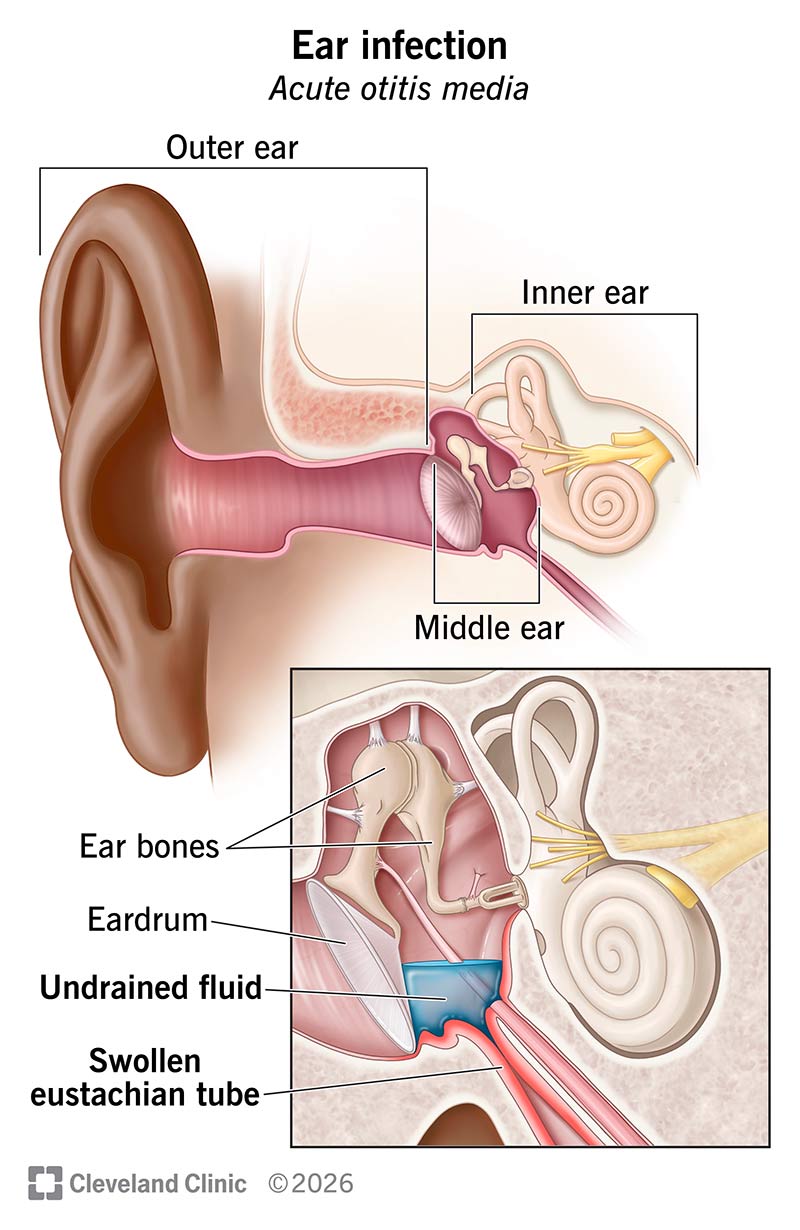
Image content: This image is available to view online.
View image online (https://my.clevelandclinic.org/-/scassets/Images/org/health/articles/ear-infection)
An ear infection, or acute otitis media, is a condition where viruses or bacteria grow in fluid trapped in your middle ear. This is the space just behind your eardrum. It can cause symptoms like ear pain and muffled hearing that can feel miserable while the infection lasts.
Advertisement
Cleveland Clinic is a non-profit academic medical center. Advertising on our site helps support our mission. We do not endorse non-Cleveland Clinic products or services. Policy
Anyone can get an ear infection. But they’re most common in children, especially kids under 2 years old. Their ear anatomy and still-developing immune systems make them especially vulnerable to infections. Pediatricians in the U.S. diagnose about 15 million cases each year.
The good news is that most ear infections go away on their own within a few days. When they don’t, antibiotics often clear things up.
Symptoms often come on suddenly after an upper respiratory infection. They include:
As small children can’t always tell you that their ears hurt, it’s important to recognize the signs. A baby or child may:
Ear infections aren’t contagious, but the germs that cause them are. Many types of bacteria and viruses can lead to ear infections, including ones that cause colds and the flu.
Often, ear infections start after a viral infection, like a cold. They can also be caused by or progress to a bacterial infection. Either way, this leads to infected fluid behind your eardrum in your middle ear space.
Advertisement
The most common bacteria that cause this condition are:
Factors that increase your child’s risk include:
Most ear infections don’t cause long-term issues. But they can become serious if the infection spreads to nearby tissue, like the bone behind your child’s ear. This is called mastoiditis.
Infections can lead to ear drainage from a torn eardrum. Most tears heal on their own within a few weeks or months. But some children need treatment.
Frequent or ongoing ear infections can damage the internal structures in your child’s ear. This can lead to hearing loss. This is always concerning. But it’s especially worrisome if your child loses hearing function when they’re learning to talk. It can delay their speech development.
Prompt treatment can prevent these worst-case scenarios from happening.
Most healthcare providers diagnose ear infections based on symptoms and an ear exam. For the exam, your child’s provider will use a lighted instrument called an otoscope to view their eardrum. A swollen eardrum is a sign of an ear infection.
They may also use tests that:
Your child may need a hearing test to check for hearing loss. This is more common in children with long-lasting or frequent ear infections.
Ear infections often get better without treatment, usually within three days. Your child’s healthcare provider may observe their condition to see if it improves before prescribing treatments. They may give you a prescription for antibiotics to take home and fill just in case your child doesn’t get better.
Antibiotics are the most common treatment. Your child is more likely to need them if their body has a hard time fighting the infection on its own. The American Academy of Pediatrics provides guidelines on when a child should receive antibiotics and when it’s best to observe. Pediatricians often recommend antibiotics for:
Advertisement
Your pediatrician knows the specifics about your child’s health best and can advise you on when they need medicine.
It’s important that your child keeps taking their meds as prescribed, even if they start to feel better. Otherwise, the infection can come back. Usually, they’ll need to be on antibiotics for about a week.
Over-the-counter medicine, like acetaminophen (Tylenol®) or ibuprofen (Advil®, Motrin®), can help ease your child’s pain and reduce their fever while the infection clears. Their provider may prescribe pain-relieving ear drops as long as there are no tears in your child’s eardrum.
If your child is younger than 2 years old, call their provider before giving acetaminophen.
Never give aspirin to children under 16 unless their healthcare provider says it’s OK. Aspirin can cause a life-threatening condition called Reye’s syndrome in children.
Advertisement
Your child may need ear tubes if they get frequent ear infections or have hearing loss related to fluid buildup. An otolaryngologist specialist (ear, nose and throat, ENT) places the tubes during a tympanostomy. During this short procedure, the provider inserts tubes into your child’s eardrum. This allows fluid to drain.
The tube usually stays in place for 12 to 18 months. It may fall out on its own, or your child may need surgery to remove it. Once the tubes are gone, the hole in your child’s eardrum will heal and close.
Call your pediatrician immediately if your child:
If your child is taking an antibiotic, let their provider know if they have ear pain that doesn’t improve after three days. And contact them if the fever goes away but then comes back after two days (48 hours) of starting an antibiotic.
Yes, most infections go away on their own in about three days (72 hours). This is why your healthcare provider may wait before prescribing medications like antibiotics. This can spare your child from having antibiotic side effects, like an upset tummy. In the meantime, pain relievers can help with symptoms like ear pain.
Advertisement
Depending on your child’s age and symptoms, they may need antibiotics or ear tubes. Follow your healthcare provider’s guidance about caring for your child.
You can’t prevent all ear infections. But you can greatly reduce your child’s risk if you:
Swimming is OK if your child doesn’t have a tear in their eardrum or drainage from their ear.
Air travel or a trip to the mountains is safe. But you may feel temporary pain during takeoff and landing. Swallowing fluids or chewing gum during descent can help with the pain. If your small child has an ear infection, have them suck on a pacifier to relieve discomfort during air travel.
The causes are the same in children and adults. Otitis media happens when bacteria infect fluid that gets trapped behind your eardrum.
In children, this happens more often because their immune systems aren’t as good at fighting off germs. Also, their eustachian tubes (the canals behind their ears that drain fluid) don’t function as well as in adults. This can make it easier for fluid to collect. And as most parents know, kids share germs and colds all the time.
But adults can still get ear infections. This is especially the case if your eustachian tubes are blocked. Your risk is greater if you have a weak immune system. This can happen because of a condition, procedure or even medicine you take.
Contact your pediatrician if your child shows signs of an ear infection (otitis media) and their condition doesn’t improve within two to three days. Often, ear infections get better without treatment. But depending on your child’s age and symptoms, they may need antibiotics. In the meantime, your child’s healthcare provider can recommend pain relievers for your child as their body works through the illness.



Sign up for our Health Essentials emails for expert guidance on nutrition, fitness, sleep, skin care and more.
Learn more about the Health Library and our editorial process.
Cleveland Clinic’s health articles are based on evidence-backed information and review by medical professionals to ensure accuracy, reliability and up-to-date clinical standards.
Cleveland Clinic’s health articles are based on evidence-backed information and review by medical professionals to ensure accuracy, reliability and up-to-date clinical standards.
Need care fast? Cleveland Clinic’s Express Care and Urgent Care locations treat everything from sprains to sinus infections — no appointment needed.