Burning mouth syndrome (BMS) is a painful condition that affects your tongue, lips and other areas inside your mouth. There isn’t a cure for BMS that happens for no obvious reason. But there are treatments to help manage its symptoms. Certain medical issues may cause it. In that case, treating the issue often makes BMS go away.
Advertisement
Cleveland Clinic is a non-profit academic medical center. Advertising on our site helps support our mission. We do not endorse non-Cleveland Clinic products or services. Policy
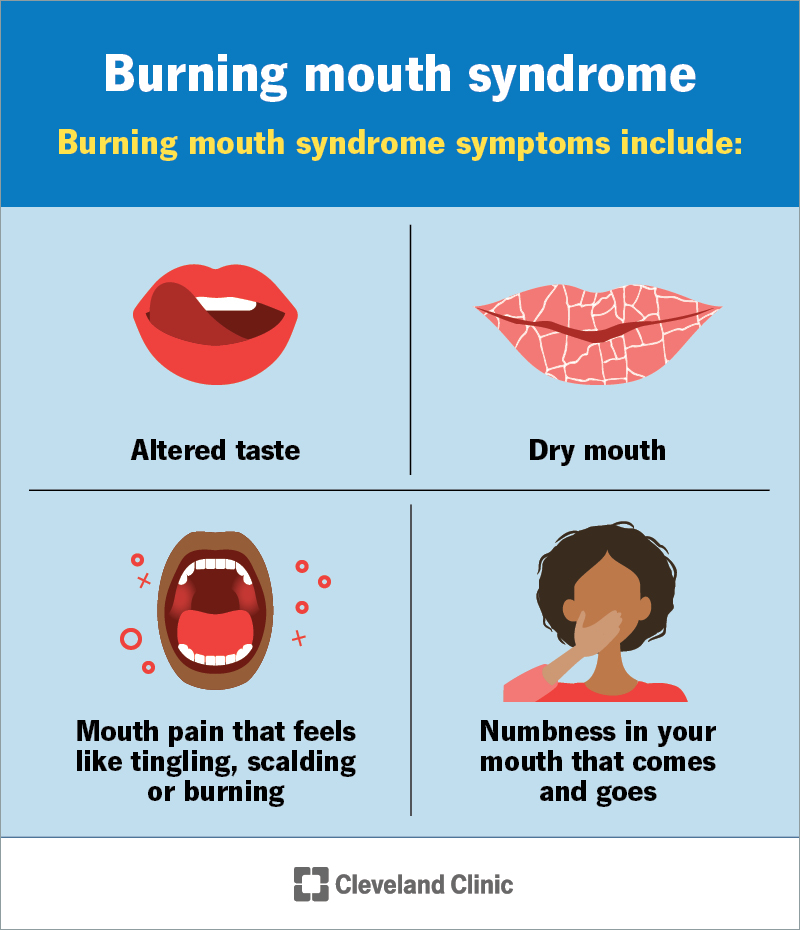
Image content: This image is available to view online.
View image online (https://my.clevelandclinic.org/-/scassets/Images/org/health/articles/burning-mouth-syndrome)
Burning mouth syndrome (BMS) causes mouth pain that causes burning, tingling or scalding sensations. The syndrome can affect any part of your mouth and throat, but it typically causes pain in your tongue, the roof of your mouth or your lips. You may have a bitter or metallic taste in your mouth.
Advertisement
Cleveland Clinic is a non-profit academic medical center. Advertising on our site helps support our mission. We do not endorse non-Cleveland Clinic products or services. Policy
This condition is rare. The American Academy of Oral Medicine estimates it affects about 2 out of 100 people in the U.S. It’s more common in women.
Treatment will vary. For example, a medical condition may make your mouth burn. In that case, treating it may cure burning mouth syndrome or make your symptoms less noticeable. But in some cases, there’s no obvious cause and no cure. But, again, some treatments can make the burning sensation less noticeable.
There are two types of this condition:
This condition causes painful burning, scalding or tingling sensations in different parts of our mouth. Other symptoms are:
You may have symptoms at different times of the day or night. For example, you may:
Nerve damage that affects the parts of your tongue that control taste and pain may cause primary burning mouth syndrome. Researchers continue to look for specific issues that may cause nerve damage in your mouth. Some research indicates factors like stress or hormonal changes may trigger this type of the condition.
Advertisement
There are clearer causes for secondary BMS, including certain underlying medical conditions or medications. Medical conditions that can cause or increase your risk for secondary BMS include:
This condition can affect your quality of life. The burning sensation and pain can make eating and drinking difficult. The sensation can keep you awake at night and make you feel anxious and stressed during the day. Some people develop mental health issues, like depression.
If you have symptoms, see a dentist first. They’ll look at your mouth and tongue. While burning mouth syndrome doesn’t cause obvious symptoms like a bump, your dentist may check for issues like grinding your teeth that can cause secondary BMS.
Your dentist may refer you to specialists for tests to check for underlying conditions. You may have:
Treatment may help with symptoms, but there’s no cure. Your treatment will depend on whether you have primary or secondary BMS. For example, if vitamin deficiencies cause secondary BMS, taking supplements may help. If grinding your teeth causes it, your dentist can make a custom mouth guard. The mouth guard protects your teeth and reduces inflammation in your mouth.
If you have primary BMS, there are treatments that can help manage pain and make the burning sensation less noticeable. Your provider may prescribe:
Advertisement
They may recommend support and medication to help you manage the mental health issues that living with this condition may cause. Some possible treatments include:
Burning mouth syndrome treatments may take time to be effective. If you have primary BMS, you and your healthcare provider may need to try different treatments to find the ones that work best. In the meantime, try:
And it’s a good idea to avoid things that may irritate your mouth and boost the burning sensation in your mouth. Examples include:
Advertisement
Without treatment, burning mouth syndrome can last for months or even years. That can be a long time to live with mouth pain. BMS treatment can provide relief within days or weeks. Talk to your healthcare provider about your specific treatment and when you can expect to feel better.
You should contact a provider if there’s a burning sensation in your mouth that:
There’s no cure for primary burning mouth syndrome. But there are treatments and other ways to manage your symptoms. The situation is different for BMS that happens when you have issues like GERD or an oral infection. Treating the underlying condition may cure it.
When your mouth feels like it’s on fire, it can be hard to think about anything else. Burning mouth syndrome (BMS) can happen for no obvious reason or because you have a condition that leads to BMS. Either way, having BMS can be upsetting and stressful. Fortunately, there are treatments that can help. Talk to a dentist if your mouth burns for no reason or the burning sensation doesn’t go away.
Advertisement



Sign up for our Health Essentials emails for expert guidance on nutrition, fitness, sleep, skin care and more.
Learn more about the Health Library and our editorial process.
Cleveland Clinic’s health articles are based on evidence-backed information and review by medical professionals to ensure accuracy, reliability and up-to-date clinical standards.
Cleveland Clinic’s health articles are based on evidence-backed information and review by medical professionals to ensure accuracy, reliability and up-to-date clinical standards.
If you have conditions affecting your ears, nose and throat, you want experts you can trust. Cleveland Clinic’s otolaryngology specialists can help.