



A traumatic brain injury (TBI) happens when a hit to the head or an object injures your brain. They range from mild to severe and may affect your thinking, movement or emotions. It can cause headaches, confusion or memory loss. Treatment options are available to help you recover.
Advertisement
Cleveland Clinic is a non-profit academic medical center. Advertising on our site helps support our mission. We do not endorse non-Cleveland Clinic products or services. Policy
A traumatic brain injury (TBI) happens when an outside force damages your brain and affects how it works. This can occur after a fall, a hard hit to your head, a vehicle accident or when something goes through your skull.
Advertisement
Cleveland Clinic is a non-profit academic medical center. Advertising on our site helps support our mission. We do not endorse non-Cleveland Clinic products or services. Policy
Symptoms can affect your body, thinking and emotions. You may have headaches, confusion, short-term memory loss, and mood or behavior changes. TBIs may be life-threatening. They can cause short-term or long-term health problems that affect many parts of your daily life.
Treatment is available and depends on how serious the injury is.
There are two types:
Healthcare providers classify traumatic brain injuries as being mild, moderate or severe. They may use the term “concussion” when talking about mild TBI. Providers typically group moderate and severe TBIs together.
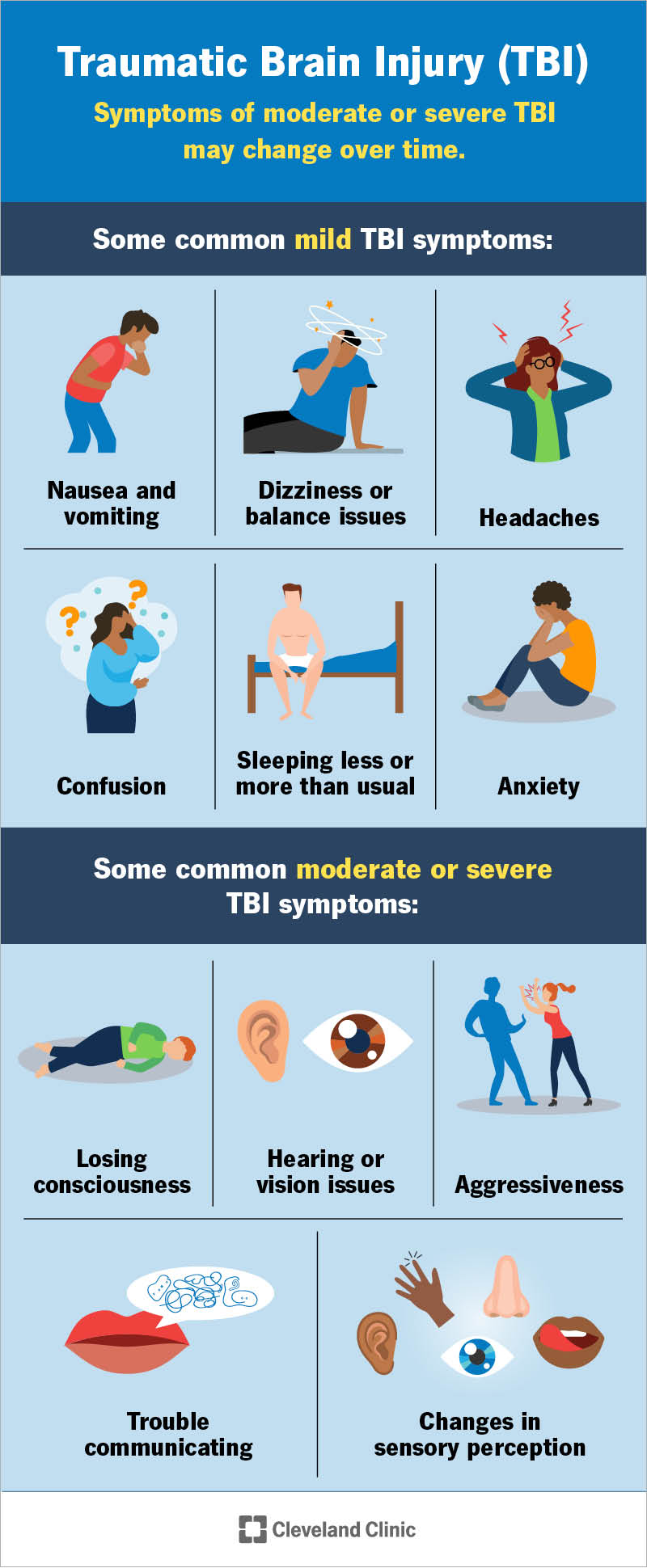
Image content: This image is available to view online.
View image online (https://my.clevelandclinic.org/-/scassets/images/org/health/articles/8874-traumatic-brain-injury)
Symptoms vary depending on the severity. Any TBI can cause physical symptoms, problems with thinking or memory, and social or emotional changes.
Advertisement
Mild TBI symptoms can appear right away or develop over days. You may not always connect your symptoms to the injury. Symptoms can also change as your brain heals.
Physical problems may include:
Thinking or memory symptoms may include:
Social or emotional changes may include:
Sleep changes may include:
These symptoms can be more serious and may also change over time.
Physical symptoms may include:
Thinking or memory problems may include:
Social or emotional symptoms may include:
Children and adults often have similar symptoms. But babies may show different signs. TBI signs in babies may include:
Brain damage causes a TBI. A hard hit to the head can make your brain move, bounce or twist inside your skull. This movement can injure brain tissue and blood vessels. A foreign object entering your skull can also cause damage.
Common causes of a penetrating TBI may include:
Common causes of non-penetrating TBIs may include:
Mild, moderate and severe TBIs can lead to different complications.
If you have a mild TBI and don’t give your brain time to heal, you have a higher risk of second-impact syndrome. This is a life-threatening condition where your brain suddenly swells after a second injury.
Moderate or severe TBIs can cause long-term problems, like:
If you have a mild TBI, a healthcare provider will examine you and ask about your symptoms. They’ll also want to know how the injury happened. They may order:
Advertisement
If you have a moderate or severe TBI, your provider will likely do blood tests and a CT scan right away. These help them decide on the immediate care you need.
Treatment depends on whether the TBI is mild, moderate or severe. Your specific care plan will vary based on your symptoms and overall health.
If you have a mild traumatic brain injury, healthcare providers may recommend:
Your provider will let you know how often check-ups should be.
A moderate or severe traumatic brain injury is a medical emergency. Healthcare providers may need to do surgery to:
Providers may prescribe medications, including:
After surgery, you may need rehabilitation. This helps you recover daily skills and manage thinking, communication or emotional changes. Rehabilitation may include:
Advertisement
If you have a TBI, get help right away if you have:
Recovery looks different for everyone. All traumatic brain injuries can create challenges, and some may lead to long-lasting effects. Your provider can explain what to expect based on your specific injury.
A traumatic brain injury (TBI) can change everything in an instant — whether it’s from a fall, a crash or a blow to the head. Some symptoms might show up right away, while others may slowly surface days or even weeks later. That unpredictability can feel scary, especially when it affects your memory, emotions or ability to think clearly.
What’s important to know is that even mild TBIs deserve attention. Giving your brain the time and care it needs to heal is key. And for more serious injuries, the right treatment and therapy can support your recovery over time. If you’re unsure whether symptoms are related to a TBI, trust your intuition and reach out to a provider.
Healing from a brain injury is a process, and it often takes patience, care and the right team around you.
Advertisement



Sign up for our Health Essentials emails for expert guidance on nutrition, fitness, sleep, skin care and more.
Learn more about the Health Library and our editorial process.
Cleveland Clinic’s health articles are based on evidence-backed information and review by medical professionals to ensure accuracy, reliability and up-to-date clinical standards.
Cleveland Clinic’s health articles are based on evidence-backed information and review by medical professionals to ensure accuracy, reliability and up-to-date clinical standards.
Traumatic brain injuries can be serious or life-threatening. Cleveland Clinic’s experts provide fast treatment to give you the best chance of recovery.
