



Abusive head trauma, formerly known as shaken baby syndrome, is a type of child abuse. It’s never OK to shake a baby. It can cause severe, permanent and life-threatening injuries. It’s completely preventable when you manage your emotions and reactions, and when you’re cautious about who you trust to care for your baby.
Advertisement
Cleveland Clinic is a non-profit academic medical center. Advertising on our site helps support our mission. We do not endorse non-Cleveland Clinic products or services. Policy
Abusive head trauma (AHT) refers to head and brain injuries that babies and toddlers can develop if someone shakes them forcefully or violently. It can cause brain bruising, swelling or bleeding, plus eye and spine injuries. Shaken baby syndrome (SBS) is a better-known — but outdated — name for this condition.
Advertisement
Cleveland Clinic is a non-profit academic medical center. Advertising on our site helps support our mission. We do not endorse non-Cleveland Clinic products or services. Policy
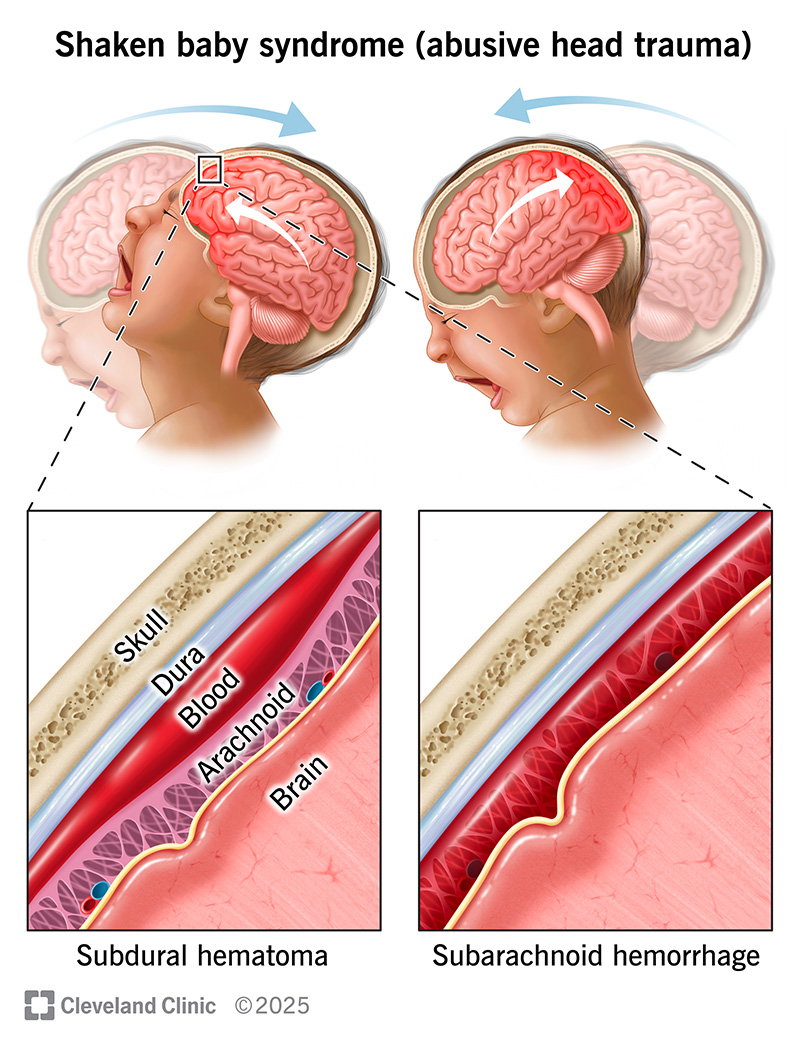
Image content: This image is available to view online.
View image online (https://my.clevelandclinic.org/-/scassets/images/org/health/articles/13779-shaken-baby-syndrome.jpg)
Abusive head trauma can cause symptoms like:
Abusive head trauma happens because babies’ and younger kids’ brains can’t handle the strain from someone shaking them. That’s why it usually happens to children under 2 years old (though it can happen up to age 5).
Infants’ heads are large compared to their body size. And their weaker neck muscles can’t handle a lot of stress from movement. This can also happen from being struck, or if you throw or drop them on purpose.
There are a few main ways the most severe injuries from abusive head trauma happen:
Advertisement
Abusive head trauma is most likely to happen when a child’s caregiver feels frustrated, angry or overwhelmed with an infant who won’t stop crying. They might shake the baby, thinking it will stop the crying or because they lose control of their emotions. But even just a few seconds of shaking can cause devastating injuries.
Crying is normal for babies because that’s the only way they can tell you they need something. AHT is more likely to happen to babies during the purple crying period, which happens within the first several months of life. That’s when babies cry the most.
Abusive head trauma can also happen if a caregiver doesn’t know that shaking a baby is dangerous. But this isn’t common.
It is NEVER safe or OK to shake, hit or throw a baby.
AHT can cause several severe complications. Many of them are permanent. They include:
Abusive head trauma is often fatal. It’s the top cause of abuse-related deaths in children.
Healthcare providers use several tools to diagnose AHT. They’ll check your baby’s eyes for bleeding and look for any other signs of injury on their body, especially their head, neck and chest.
But diagnosing abusive head trauma is still difficult in some cases. That’s because:
Tests used to diagnose AHT are for finding how severe injuries are or ruling out other conditions. Checking for other conditions is important to avoid mistakenly suspecting child abuse.
Imaging tests are the main way to diagnose abusive head trauma. They include:
Healthcare providers may also use X-rays or a bone scan to look for evidence of other injuries, past or present.
Non-imaging tests can include:
Abusive head trauma is an emergency and needs immediate medical care. Children with milder cases may need to stay in the hospital for observation and treatment.
Advertisement
In severe cases, life-saving treatments are necessary. They include having a breathing tube inserted, surgery to relieve pressure on the brain and medicines to manage effects like seizures. Other treatments can vary depending on the case. Your healthcare provider is the best source of information about treatments.
Abusive head trauma is a very serious condition. The outlook (prognosis) for it depends on many factors, especially how severe any injuries are. But in general, the outlook is usually not good. About 1 in 4 children die from AHT. Most of those who survive will have lifelong complications. Your child’s healthcare provider can tell you more about what to expect.
Abusive head trauma is 100% preventable. The ways to prevent it generally revolve around:
When your baby starts crying, first confirm that they’re OK and there isn’t a reason to call their pediatrician. Make sure their diaper is clean, they’ve eaten and that they don’t have any illness symptoms, like a fever. Also, make sure their surroundings are clear of anything that might cause pain or discomfort (like whether they’re warm enough or too warm).
Advertisement
Once you’ve checked all those, you can encourage self-soothing techniques. You can also try things like the cry-it-out method of sleep training.
Having a newborn is often exhausting. And when you’re tired, it can be harder to control your reactions. That’s why it’s important not to try to tough it out until you’re hanging by a thread. Taking action earlier can help you cope better.
Some things you can try include:
Advertisement
Preparing ahead can help you protect your baby even when they’re with others. Some things you can do include:
It’s important to start planning for this sooner rather than later. Taking your time when choosing who cares for your baby can make a huge difference.
Abusive head trauma can go unnoticed in some cases. That’s possible when there aren’t any visible signs of an injury. It can also happen when providers misinterpret symptoms like vomiting or irritability as coming from another condition, like a virus.
No, bouncing a baby gently on your knee won’t cause abusive head trauma.
Other things that won’t cause abusive head trauma include:
Babies can’t help crying. It’s their only way to communicate. Sometimes, they cry for reasons nobody can help. And caring for a crying, inconsolable baby may feel overwhelming or frustrating. But it’s never OK to take those feelings out on a child.
If you want to take good care of your little one, you have to take care of yourself, too. Don’t wait to ask for resources and help. Planning ahead and being proactive can help both you and your baby. Asking for help and caring for yourself don’t make you a bad caregiver. They make you a good one.



Sign up for our Health Essentials emails for expert guidance on nutrition, fitness, sleep, skin care and more.
Learn more about the Health Library and our editorial process.
Cleveland Clinic’s health articles are based on evidence-backed information and review by medical professionals to ensure accuracy, reliability and up-to-date clinical standards.
Cleveland Clinic’s health articles are based on evidence-backed information and review by medical professionals to ensure accuracy, reliability and up-to-date clinical standards.
Whether you need stitches, a broken bone set or think your appendix might be causing your abdominal pain, Cleveland Clinic’s emergency medicine team is here to help.
