



ADHD medication treats the symptoms of attention-deficit/hyperactivity disorder (ADHD), such as hyperactivity and impulsivity. ADHD medications work by increasing the levels of chemicals (neurotransmitters) in your brain. It can take time to find the right ADHD medication for you, but once you do, you’ll likely see an improvement in your symptoms.
Advertisement
Cleveland Clinic is a non-profit academic medical center. Advertising on our site helps support our mission. We do not endorse non-Cleveland Clinic products or services. Policy
For many people, putting on eyeglasses helps them focus their eyes. In the same way, ADHD medication helps people with ADHD focus their thoughts. The medications help them ignore distractions, pay attention and control their behavior. Medication doesn’t cure ADHD. But it can help ease the symptoms of ADHD while you or your child is taking it so you can function more effectively.
Advertisement
Cleveland Clinic is a non-profit academic medical center. Advertising on our site helps support our mission. We do not endorse non-Cleveland Clinic products or services. Policy
The U.S. Food and Drug Administration (FDA) has approved several different kinds of medications to treat ADHD. Many of the medications can treat ADHD in children as young as 6.
Attention-deficit/hyperactivity disorder (ADHD) is a very common neurodevelopment disorder. Children with the disorder may be overly active and have trouble with impulsive behaviors. They may also find it difficult to pay attention, follow instructions and complete tasks.
When symptoms of ADHD occur during childhood, they frequently continue into adulthood. One study suggested ADHD symptoms carried into adulthood in 90% of cases. In addition, some adults with ADHD haven’t ever been diagnosed.
Adults with ADHD may have trouble following directions, remembering information, concentrating or organizing tasks. Symptoms may look different for adults than they do for children. For instance, hyperactivity in children may appear as extreme restlessness in adults.
ADHD medications work in different ways depending on the type. But all ADHD medications work by increasing the levels of important chemicals (neurotransmitters) in your brain. These neurotransmitters include dopamine and norepinephrine. Increasing the amount of these neurotransmitters helps improve the symptoms of ADHD, including:
Advertisement
ADHD medications affect each person differently. What works for one person may not be effective for you or your child. And the first ADHD medication you or your child tries may not be the right one. It may not be effective, or it may cause bothersome side effects. Or you may have the correct medication but need a higher dose.
Make sure to tell your provider about all of the medications you or your child takes, whether prescribed or over-the-counter. Also, tell your provider if you consume any caffeinated drinks or take any supplements (and the amount per day). Combining certain medications can have a harmful effect on the body.
Your healthcare provider may need to try different medications and doses to find what works for you or your child. Your provider will observe you or your child and adjust the dose of the medication to find the right balance between the benefits and side effects.
Once you find the right medication and dose, most people find ADHD medication helps their symptoms. The symptoms involved with hyperactivity, attention span and impulsive behaviors improve.
ADHD medications include stimulants and non-stimulants. Healthcare providers often prescribe antidepressants, as well.
Stimulants are the most common type of prescription medication healthcare providers use to treat ADHD. Despite their name, stimulants don’t work by increasing your stimulation. Rather, they work by increasing levels of certain chemicals (neurotransmitters) in your brain called dopamine and norepinephrine. These neurotransmitters play important roles in your ability to pay attention, think and stay motivated. Studies have shown that approximately 80% of children with ADHD have fewer symptoms after finding the correct stimulant medication and dosage.
Stimulants are considered controlled substances, which means they have the potential to be improperly used or cause substance use disorders. However, under the care and supervision of your provider, stimulant medication use is safe. Before they prescribe you a stimulant, your provider may order an electrocardiogram (EKG) screening to avoid complications from a previously undetected heart rhythm issue.
In the United States, some states have laws that tightly restrict the quantity of stimulant medications that you can receive at one time. For example, you may not be able to get more than a 30-day supply before requesting a refill.
There are two forms of stimulants:
Advertisement
Many people supplement an extended-release medication taken in the morning with an immediate-release dose taken in the mid to late afternoon. This extra dose may help cover the late afternoon to evening hours after the earlier dose starts to wear off.
Most stimulants fall into one of two drug classes: methylphenidates or amphetamines. Drug classifications group medications together by their similarities, such as active ingredients or approved use.
Advertisement
Non-stimulants are prescription medications, but they’re not controlled substances like stimulants. That means you’re less likely to improperly use or become dependent on them. They work by increasing the levels of norepinephrine in your brain.
Non-stimulant medications for ADHD take longer to start working than stimulants. You may not feel the full effects of these medications until you’ve been taking them regularly for three to four weeks. However, these medications can also help you improve your attention, focus and impulsivity. They can work for up to 24 hours.
Your healthcare provider may prescribe a non-stimulant for various reasons, including:
There aren’t as many non-stimulants currently available for treating ADHD. These drugs are primarily norepinephrine reuptake inhibitors or alpha-2 adrenergic agonists.
The FDA hasn’t specifically approved antidepressants for the treatment of ADHD. However, healthcare providers sometimes prescribe them alone or in combination with a stimulant for the treatment of ADHD. The antidepressants providers typically prescribe for ADHD work on the dopamine and norepinephrine levels in your brain. The most common drug classes are norepinephrine-dopamine reuptake inhibitors and tricyclics.
Advertisement
Antidepressants that only work on the serotonin levels in your brain, called selective serotonin reuptake inhibitors (SSRIs), haven’t been shown to be effective for treating the main symptoms of ADHD. But they can be helpful in combination with stimulants if you also have a mental health condition such as depression or an anxiety disorder.
The following list contains the names of ADHD medications approved by the FDA. The chart shows the type, class, generic name, brand name and duration of each stimulant ADHD medication.
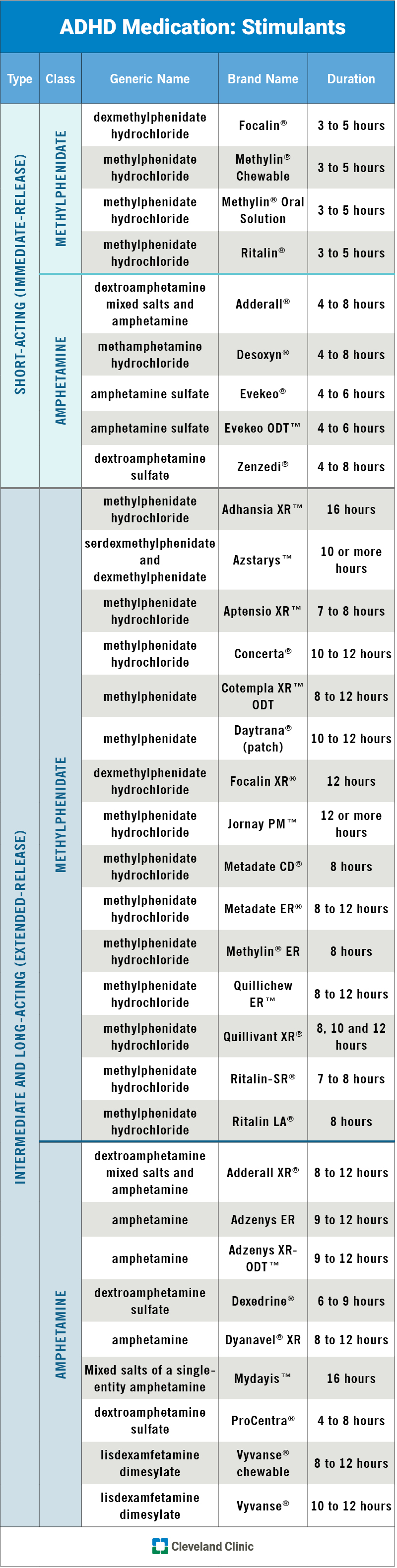
Image content: This image is available to view online.
View image online (https://my.clevelandclinic.org/-/scassets/images/org/health/articles/11766-ADHD-medication-stimulants.jpg)
The chart below shows the class, generic name, brand name and duration of each FDA-approved non-stimulant ADHD medication.
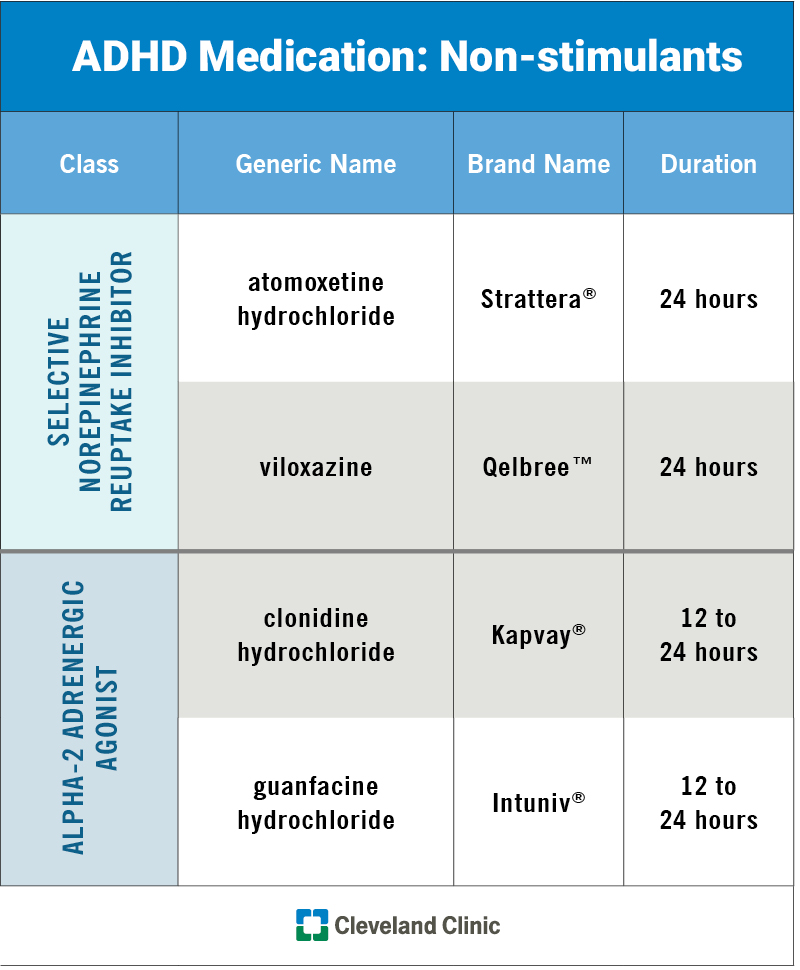
Image content: This image is available to view online.
View image online (https://my.clevelandclinic.org/-/scassets/images/org/health/articles/11766-ADHD-medication-non-stimulants.jpg)
The chart below shows the class, generic name, brand name and duration of certain antidepressants that may help treat ADHD.
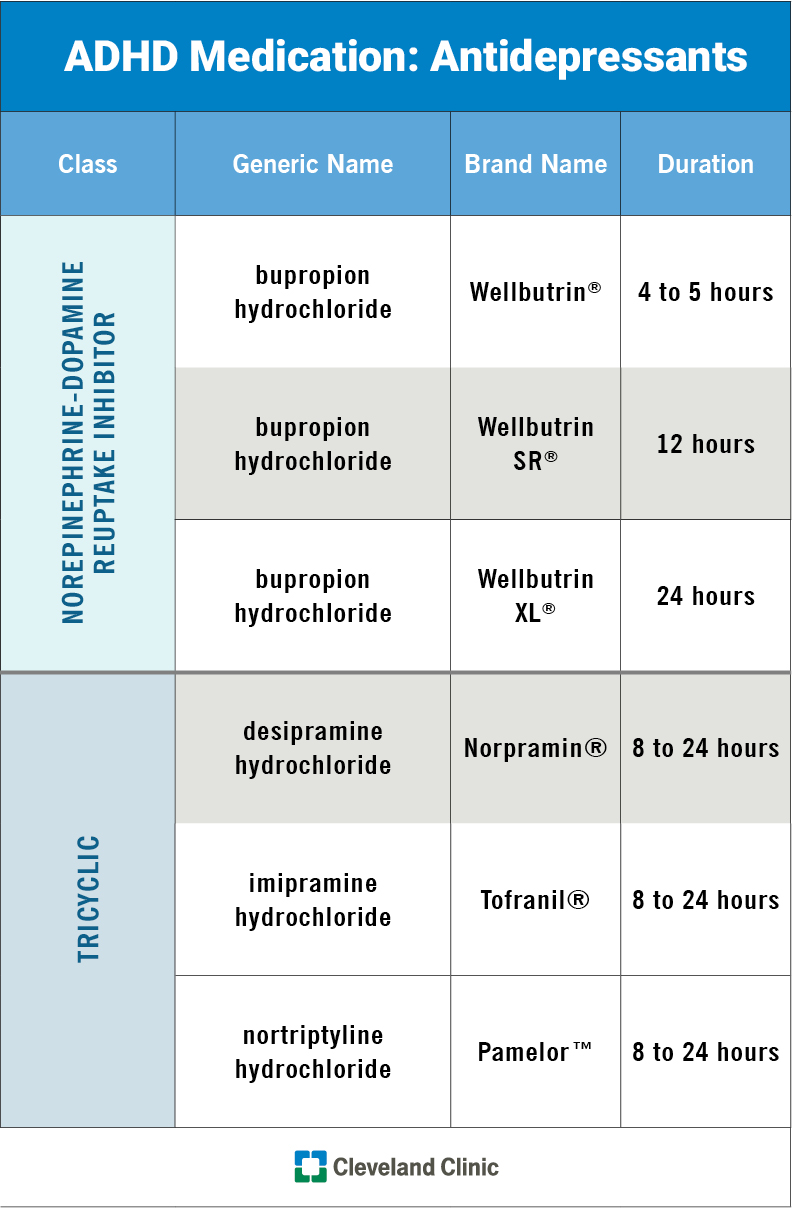
Image content: This image is available to view online.
View image online (https://my.clevelandclinic.org/-/scassets/images/org/health/articles/11766-ADHD-medication-antidepressants.jpg)
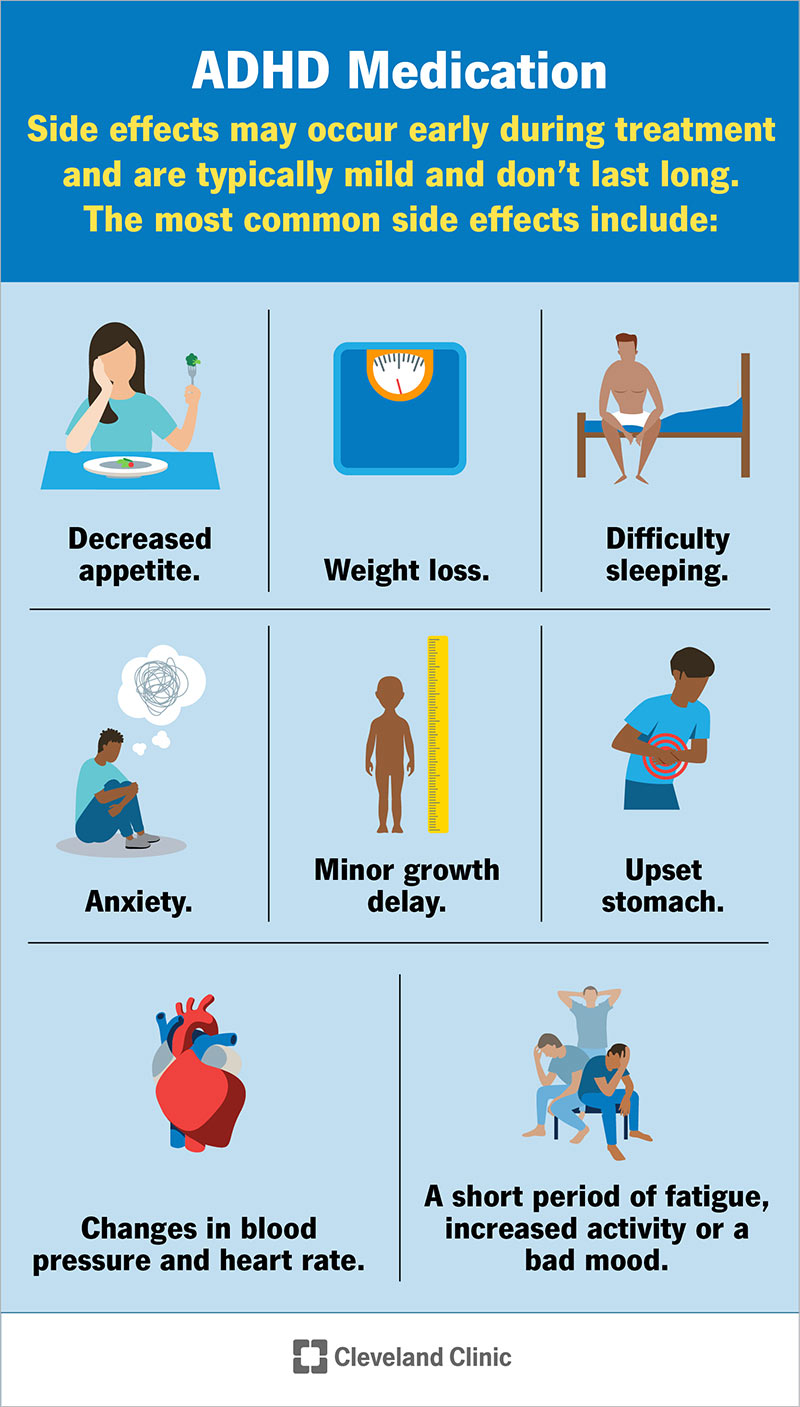
Image content: This image is available to view online.
View image online (https://my.clevelandclinic.org/-/scassets/images/org/health/articles/11766-ADHD-medications)
Side effects may occur early during treatment with ADHD medication. These side effects are typically mild and don’t last long. They may resolve after a few weeks of treatment as your body adjusts to the medication. Rarely, they can be more severe or last longer. The most common side effects of ADHD medications include:
Other ADHD medication side effects may include:
Side effects that don’t go away after a few weeks of treatment may be relieved by:
Medications are the first line of treatment for ADHD. Studies have shown they’re effective for about 80% of children with the condition. But you may be worried about the side effects of the medication or want to avoid taking them for another reason.
For many people, behavior therapy is an appropriate option. Behavior therapy teaches and reinforces positive behaviors and reduces negative, unwanted behaviors.
For children younger than age 6, the American Academy of Pediatrics (AAP) recommends parent training in behavior management, which can teach you strategies and skills to help your child.
After age 6, the AAP recommends ADHD medication along with behavioral therapy. This may be a continuation of parent training in behavior management for children ages 6 through 12 and other types of behavior therapy for children ages 12 and up.
In addition, schools can play an important part in your child’s treatment plan. The AAP recommends adding behavioral interventions in your child’s classroom. Your child’s plan should include close monitoring of your child’s behavior and making adjustments along the way as necessary.
Attention-deficit/hyperactivity disorder is a lifelong condition that has no cure. It’s not like taking an antibiotic to treat a bacterial infection. You’ll have to keep taking ADHD medication to manage your symptoms.
In addition, up to 50% of children with ADHD will continue to experience symptoms into adulthood. If you have found a medication that helps you manage your symptoms, it may be helpful to keep taking it throughout your life.
If you or your child is starting on ADHD medication, you’ll have frequent appointments with a healthcare provider. They’ll need to monitor bodily reactions until you find the right medication and dose. Once you’ve found a medication that works, your provider will continue to monitor your condition — or your child’s condition — to make sure the medication remains effective.
In some places, there are laws or regulations that require a healthcare provider to see you or your child on a regular basis in order to continue prescribing certain medications (especially stimulants). If you don’t see them regularly, they can’t legally prescribe these medications. Your provider can tell you if this is the case in your area and — if required — how often you’ll need to see them.
Yes, but the dosages of many ADHD medications are different for children and adults. In addition, children and adults may experience different side effects from the medications.
No. Only doctors and certain other healthcare providers can prescribe ADHD medications. They aren’t available over-the-counter (OTC). In addition, vitamins and minerals claiming to treat ADHD have no scientific backing. In fact, they may interact with prescription medication. If you think ADHD medication may help you or your child, talk to your provider.
When used to treat ADHD, stimulant medications aren’t considered to be habit-forming. There isn’t any evidence that using them will lead to substance use disorders. Nevertheless, there’s a potential for improper use and substance use disorders with any stimulant medication, especially if you have a history of a substance use disorder. However, recent research states that medically treated people with ADHD had a lower rate of substance use disorders than if they weren’t treated.
An ADHD diagnosis can be scary for you or your child. But your healthcare provider is there to help. There are many different ADHD medications available. Your provider will work with you to choose the correct medication and dosage for you or your child. They’ll continue to track your progress and watch for side effects to make sure the drug remains effective. In addition to medication, they may recommend other treatment options such as behavioral therapy. They’ll work with you to provide the best possible outcome for you or your child.



Sign up for our Health Essentials emails for expert guidance on nutrition, fitness, sleep, skin care and more.
Learn more about the Health Library and our editorial process.
Cleveland Clinic’s health articles are based on evidence-backed information and review by medical professionals to ensure accuracy, reliability and up-to-date clinical standards.
Cleveland Clinic’s health articles are based on evidence-backed information and review by medical professionals to ensure accuracy, reliability and up-to-date clinical standards.
Your child’s fidgeting can be more than boredom. Cleveland Clinic Children's ADHD experts are here to help them manage the behavior and learn new skills.
