



Vestibular rehabilitation therapy (vestibular therapy) is treatment for dizziness and balance issues. Many things can make you feel dizzy or unsteady on your feet. Vestibular therapy involves exercises to manage dizziness and help you keep your balance.
Advertisement
Cleveland Clinic is a non-profit academic medical center. Advertising on our site helps support our mission. We do not endorse non-Cleveland Clinic products or services. Policy
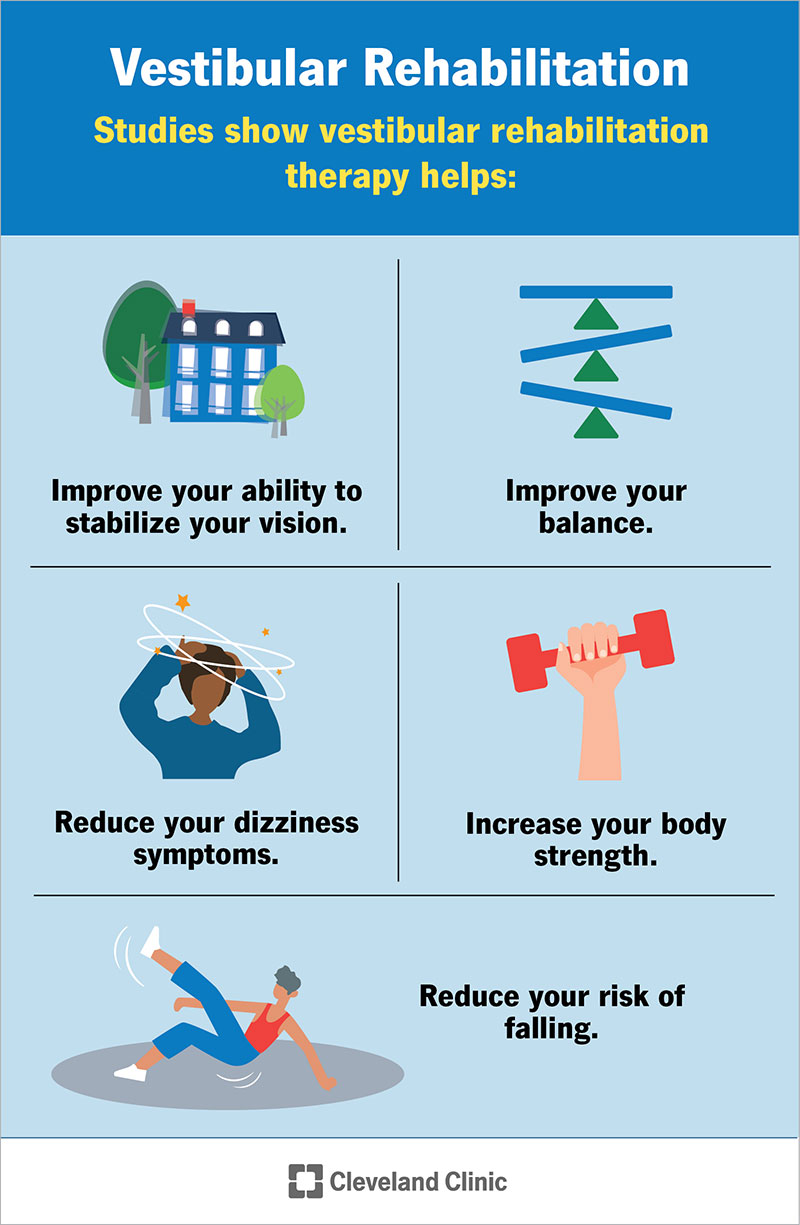
Image content: This image is available to view online.
View image online (https://my.clevelandclinic.org/-/scassets/images/org/health/articles/15298-vestibular-rehabilitation)
Vestibular rehabilitation therapy, also called vestibular rehabilitation, is exercises that help you manage dizziness and balance issues (imbalance).
Advertisement
Cleveland Clinic is a non-profit academic medical center. Advertising on our site helps support our mission. We do not endorse non-Cleveland Clinic products or services. Policy
You may have this treatment if you have conditions like:
Vestibular therapy starts with tests to check your specific symptoms. For example, an audiologist may do a vestibular test battery. A physical therapist will evaluate your balance, how you walk, and your arm and leg strength and flexibility.
Dizziness and balance problems can go together. Dizziness happens when something affects your sense of balance. Your sense of balance relies on a strong connection and communication between your brain, eyes, ears and tissues, like your skin, muscles and joints:
Injury or illness can affect the connections between your brain, eyes, inner ears or tissues. Issues that affect these connections may keep your brain from processing information correctly. Vestibular rehabilitation therapy helps restore those connections, reducing symptoms of dizziness and imbalance.
Advertisement
Balance issues and dizziness may affect you in different ways. Your healthcare provider will tailor vestibular rehabilitation therapy to your specific needs. They’ll work with you in therapy sessions so you know how to do exercises at home. Specific exercises may include:
This treatment can:
Vestibular rehabilitation therapy doesn’t cause physical risks. There’s always the chance therapy won’t completely resolve your dizziness or balance issues. This is particularly true if you’re not able to do the prescribed exercises on your own.
Vestibular therapy takes time. Most people have six to eight weekly sessions. Some people may only need one or two sessions. Other people may need several months of ongoing treatment, including doing exercises on their own. But everyone’s situation is different. How much therapy you’ll need depends on why you have dizziness or balance issues and how you respond to therapy.
Vestibular rehabilitation therapy rarely causes issues. But some people experience problems while doing exercises. Contact your provider right away if you’re doing exercises at home and experience symptoms such as:
It can be scary to feel very dizzy or unsteady on your feet, even for a short time. Dizziness and imbalance that don’t go away or come back can affect your quality of life. Vestibular rehabilitation therapy may help. Talk to a healthcare provider if you have dizziness or balance issues. They’ll do tests to find the cause and recommend treatment. Vestibular therapy can’t cure the underlying issue, but it can help you manage symptoms.
Advertisement
Learn more about the Health Library and our editorial process.
Cleveland Clinic's health articles are based on evidence-backed information and review by medical professionals to ensure accuracy, reliability, and up-to-date clinical standards.
Cleveland Clinic's health articles are based on evidence-backed information and review by medical professionals to ensure accuracy, reliability, and up-to-date clinical standards.
Vertigo, dizziness and balance disorders can make you feel unsteady on your feet. Cleveland Clinic’s experts can craft a treatment plan that works for you.
