



Helmet therapy, or helmeting, helps correct your baby’s flat or uneven head shape. It works best in the first year of life, when brain growth is rapid. Treatment requires wearing a custom helmet for about 23 hours a day. With consistent care and follow-up visits, you can expect the best results.
Advertisement
Cleveland Clinic is a non-profit academic medical center. Advertising on our site helps support our mission. We do not endorse non-Cleveland Clinic products or services. Policy
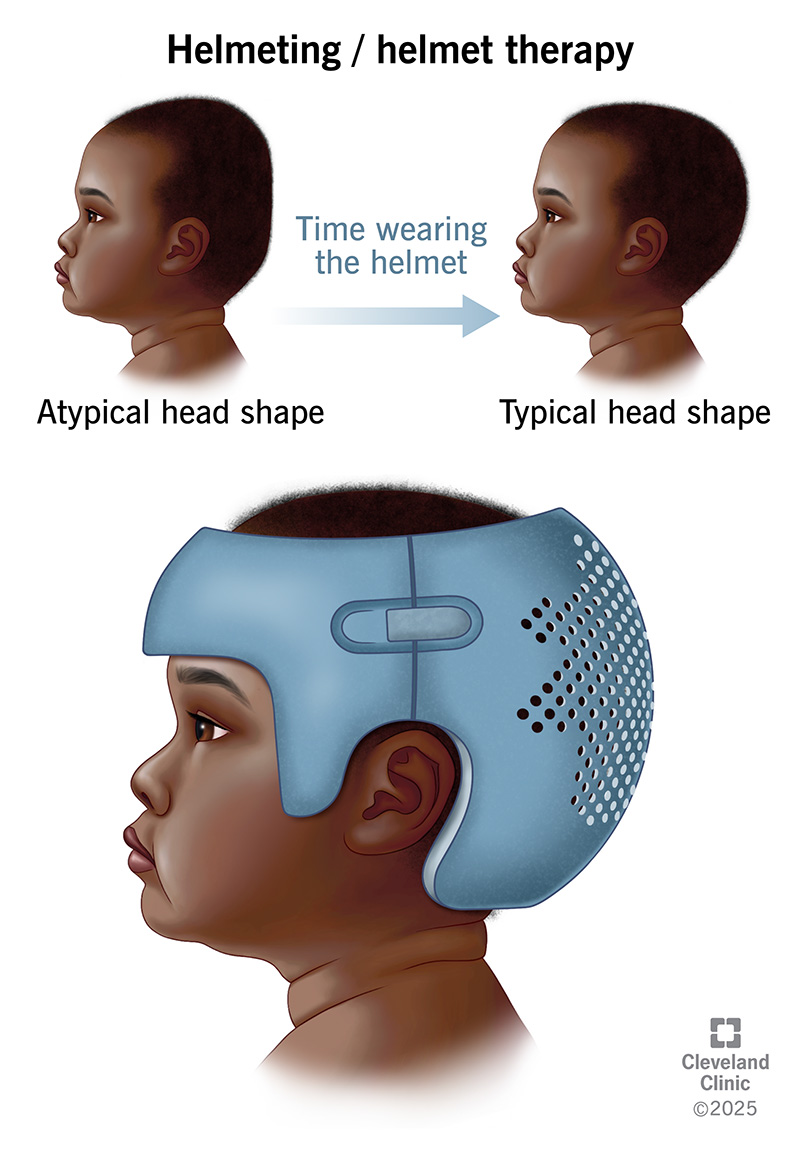
Image content: This image is available to view online.
View image online (https://my.clevelandclinic.org/-/scassets/images/org/health/articles/baby-helmet-for-flat-head.jpg)
Helmet therapy, or helmeting, uses a custom-fitted brace to help gently mold your baby’s skull into a more typical shape. It’s to help your baby’s appearance. It doesn’t affect their development.
Advertisement
Cleveland Clinic is a non-profit academic medical center. Advertising on our site helps support our mission. We do not endorse non-Cleveland Clinic products or services. Policy
The helmet provides a guide for skull-shaping while your baby’s head is actively growing. Infant heads grow most quickly during their first year of life, so your baby’s treatment needs to happen during that time. After that, a baby helmet won’t affect head shape.
Your baby may need to wear a helmet for two main reasons: positional skull deformity and craniosynostosis.
Babies’ heads may become flat or uneven from positioning in the uterus, challenges during labor and delivery, or spending a lot of time in one position. Types of head shapes include:
Craniosynostosis is when your baby’s skull bones fuse too early. Your baby’s primary care provider will help guide this diagnosis. As your baby’s brain grows, their head takes on an abnormal shape. In some cases, it may affect your child’s brain growth. Your baby will need surgery to correct the issue. They may need helmet therapy after the surgery.
Your baby’s pediatrician will examine their head shape and growth. If the flattening is mild, they may suggest changing your baby’s position more often.
Advertisement
If your baby has tight neck muscles (torticollis), they’ll recommend starting physical therapy. Your baby may need to work with a physical therapist throughout their first year of life. This is to make sure the muscle tightness doesn’t affect their growth and development.
Your child’s provider may refer you to an orthotics specialist who’ll be able to help you make the decision regarding a helmet if:
Helmeting works by gradually guiding your infant’s skull into a more standard shape while their head is still growing. Your baby’s skull is made of flexible plates connected by joints (sutures). These sutures allow room for your baby’s rapid brain growth.
Because most brain and skull growth occurs during the first year of life, baby helmets are only effective during this period. The best results happen when therapy starts early in infancy, after 4 months old, when head growth is fastest. As your baby gets older, the plates of their skull fuse and their bones harden, so helmeting isn’t effective.
If your baby’s pediatrician thinks your baby would benefit from helmeting, they’ll refer you to an orthotist. Orthotists are healthcare providers specially trained to measure and fit helmets. First, the orthotist will measure the shape of your baby’s head. They may use computer scans to get the specific shape of your baby’s head. Then, they’ll design a custom-fitted helmet made of a hard outer shell with a foam lining.
A custom-fitted helmet creates space where your baby’s skull should expand. It fits snugly over the more rounded areas. As your baby’s head grows, adjustments are made to the helmet.
Your baby will build up to wearing the helmet for about 23 hours a day. During the first week, they’ll start off with an hour or two in the helmet and add more time each day. Most babies get used to wearing them very quickly. You should take your baby’s helmet off during their nightly bath. This is a good time for you to clean it with an alcohol wipe or gentle detergent.
Your baby’s helmet shouldn’t be uncomfortable. If your baby experiences any discomfort or skin irritation, you should have your orthotist adjust it.
The length of helmet therapy depends on:
If your baby begins helmeting at a younger age, they may need a helmet for a shorter time. If therapy starts later (after about 8 months), treatment often takes longer.
In general, most babies wear a helmet for several months. But some may need more time to reach the desired head shape. Your child’s orthotist will check progress at follow-up visits and adjust the plan as needed.
Advertisement
Helmeting can be very effective, especially when your baby starts the treatment early, and you use it as instructed by their provider. But it requires a significant amount of your time and energy. Helmeting might also not fully correct severe deformities.
Potential benefits include:
Potential downsides include:
Most babies get used to the helmet right away and don’t experience any discomfort. You can add stickers or decals to your baby’s helmet to personalize it. To ensure the treatment goes smoothly, use the following tips:
Advertisement
It’s normal for skin changes or mild indentations to appear for a few minutes after you take off the helmet. Call your orthotist immediately if:
The cost of helmet therapy can range based on several factors, including the cost of the helmet itself and follow-up visits for adjustments.
Advertisement
Insurance coverage varies. Contact your insurance provider to check which orthotic companies are members of their network. When you start the helmet process, be sure to ask the orthotics company if there’s any out-of-pocket cost. Some plans help cover the cost. But others don’t, and you might have to pay out of pocket.
Helmet therapy can help improve the shape of your child’s head. It can also make it easier for them to wear standard eyeglasses or a bike helmet when they’re older. But helmet therapy can be demanding. It takes patience and consistency, from cleaning and checking the fit to keeping up with appointments.
Helmeting supports your baby during a time of rapid development. Remember that every follow-up visit and helmet adjustment helps your baby grow in a healthy way. This stage is temporary. In time, you’ll be able to look back and see how your care and dedication made a lasting difference for your child.



Sign up for our Health Essentials emails for expert guidance on nutrition, fitness, sleep, skin care and more.
Learn more about the Health Library and our editorial process.
Cleveland Clinic’s health articles are based on evidence-backed information and review by medical professionals to ensure accuracy, reliability and up-to-date clinical standards.
Cleveland Clinic’s health articles are based on evidence-backed information and review by medical professionals to ensure accuracy, reliability and up-to-date clinical standards.
As your child grows, you need healthcare providers by your side to guide you through each step. Cleveland Clinic Children’s is there with care you can trust.
