



Trisomy 13 (Patau syndrome) is a rare genetic disorder that occurs when your baby is born with an extra copy of chromosome 13. It can affect your baby’s brain, heart and other parts of their body. Trisomy 13 is a serious condition. Many affected pregnancies end in miscarriage or stillbirth. Babies that survive may only live days or weeks.
Advertisement
Cleveland Clinic is a non-profit academic medical center. Advertising on our site helps support our mission. We do not endorse non-Cleveland Clinic products or services. Policy
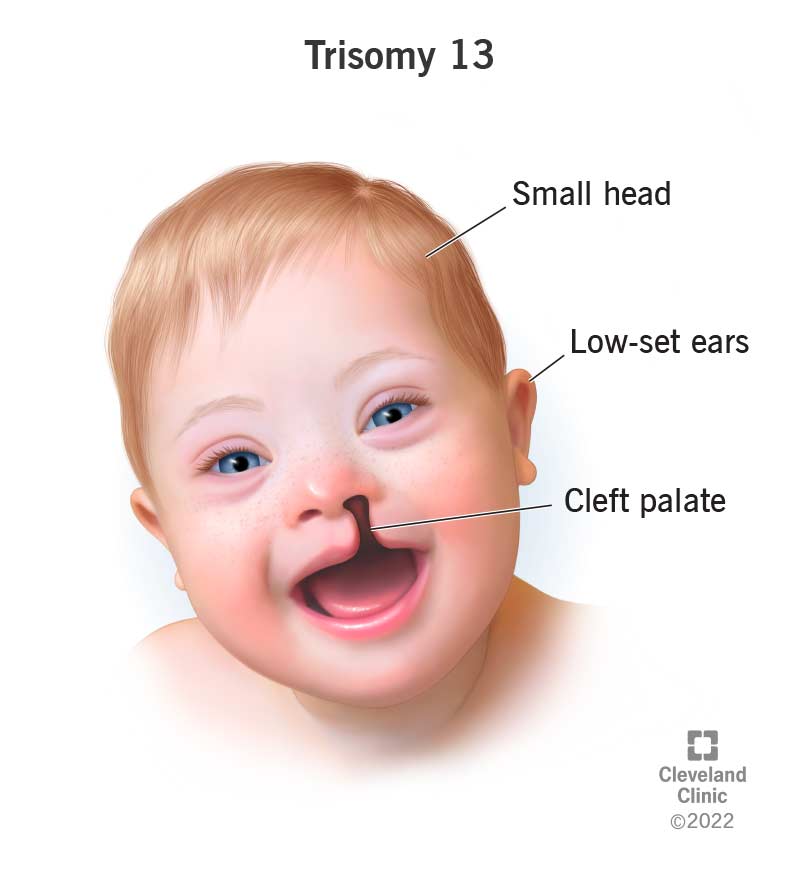
Image content: This image is available to view online.
View image online (https://my.clevelandclinic.org/-/scassets/images/org/health/articles/24647-trisomy-13-patau-syndrome)
Trisomy 13 (Patau syndrome) is a rare genetic condition that happens when your baby is born with an extra copy of chromosome 13. Instead of having two copies, they have three. This is called trisomy.
Advertisement
Cleveland Clinic is a non-profit academic medical center. Advertising on our site helps support our mission. We do not endorse non-Cleveland Clinic products or services. Policy
Learning that your baby has trisomy 13 can feel overwhelming. The condition can affect how your baby develops before birth. It can cause serious differences in their brain, heart, face and other parts of their body. Some babies have mild symptoms, but many have severe, life-threatening medical problems.
Many babies with trisomy 13 need special care right after birth. Your baby may go to the neonatal intensive care unit (NICU). Your healthcare team will work with you to create a care plan based on your baby’s needs.
Trisomy 13 occurs in about 1 out of 10,000 live births. Many affected pregnancies end in miscarriage or stillbirth. Among babies born alive, 10% to 25% survive beyond their first birthday.
Trisomy 13 can affect many parts of your baby’s body. Symptoms vary from child to child. Some babies are more severely affected than others.
Patau syndrome symptoms can include:
Physical symptoms may include:
Advertisement
Trisomy 13 can also affect your baby’s internal organs and body systems. Symptoms may include:
These complications can be life-threatening. Babies who survive beyond infancy may continue to have complex medical needs. This can include a higher risk of seizures and some cancers.
Trisomy 13 happens when your baby has an extra copy of chromosome 13.
Chromosomes contain your DNA. DNA carries the instructions your body uses to grow and function. Most people have 46 chromosomes arranged in 23 pairs. Babies with trisomy 13 have 47 chromosomes because of the extra copy of chromosome 13.
The extra chromosome usually happens by chance while the egg or sperm is forming. Nothing you did before or during pregnancy caused trisomy 13.
There are three types of trisomy 13:
Your healthcare provider may suspect trisomy 13 during pregnancy based on prenatal screening tests or ultrasound findings. Screenings can begin during the first trimester.
To confirm the diagnosis, your provider may recommend genetic testing before birth. They may also perform testing after your baby is born.
A karyotype test is the most common test providers use to confirm Patau syndrome.
There isn’t a cure for trisomy 13. Treatment focuses on managing symptoms and giving your child the best possible quality of life.
Depending on your child’s needs, treatment may include:
Some babies need intensive medical care after birth. Others may benefit from comfort-focused care. Your healthcare team will talk with you about your baby’s treatment options. They’ll help you make decisions that fit your family’s goals.
Many pregnancies affected by trisomy 13 end in miscarriage or stillbirth. If you’ve experienced a pregnancy loss, you can get support. Your healthcare provider can connect you with counseling, grief services and other resources.
Contact your child’s provider right away if they have:
Advertisement
Trisomy 13 is a serious condition, and the outlook is often poor.
Many pregnancies end in miscarriage or stillbirth. Among babies born alive, many survive only days or weeks. About 10% to 25% live beyond their first birthday.
If your baby is diagnosed with trisomy 13, your healthcare team will help you understand what to expect. They’ll support you as you make decisions about your child’s care.
An extra chromosome causes both genetic conditions. In trisomy 13, there’s an extra copy of chromosome 13. In trisomy 18 (Edwards syndrome), there’s an extra copy of chromosome 18.
Both conditions can cause serious birth differences and life-threatening complications. Many affected pregnancies end in miscarriage or stillbirth. Babies born with either condition often have a shortened life expectancy.
Learning that your baby has trisomy 13 (Patau syndrome) can bring many emotions. You may feel shocked, scared, angry or sad. There isn’t a right or wrong way to respond.
You don’t have to face this alone. Your healthcare team can answer your questions and explain your baby’s care options. They can also connect you with counseling, support groups and other resources. Lean on the people who care about you as you navigate the days ahead.
Advertisement



Sign up for our Health Essentials emails for expert guidance on nutrition, fitness, sleep, skin care and more.
Learn more about the Health Library and our editorial process.
Cleveland Clinic’s health articles are based on evidence-backed information and review by medical professionals to ensure accuracy, reliability and up-to-date clinical standards.
Cleveland Clinic’s health articles are based on evidence-backed information and review by medical professionals to ensure accuracy, reliability and up-to-date clinical standards.
Do certain health conditions seem to run in your family? Are you ready to find out if you’re at risk? Cleveland Clinic’s genetics team can help.
