Sports Concussion Concerns:
Speedy diagnosis and treatment can reduce lifelong effects
Every time an athlete steps on the playing field, he or she faces the very real possibility of concussion. In fact, U.S. athletes at all levels of competition suffer more than 1 million concussions each year. Most concussions (80 to 90 percent) will resolve within seven to 10 days. But for reasons not yet well understood, some patients take much longer to recover.
Effects of a concussion can last several months, and rarely, may have long-lasting effects, even into adulthood. Expedient diagnosis and management of concussions are the best ways to reduce the potential long-term-risks.
Education Is Key
Inadequate response to concussion can have serious, even deadly, consequences. Cleveland Clinic Sports Health is reaching out to parents, coaches, athletic trainers and athletes to ensure that they know the symptoms and act appropriately when athletic concussion is suspected.
Concussion: What is a Sports Concussion?
- »What is a Concussion?
-
A concussion is a short-lived brain injury caused by a bump, blow or jolt to the head. A variety of symptoms may develop and typically resolve over time. An athlete can suffer a concussion in any sport. Contact or collision sports, such as football, soccer, wrestling, ice hockey, lacrosse and rugby, have the highest incidence of concussion. Most concussions appear without loss of consciousness. Rarely is there a structural injury noted on MRI or CT scan. Even when the physical, and sometimes emotional, symptoms of a concussion have disappeared, the brain may not be healed.
Athletes who suffer a concussion are three to five times more likely to suffer a second concussion in the same season. Sustaining a repeat concussion, while recovering from a concussion, is dangerous. This is called second impact syndrome and can potentially cause brain swelling and brain damage. Your athletes can avoid further injury by not playing with a concussion.
- »Know the signs and symptoms of a concussion
-
Concussions don’t always cause a loss of consciousness. The most common signs and symptoms are:
Signs Observed by Coaches or Parents:
- A dazed or stunned appearance
- Confusion or clumsiness
- Slow responses to questions
- Personality or behavioral changes
- Loss of consciousness - even temporary
- Forgets plays or assignments
- Forgetting play prior to or after the “hit”
Symptoms reported by Athletes:
- Headache
- Nausea
- Balance problems
- Double or blurry vision
- Sensitivity to light and noise
- Fatigue or drowsiness
- Changed sleep patterns
- Trouble comprehending and/or concentrating
- Difficulty paying attention
- Depression
- Irritability, nervousness or sadness
- Feeling “just not right” or in a “fog”
Concussion symptoms can worsen with physical and mental activity, such as using your computer, gaming system or texting.
- »Danger Signs To Watch For
-
Seek medical treatment from the nearest hospital emergency immediately, if you notice any of the following danger signs or severe symptoms within the first 24-48 hours:
- One pupil larger than the other
- Is drowsy and cannot be awakened
- A headache that does not diminish, and gets worse
- Weakness, numbness or decreased coordination
- Repeated nausea or vomiting
- Slurred speech
- Convulsions or seizures
- Cannot recognize people or places
- Becomes increasingly confused, restless or agitated
- Has unusual behavior
- Loses consciousness (a brief loss of consciousness should be taken seriously)
Rule out neck injury
Assess level of orientation, some questions to ask: what month, date, year is it?
- what team are we playing?
- who is your opponent today?
- which quarter is it?
- »Additional risk factors include:
-
- Athletes with genetic factors or a history of previous brain impairment
- Younger athletes whose brains aren’t fully developed
- Recent or previous concussion
- Poorly fitting or improper equipment
- Poor technique
- Neglect of sports’ rules
- »Prevention:
-
Although we know of nothing that can prevent a concussion, be smart and follow these guidelines:
- Use the proper sports and personal protective equipment. Equipment must be:
- the right equipment for the game, position or activity
- worn correctly and be the correct size and fit
- used every time you play or practice
- in good condition
- wear a mouth piece and for Football – chin strap
- Follow the rules for safety and the rules of the sport.
- Coaches should insist that players follow the rules of the game and display good sportsmanship at all times.
Evaluations and Management
- »When An Athlete Has Sustained a Concussion
-
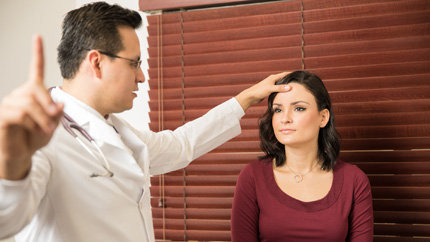
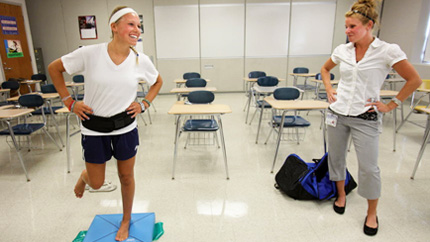
Coaches and Athletic Trainers who suspect an athlete has sustained a concussion, should immediately remove the athlete from play, practice or games. The athlete should not return until evaluated by a medical professional. A medical professional should provide a neurological check, along with a mental status evaluation that includes orientation, concentration, balance and amnesia. No athlete with symptoms at rest or with activity is permitted to return to play.
While many athletes experience only temporary neurological impairment lasting one to two days, some athletes have symptoms lasting weeks to months. That is why it’s important for athletes to undergo a more thorough evaluation by a physician, experienced in evaluating and treating concussions, before starting a progressive return to play.
- »Danger Signs To Watch For
-
Seek medical treatment from the nearest hospital emergency immediately, if you notice any of the following danger signs or severe symptoms within the first 24-48 hours:
- One pupil larger than the other
- Is drowsy and cannot be awakened
- A headache that does not diminish, and gets worse
- Weakness, numbness or decreased coordination
- Repeated nausea or vomiting
- Slurred speech
- Convulsions or seizures
- Cannot recognize people or places
- Becomes increasingly confused, restless or agitated
- Has unusual behavior
- Loses consciousness (a brief loss of consciousness should be taken seriously)
- »Other Important Care Points:
-
- Mental and physical rest. This means no activity for at least 24 hours. Concussion symptoms can worsen with physical and mental activity, such as using your computer, gaming system or texting.
- Do not consume alcohol or take sleeping tablets
- Take only medication that has been prescribed for you. Okay to use acetaminophen (e.g. Tylenol®) or codeine only for headache. Do not use aspirin or anti-inflammatory medication.
- Do not drive a car or ride a bike until medically cleared
- Avoid anything that will put athlete at risk for another blow or jolt to the head.
- Do not return to play, sport or training until medically cleared
Returning to Play
- »When does recovery start?
-
Recovery from a concussion starts immediately with physical and mental rest and may take days to several weeks. This means no activity. The athlete remains under the observation of an adult or healthcare professional during their recovery.
Athletes should not return to play until the appropriate healthcare professional ensures that they are totally symptom-free and approved to start a gradual stepwise progression. Once the signs and symptoms of a concussion have resolved, gradual stepwise exertion (such as light aerobic training) is started. The athlete can then move on to sport specific training. Non-contact drills are followed by full-contact drills, and, if no symptoms appear, a return to competition.
If at any point signs or symptoms of concussion recur, the athlete must be reevaluated, rest and be symptom free at rest before returning back to stepwise progression.
ImPACT: Sports Concussion Program
- »What Is ImPACT?
-
ImPACT (Immediate Post-Concussion Assessment and Cognitive Testing) is currently the most widely utilized computerized concussion management program in the world and has been implemented effectively for high school, collegiate, and professional athletes. This sophisticated software program was developed through research by neuropsychologists, neurologists and physicians at the University of Pittsburgh Medical Center (UPMC).
ImPACT is a 25-30 minute computer test developed to help sports-medicine clinicians evaluate multiple aspects of neurocognitive functioning following concussion. In addition, ImPACT provides a user-friendly injury documentation system that facilitates the tracking of the injury from the field through the recovery process. Used correctly, the ImPACT test can provide valuable information to athletes, parents and sports medicine practitioners, and promote a safer return to competition.
- »ImPACT Test Features and benefits:
-
- Protecting the student athlete
- Measuring athlete symptoms
- Measures verbal and visual memory, processing speed and reaction time
- Provides objective data to help medical experts evaluate and develop a comprehensive management plan
- Assists medical experts to determine safe return to sport
- »How ImPACT Works
-
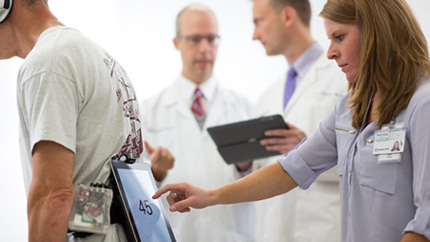
ImPACT testing is recommended for all sports athletes before a collision/contact sports season begins. Cleveland Clinic Sports Health experts administer ImPACT testing to obtain baseline data of an athlete’s symptoms, memory, reaction time, and other cognitive function.
If an athlete sustains a concussion during the season, he or she should be evaluated by a medical expert and undergo another ImPACT test within 24 to 72 hours after a concussion and before the return to competition. By comparing these results to his or her pre-season baseline data, Cleveland Clinic Sports Health experts can determine the severity of concussion.
The athlete then meets with a Cleveland Clinic Sports Health physician for a comprehensive management plan focused on returning the athlete to action safely. Athletes are monitored for recovery and when appropriate (symptom free at rest for 24-48 hours) an athlete can progressively return to play under supervision safely. ImPACT testing may be administered again to determine when an athlete can safely return to play.
- »Take the ImPACT Baseline Test
Even with ImPACT testing, a thorough medical evaluation is a must after a concussion. This includes neuropsychological assessment, CT and MRI tests to rule out more serious head injury.
Visit the ImPACT™ Website to learn more about the program.
Promising technology will Improve Safety
An intense interdisciplinary research focused in part on improving safety helmet and equipment design, is underway across Cleveland Clinic.
The Spine Research Laboratory, part the Neurological Institute, has developed a wireless, MEMS-based Intelligent Mouthguard that measures in-game impact dynamics in contact sports as football and boxing. With Bluetooth technology, data from mouthguard are transmitted to a computer on the sideline to measure head orientation, position, and velocity and acceleration of impact. The data are used to assess real-time and post-competition neurological outcomes and to assist with rapid diagnosis of injury. Ultimately, the information be useful in equipment design.
On another front, the Spine Research Lab has partnered with Rawlings, well known manufacturer and retailer of equipment and apparel, to test protective headwear and accessories for baseball football. Rawlings has donated research equipment, including a linear impactor helmet testing and a baseball air cannon. It will be housed at the newly named Rawlings Performance Laboratory at Cleveland Clinic Lutheran Hospital.
In the Lerner Research Institute, another team of researchers is developing a test to determine whether the blood- barrier has been breached, thus indicating which patients may need further evaluation. This simple test could spare less severely injured patients the radiation exposure an unnecessary, costly CT scan.
Blood test could help diagnose concussions
Pat McManamon - FOXSportsOhio.com - December 22, 2011
Help could be coming for sports teams and leagues as they work to quickly diagnose concussions. Researchers at the Cleveland Clinic are studying a simple blood test that could sound warning signals that a player might have a head injury. The test would be measurable and objective, with specific markers to indicate if a concussion might be present.
Cleveland Clinic Awarded Grant From NFL Charities To Study Concussion in Youth Sports
Researchers in Cleveland Clinic’s Spine Research Laboratory, the Department of Neurosurgery and the Center for Spine Health recently won a $100,000 award from NFL Charities to study the neck’s role in mitigating or exacerbating blows to the head and its influence on concussions in young athletes.
New Concussion Guidelines For Athletes
The effects of a concussion in high school can last a lifetime. So, to help parents, coaches, and athletes reduce the potential long-term-risks, The American Academy of Pediatrics is issuing updated guidelines on sport-related concussions.