Overview
All athletes deserve the very best sports-related care and treatment that’s one-on-one and state-of-the-art. At Cleveland Clinic Sports Medicine Center, this involves conditioning to become stronger and faster, maximizing abilities, treating injuries if they do occur and improving future performance.
Our center brings together top orthopaedic surgeons, sports medicine physicians, physician assistants, physical therapists, athletic trainers, registered dietitians, radiologists and exercise physiologists to keep athletes in the game. Our experts treat athletes in all sports, all ages and skill levels.
Global Peak Performance Center
The Cleveland Clinic Global Peak Performance Center is scheduled to open in downtown Cleveland, in partnership with the Cleveland Cavaliers, in 2027. The center will be one of the world's largest training facilities and will also become the repository for sports data collection. Research through the center will predict athletic performance and injury, support future treatments and advanced rehabilitation.
- Learn more about the partnership with the Cleveland Cavaliers, Cleveland Clinic and Bedrock Real Estate in the unveiling of the Cleveland Clinic Global Peak Performance Center
-
Cleveland Clinic Global Peak Performance Center rendering
-
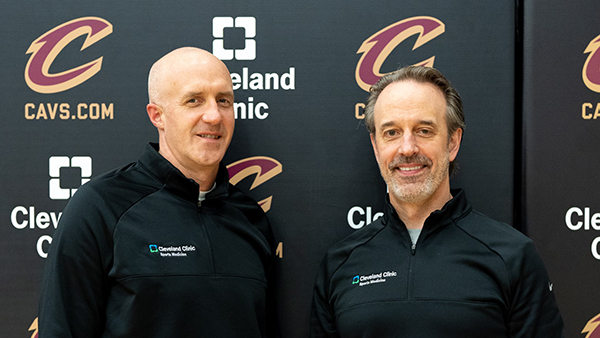
James Rosneck, MD (left) and Richard Figler, MD (right) team physicians for the Cleveland Cavaliers
-
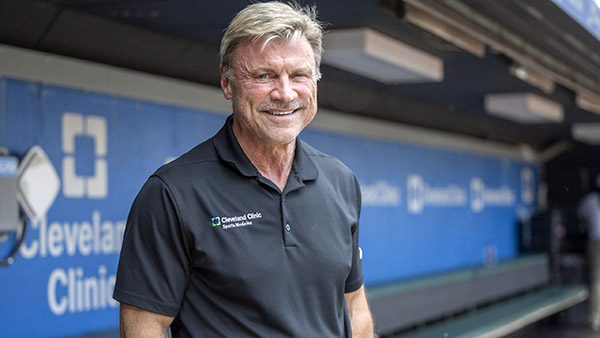
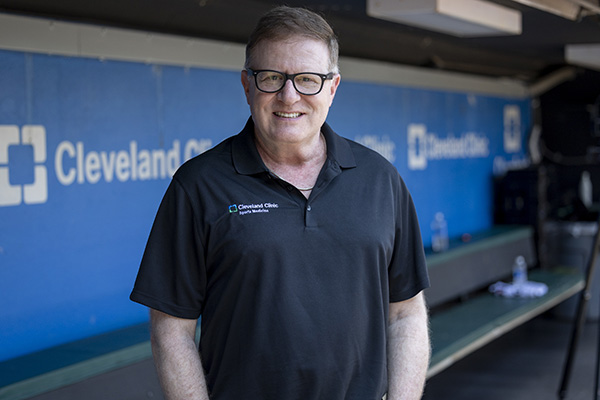
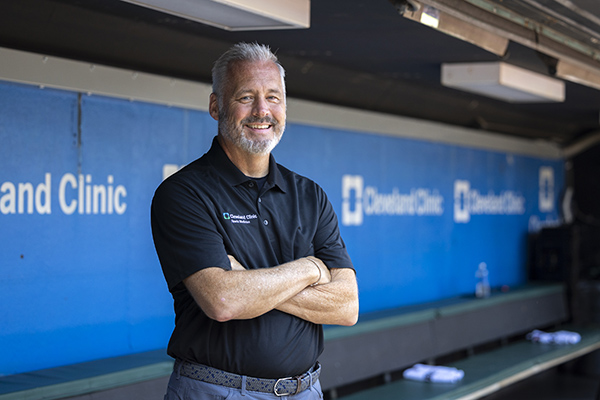
Mark Schickendantz, MD, Cleveland Guardians Team Physician
-
Kim L. Stearns, MD, Cleveland Guardians Team Physician
-
Thomas Waters, MD, Cleveland Guardians Team Physician


Teams We Work With
Cleveland Clinic’s sports medicine specialists are the official healthcare provider for:
Professional Teams
 The Cleveland Cavaliers |
 Cleveland Charge |
 The Cleveland Guardians |
 Lake County Captains |
PGA Tour
 PGA Tour |
 PGA Tour Champions |
Collegiate Athletes
 Cleveland State University |
 John Carroll University |
 Kent State University |
 Walsh University |
High School Athletes
|
|
|
Other Partners
 Greater Cleveland Sports Commission |
 Spire Institute |
 MAC |
What We Treat
Conditions
- Acute and overuse injuries
- Sprains
- Strains
- Fractures
- Tendonitis
- Arthritis (Joint Inflammation)
- Concussions
- Chronic or acute illnesses
- Chronic muscle injuries
- Torn ligaments
- ACL
- Tendons
- Broken bones
- Damaged cartilage
- Complex problems of the shoulder of instability and dislocation
- Complex throwing related problems of shoulder and elbow
- Hip impingement
- ACL tears
- Shoulder instability
- Joint cartilage problems, especially involving the knee and elbow
- Throwing and overuse injuries
Treatments and Services
- Arthroscopic surgery
- Shoulder
- Elbow
- Hip
- Knee
- ACL Reconstruction
- Meniscus transplant surgery
- Tommy John surgery
- Hamstring repairs
- Advanced surgery for articular cartilage
- Partial joint replacements
- Sport-specific rehabilitation
- Joint injections
- Injury prevention
- Exercise and performance counseling
- Return-to-play decisions for the sick or injured athlete
Programs & Clinics
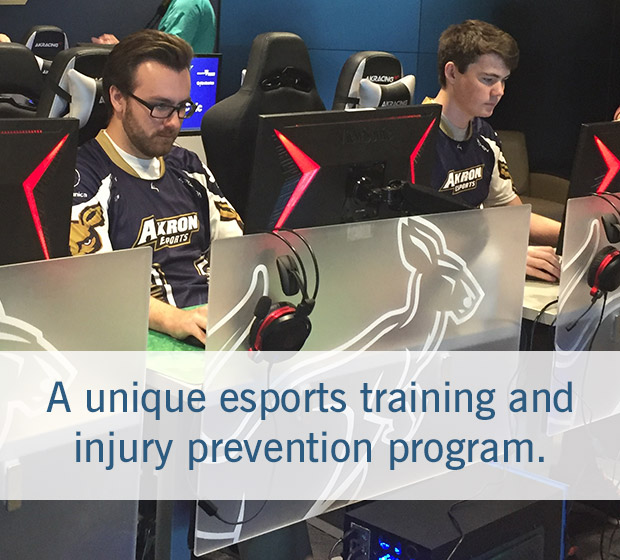
Esports Medicine Program
Cleveland Clinic Esports Medicine Program evaluates esports athletes. As with traditional athletes, esports athletes have unique sport-specific training and injury prevention needs. Our Esports Medicine team is primarily focused on the treatment and prevention of esports related injuries, as well as a commitment to protecting and enhancing the health, safety and welfare of all esports athletes. Our Esports Medicine team has a unique skill set and comprehensive background to provide esports athletes with cutting edge performance enhancement and injury prevention strategies.
Dance Medicine Clinic
The Dance Medicine Clinic utilizes a multidisciplinary approach to rehabilitation, involving practitioners interested in the care of both amateur and professional dancers.
Appointments and Hours
Performers interested in being seen in Dance Medicine clinic may call 216.518.3475 to arrange for an appointment. Our Dance Medicine Clinic is open on the second and fourth Tuesday each month from 4 - 6 p.m.
Location
Cleveland Clinic Sports Medicine Center
5555 Transportation Blvd.
Garfield Heights, OH 44125
Sponsorship Request
Thank you for your interest in Cleveland Clinic Sports Medicine.
Cleveland Clinic Sports Medicine plays a vital role in supporting athletic excellence by partnering with a variety of sports-related events and organizations. As the official healthcare provider for professional teams, including the Cleveland Cavaliers and Cleveland Guardians, and numerous athletic programs, Cleveland Clinic offers specialized care and rehabilitation services tailored to athletes of all levels.
Additionally, Cleveland Clinic has formed strategic partnerships with high schools and colleges to enhance the health and performance of student-athletes.
These initiatives reflect the Clinic’s commitment to advancing sports medicine and promoting community wellness through active engagement in a vibrant sports scene.
We appreciate your interest in sponsorship/partnership. Requests should be submitted 4-6 weeks prior to the event date. Please complete the form and allow 3-4 weeks for response.
Appointments & Locations
To schedule an appointment to see a Cleveland Clinic sports medicine specialists, please call 216.518.3444 or toll free at 877.440.8326 (TEAM). Please have your insurance information available.
Virtual Visits
You can now stay connected to your healthcare team through virtual visits, using your smartphone, tablet or computer.
Why go virtual? It's an easy, convenient and secure way to see your provider face-to-face without having to leave home. This saves you travel time, parking fees and time spent in the waiting room — and you can also have a loved one or caregiver join you. If appropriate, you can also get a prescription sent to the pharmacy of your choice.
Many insurance companies cover the cost of virtual visits, so check with your insurance company ahead of time. Interested in getting started? Call your provider to find out what virtual visit options are available.
- Learn more about virtual visits for scheduled appointments
Virtual Second Opinions
If you cannot travel to Cleveland Clinic, help is available. You can connect with Cleveland Clinic specialists from any location in the world via a phone, tablet, or computer, eliminating the burden of travel time and other obstacles.
If you’re facing a significant medical condition or treatment such as surgery, this program provides virtual access to a Cleveland Clinic physician who will review the diagnosis and treatment plan. Following a comprehensive evaluation of medical records and labs, you’ll receive an educational second opinion from an expert in their medical condition covering diagnosis, treatment options or alternatives as well as recommendations regarding future therapeutic considerations. You’ll also have the unique opportunity to speak with the physician expert directly to address questions or concerns.
- Learn more about virtual second opinions
Locations
Sports Injury Online Self-Scheduling

Quick access to a sports medical specialist for your athlete’s sports injury
Injuries happen. Whether an injury happens during practice or at a game, we’re here to help you or your athlete (ages 12 to 22) get care. We move quickly to get you or your athlete in for an appointment — and on your way towards treatment and recovery as soon as we can.
Need to see someone quickly? Self-schedule online for a sports injury
For a sports injury that has happened within the past two weeks (not including concussions), self-scheduling is an option. You or your athlete can see a sports medicine specialist, an orthopaedic sports medicine physician, or a sports and exercise medicine physician.
How do I schedule my sports injury appointment?
Self-schedule onlineSimply answer a few questions, pick a location and appointment time from the available options and hit submit.
There are many different sports-related injuries our providers can see. We care for injuries to the shoulder, elbow, wrist, hand, hip, knee, ankle and foot.
Some injuries we treat include:
- Sprains or strains.
- Dislocations.
- Torn ligaments, tendons and muscles.
- Fractures (not open).
- Contusions/bruises.
Sports injury self-scheduling appointments are available Monday through Friday, during regular Cleveland Clinic facility hours. This is not a walk-in service.
Method of payment
Most insurance plans are accepted. Payment, including co-pays, will be required at the time of service.
Our Doctors
Looking for a sports medicine provider?
Find a ProviderPatient Resources
Treatment Guides
Cleveland Clinic offers a number of free treatment guides covering a broad range of information related to Sports Medicine.
Nutrition for Athletes
Optimal nutrition is important for maximizing your stamina and ability to perform. Our sports medicine nutritionists can help you stay healthy, avoid injury or accelerate your healing. Nutritional requirements vary by sport, so our nutritionists will work with you one-on-one to design a nutrition plan that helps you achieve you goals, including:
- Improving your diet and hydration status to maximize your performance or workout
- Assist with weight loss, muscle and weight gain
- Prevention of bone loss and injuries
- Playing your best with a chronic condition, such as diabetes or heart disease
Appointments and Hours
Athletes interested in being seen by our sports medicine nutritionist may call 216.518.3475 to arrange for an appointment. Our Sports Nutrition Clinic is open every other Friday from 8 a.m. to 4 p.m.
Location
Sports Medicine Center
5555 Transportation Blvd.
Garfield Heights, OH 44125
Integrative Sports Medicine
Our Sports Medicine team collaborates with experts from Cleveland Clinic's Center for Integrative Medicine to provide services with a special focus on supporting the body’s natural abilities to heal after a sports-related injury or condition, using techniques such as:
Download the Integrative Medicine for Athletes FAQ sheet
Chiropractic Sports Medicine
Chiropractic sports medicine has proven effective in treating a wide range of acute and chronic athletic injuries, including:
- Overuse injuries
- Shoulder pain
- Peripheral nerve entrapment syndromes
Our certified chiropractic sports physician is skilled at identifying problems with body mechanics and eliminating the source of pain without surgical intervention.
For Medical Professionals & Coaches
Educational Opportunities
Learn about our Cleveland Clinic Sports Medicine educational opportunities for medical professionals.
Competitive Edge Newsletter
Competitive Edge is an e-Newsletter for athletes, coaches, parents and active individuals, written by Cleveland Clinic Sports Medicine staff. This publication will keep you informed of the latest health topics, concerns and trends.
Events
Find a variety of classes for athletes, parents and coaches both helping prevent injury and recover from it.
Pupil Activity Validation (PAV) Courses
Cleveland Clinic Sports Medicine Center is hosting Pupil Activity Validation courses for coaches of youth programs at the elementary, middle and high school level and recreation leagues.
Course Curriculum
- Recognize the signs of common injuries/health concerns, including: environmental safety, life threatening and non-life threatening injuries and health concerns.
- Emergency Planning.
- P.R.I.C.E Method.
Cleveland Clinic Sports Medicine Center is an approved provider of the Ohio Department of Education Pupil Activity Programs.
The classes offered through Cleveland Clinic Sports Medicine, fulfill the Ohio Department of Education (ODE) and Ohio High School Athletic Association First Aid Class requirements for Pupil Activity Validation.
Cleveland Clinic Sports Medicine Center reserves the right to cancel a PAV class 5-7 days prior to the date of the class if insufficient numbers have registered.
Please check back for future class dates.