You need to devote time and energy to caring for your health, and this means more than just following the orders of health care providers. Maintaining your health requires long-term commitments—not only from you, but also from your family.
Quitting smoking, performing breathing exercises and taking medication are only the start of your lung treatment program. You will also need to make lifestyle changes to prepare for your transplant. These changes will also help you adjust after the transplant.
Commit yourself to a smoke-free lifestyle
All transplant candidates must be non-smokers and lead a tobacco-free/nicotine-free lifestyle for at least 6 months before they are even eligible for a pre-transplant evaluation.
As you may realize, it is essential to maintain a non-smoking lifestyle after your transplant surgery, since any smoke—including second-hand smoke (from other people’s cigarettes)—is extremely hazardous to a transplanted lung. The immunosuppressive medications transplant recipients take after surgery also make smoking very dangerous to their health.
The places where you live and work need to be smoke-free, and it’s best to make these environments smoke-free before your transplant.
There are several community resources available to help your family members quit smoking or using tobacco products. Among them are:
CCF Smoking Cessation Program
This program, designed and directed by clinical psychologists, offers a variety of methods to help people who want to become non-smokers. The program is tailored to meet each person’s special needs. For more information, please call 216.444.5819.
Stop Smoking Programs Referral Guide
American Heart Association, Northeast Ohio Affiliate, Inc.
1689 East 115th Street
Cleveland, OH 44106
216.791.7500 or 800.331.5124
Freedom from Smoking
American Lung Association of Northern Ohio
1621 Euclid Avenue
Cleveland, OH 44115
216.781.5656 or 800.LUNG.USA
email: northern@ohio.lungusa.org
For more information about smoking cessation programs in your community, please contact Cleveland Clinic's Social Work Department at 216.444.6552.
Limit alcohol use
Be sure to get specific guidelines from your doctor or transplant coordinator. We strongly advise you not to drink after your transplant surgery, since some of the medications you must take after a transplant interact with alcohol and can cause serious problems.
If drinking becomes a problem for you, it is important to get help right away to protect your health. Talk to your support person or call a social worker at 216.444.6552.
Exercise regularly
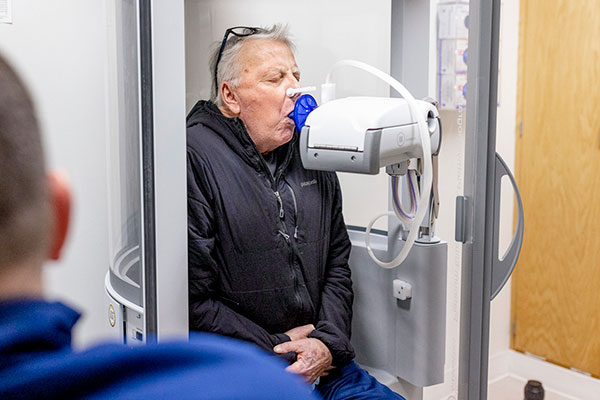
Pulmonary rehabilitation is a must because it is important for you to stay active to build up strength in your lungs before the transplant. Your doctor or therapist will provide specific exercise guidelines, based on your current condition.
Whenever possible, we encourage you to continue doing the activities you enjoy. However, be realistic and set priorities for your activities, especially when your energy level is down.
Rely on others for support
You may need to rely more on your support network than before. Don’t hesitate to ask others for help. They will appreciate the opportunity to assist you.
Support groups are also a great resource to provide information and share experiences. See the handouts, "Lung Transplant Resources" and "How to Cope," in this notebook for more information.
For More Information
If you have any questions or concerns, please call us at 216.444.6996. We will be happy to answer your questions.