Transplant Programs

Toll-Free: 866.320.4573

Call Us Toll Free:

866.223.2273 x1234


Kidney Transplantation Procedure and Recovery

Where does your new kidney come from?

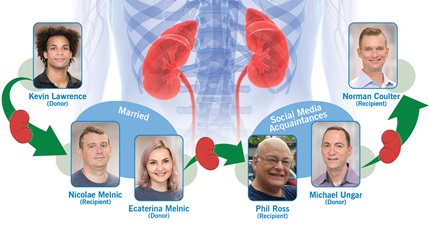
Kidneys for transplantation come from two sources: living donors and cadaver (non-living) donors.

  • Living donors are usually immediate family members or sometimes spouses.
  • Cadaver kidneys usually come from people who have willed their kidneys before their death by signing organ donor cards. Permission for kidney donation can also be given by the deceased person’s family at the time of death.

All donors are carefully screened to make sure there is a suitable match and to prevent any transmissible diseases or other complications.

What happens during the kidney transplantation procedure?

Kidney transplantation involves placing a healthy kidney into the body where it can perform all of the functions that a failing kidney cannot.

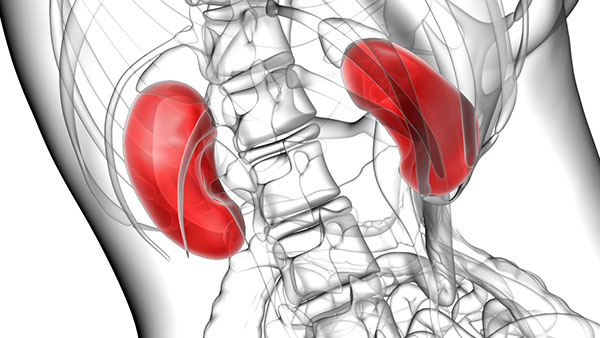
The new kidney is placed on the lower right or left side of your abdomen where it is surgically connected to nearby blood vessels. Placing the kidney in this position allows it to be easily connected to blood vessels and the bladder. The vein and artery of your new kidney are attached to your vein and artery. The new kidney’s ureter is attached to your bladder to allow urine to pass out of your body.

What happens to my old kidneys after my kidney transplantation?

In most cases of kidney transplantation, the diseased kidneys are not removed. There are three conditions which may require your diseased kidneys to be removed during kidney transplantation:

  •  Repeated infection that could spread to the transplanted kidney
  •  Uncontrollable hypertension caused by your original kidneys
  •  Backup of urine into your kidneys (a condition called reflux)

What are the benefits of kidney transplantation?

A successful kidney transplant gives you increased strength, stamina and energy. After kidney transplantation, you should be able to return to a more normal lifestyle and have more control over your daily living. You can have a normal diet and more normal fluid intake.

If you were dependent on dialysis before the transplant, you’ll have more freedom because you won’t be bound to your dialysis schedules.

Anemia, a common problem with kidney failure, may be corrected after transplantation. If you have hypertension (high blood pressure), you could be on fewer blood pressure medications after transplantation.

What are the risks of kidney transplantation?

The risks of kidney transplantation are the same as those of any surgery. There is the risk of bleeding, infection or breathing problems. You also may experience some side effects from the medications and you could be more prone to infections, since the medicine you will take after kidney transplantation lowers your body’s ability to fight infection.

There is also the risk of rejection. Since the body recognizes the new kidney as a foreign object, it will normally try to get rid of it or "reject" it. However, you are given medications to prevent rejection.

Because of years of experience, research and improved medications that prevent rejection, kidney transplants are very successful with few complications after kidney transplantation.

For more information about kidney transplantation

If you have any questions or concerns, please call us at 216.444.6996. We will be happy to answer your questions.