


About Us
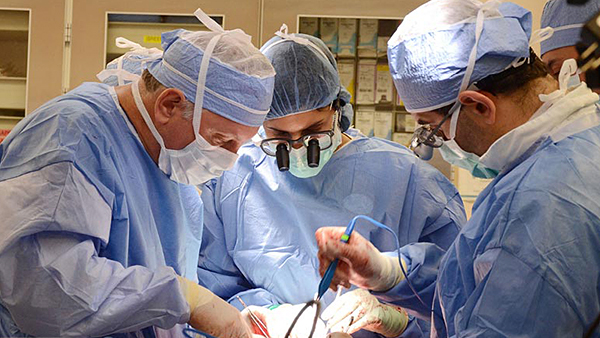
An unparalleled team of Cleveland Clinic physicians, surgeons, basic and clinical research scientists, bioethicists and support staff have combined their expertise to launch the Center for Reconstructive Transplantation. With seed money from government and private sources, the center is endeavoring to improve services, access and care for patients who have experienced extensive and complex tissue loss due to disease or trauma.
The Challenge
Massive loss of complex tissues due to traumatic injury or degenerative disease causes devastating loss of physical and social function in its victims. In some cases, such as loss of facial or abdominal wall tissue (where prosthesis is either unavailable or insufficient to restore physical integrity and function) patients may face dozens of surgical reconstructions. These surgeries are associated with additional pain and loss of function and rarely result in an acceptable outcome.
The Solution
Reconstructive transplantation, also called composite tissue allograft, offers an alternative to traditional surgical reconstruction that can restore natural function to these patients, allowing them to regain their daily living independence. Reconstructive transplantation involves the transplanting of intact tissues (such as hands, faces, abdominal walls, larynges, etc) from a deceased donor to a living recipient. Because these tissues are replaced with their functional equivalents, the recipient patients are able to regain both structure and function that is impossible with other surgical reconstructions.
Our Team
Pharmacy
Jessica Bollinger PharmD
Lead Transplant Coordinator
Deb Priebe, RN, BSN, CCTC
Transplant Social Worker
Beth Piotrowicz, LISW-S
AFIRM Program
The Armed Forces Institute of Regenerative Medicine is a multi-institutional, nationwide network of hospitals and universities with one goal: using the best technology in regenerative medicine to bring healing to our wounded men and women of the armed services. These young people are willing to give their lives in support of the United States and world stability and we owe it to them to give them the best medical technology we can offer to help them restore their health after an injury
Reconstructive Transplantation is an integral part of this activity. Sometimes, limbs or faces are so badly damaged that they cannot be adequately treated even with the best regenerative medicine therapies. For these patients, transplant of tissues from the face or limb of a donor can restore not just life, but quality of life, to service members who otherwise would face a lifetime of isolation and disability.
Cleveland Clinic is one of only two centers in the country that is screening patients for reconstructive transplant of the face, and one of only four screening for reconstructive transplant of arms and hands.
Education
Composite tissue transplant is an extremely powerful treatment option for patients who have lost large and complex areas of tissue due to traumatic injury or disease. Cleveland Clinic’s Center for Reconstructive Transplantation offers a comprehensive program to educate and train surgeons and clinicians in the most up-to-date methods for composite tissue allograft surgery, medical treatment options for immuno-modulation, and ethics programs for patient and donor screening. Fellowships are available in these areas, as well as in several areas of research.
Learn about our extensive education programs for physicians and healthcare professionals.
Ethics
Cleveland Clinic's commitment to quality patient care includes a deep concern for the ethical aspects of medicine. The Department of Bioethics, established in 1984, offers clinical consultation, research ethics, institutional ethics support, education and research.
By systematically examining patient values and moral beliefs, members of the Department of Bioethics seek to enhance the many clinical interactions that take place among patients, families, community members and healthcare professionals.
Members of the department play a vital role in the Center for Reconstructive Transplantation, offering guidance and support to patients and their family members at no cost.
Resources
Ethical Issues in Near-Total Face Transplantation
Eric Kodish, MD, Chairman of the Cleveland Clinic Bioethics Department
- Cleveland Clinic Bioethics Department
