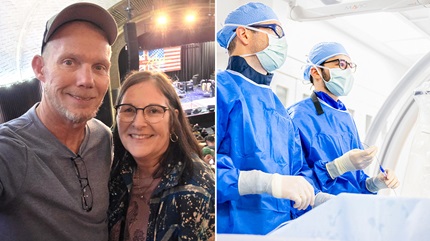
During a family luncheon in May 2021, Tom Yoder felt an unusual feeling of fullness. His primary care physician suspected pancreatitis (inflammation, swelling and soreness of the pancreas) and referred him to a gastroenterologist who confirmed the diagnosis.
In September, he felt the same fullness, which lasted for a few days. The gastroenterologist was perplexed. One month later, the feeling came back for a third time. Tom and his wife Debbie sought a second opinion from Cleveland Clinic. Debbie, a retired nurse practitioner, suggested they go to the emergency room at Cleveland Clinic Main Campus. Following a second diagnosis of pancreatitis, she convinced doctors to admit her husband. A scan of his abdomen showed a tumor.
“Be an advocate for yourself. Know your body.”
Robert Simon, MD, a Cleveland Clinic surgeon specially trained in hepato-pancreato-billary surgery, saw Tom, and his imaging studies, the next day. “He was healthy overall, but the pancreatitis and our suspicion that the tumor was cancerous were high enough that we scheduled surgery rather than waiting for a biopsy and results,” he says.
Dr. Simon performed a distal pancreatectomy and splenectomy, removing the end of Tom’s pancreas and his spleen – the standard surgical treatment for pancreatic cancer. Biopsy of the removed tissue confirmed early stage 1B pancreatic cancer.
“We caught it early, which is unusual for pancreatic cancer. Typically by the time a pancreatic cancer patient becomes symptomatic, the cancer has already advanced,” says Dr. Simon.
Dr. Simon credits Tom and Debbie for seeking care immediately when they felt something was wrong. He also said that Tom’s overall good health and activity level worked to his advantage and put him in a better position to deal with the chemotherapy treatment that began five weeks post-surgery.
“Even with successful surgery, there is a high risk the cancer can come back, so an aggressive chemotherapy protocol that includes a combination of drugs is pretty standard,” says Alok Khorana, MD, a Cleveland Clinic hematology and medical oncology specialist. “The goal of the chemotherapy is to prevent the cancer from coming back.”
Chemotherapy treatment lasted about six months (every two weeks for a total of 12 sessions). Often tired, Tom stayed active throughout, walking an average of 16,000 steps a day, playing tennis and biking.
“My diagnosis was a devastating blow, and I thought my days were numbered, but I was determined to stay as strong and positive as possible,” says Tom. “I had tremendous support from family and friends, most notably my wife.”
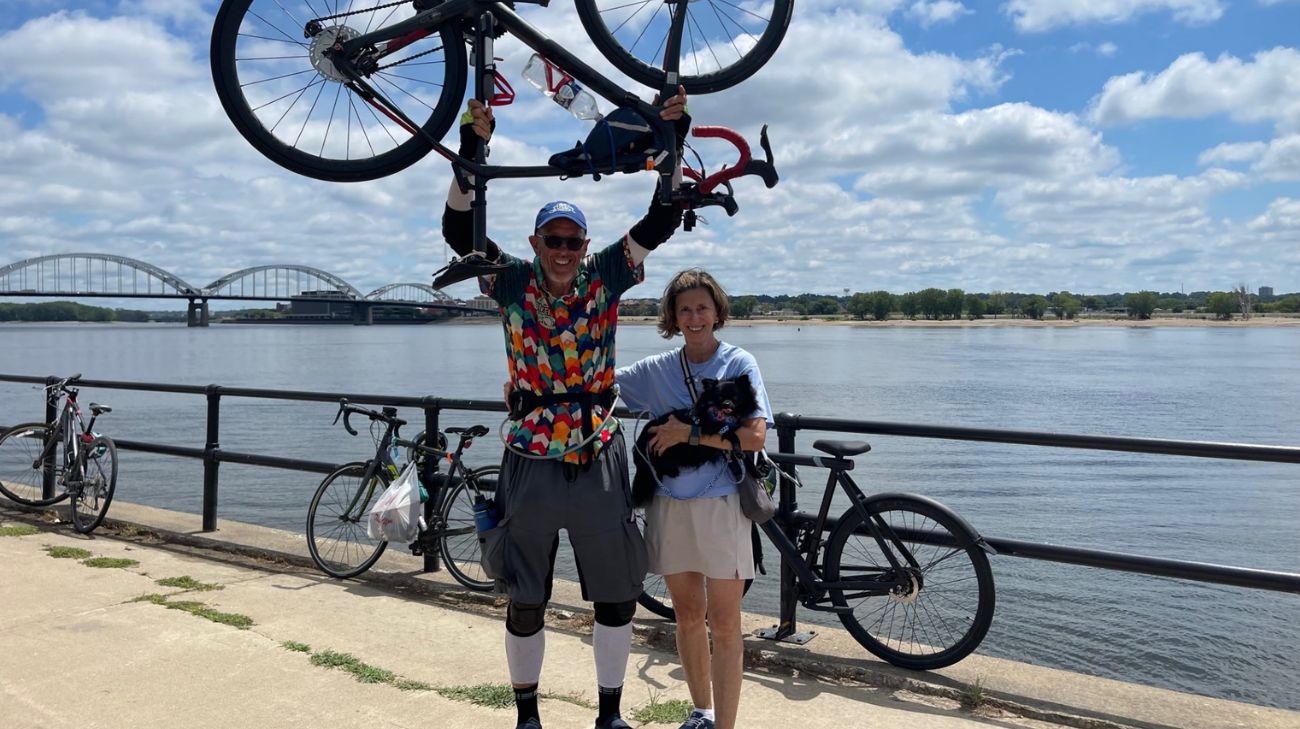
In May 2022, with chemotherapy complete and scans showing no evidence of disease, Tom began checking off items on his bucket list. He has celebrated his 70th birthday, the birth of his ninth grandchild and attended many special events involving his grandchildren. Tom has visited ten states, riding more than 6,000 bike miles – including a seven-day 527-mile trek across Iowa. He has cheered on Michigan at the 2024 Rose Bowl and National Championship game in Houston, and is enjoying every moment spent with family and friends.
His latest scans in October 2023 show no evidence of disease. As he continues to check off his bucket list (he needs to get to Oregon to have spent time in all 50 states) Tom wants to share a simple message.
“Be an advocate for yourself. Know your body. If something seems wrong, see your physician. Seek second opinions and stay positive,” he says.
Related Institutes: Digestive Disease & Surgery Institute , Cleveland Clinic Cancer CenterPatient Stories
Exercise Medicine Program Helps Man Prepare for Surgery and Reclaim an Active Life
Oct 9, 2026

‘Cornstarch Keeps My Son Alive’: Boy Eats Raw Cornstarch Daily To Manage Rare Metabolic Disorder
Oct 8, 2026