


Advanced Endoscopic & Open Skull Base Surgery
The Section of Open Skull Base Surgery (SSBS) works as an interdisciplinary team in conjunction with specialists in interventional neuroradiology, otolaryngology, neuro-ophthalmology and plastic surgery. The SSBS consists of one of the largest meningioma programs in the country, evaluating over 200 new patients with meningiomas annually, of which approximately 100 operations are performed. In addition to meningioma surgery, the SSBS surgeons perform approximately 50-60 MVD procedures for trigeminal neuralgia and hemifacial spasm in addition to a growing number of minimally invasive endoscopic procedures for selected anterior skull base pathology.
The primary goals of this fellowship is to train future academic leaders and clinical scientists in the subspecialty of skull base surgery by providing advanced training in the overall management of patients with complex skull base pathology. During the fellowship year, the fellow also actively participates in on-going clinical research in the areas of outcomes research, surgical technique refinement and elucidation of the natural history in meningiomas/schwannomas. Our past fellows and the current SSBS staff have won several prestigious awards from the AANS/CNS Joint Section on Tumors for their excellence in clinical research (Mahaley Award 2002, Integra Foundation Award 2006, Synthes Award 2007, Integra Foundation Award 2008, Synthes Award 2009).
Interested applicants must have successfully passed USMLE Steps 1, 2CK and 2CS. Applicants requesting an H-1B visa must also have successfully passed USMLE Step 3. International medical graduates must have received a currently valid ECFMG certificate in order to apply to our program.
Interested candidates can apply for a fellowship position by submitting the following documentation:
- Fellowship Application.
- Curriculum Vitae (CV).
- Personal Statement.
- Letter from Residency Program Director in lieu of Dean’s Letter.
- At least two letters of recommendation from physicians whom have supervised you in a clinical setting.
- USMLE/COMLEX Score Reports.
- Medical School Diploma.
- Certificate(s) of previous training.
- Certified copy of your currently valid ECFMG certificate (applicable for International Medical Graduates only).
Current Fellow
- Silky Chotai, MD
Past Fellows
- Saira Alli, MD
- Graduated June 2024
- Neurosurgeon, St. Michael's Hospital, Toronto, Canada
- Sara Alsulaimani, MD
- Graduated June 2023
- Neurological Surgery, Loma Linda Hospital, Loma Linda, CA
- Erion De Andrade, MD
- Graduated June 2022
- Neurosurgical Oncology Fellow, Cleveland Clinic, Cleveland, OH
- Pranay Soni, MD
- Graduated: June 2021
- Assistant Associate Staff, Cleveland Clinic
- Joao Paulo Almeida, MD
- Graduated: December 2020
- Associate Professor of Clinical Neurological Surgery, Indiana University
- Hamid Borghei-Razavi, MD
- Graduated: June 2019
- Assistant Professor of Neurological Surgery, Cleveland Clinic Florida
- Paramita Das, MD, MS
- Graduated: June 2018
- Assistant Professor at University of Chicago Medical Center, Chicago, IL
- Danilo Silva, MD
- Graduated: June 2017
- Assistant Professor of Neurosurgery, Hofstray University, New York, NY
- Aaron Sigler, DO
- Graduated: June 2016
- Clinical Assistant Professor of Neurosurgery, Baton Rouge General Medical Center, Baton Rouge, LA
Contact Person
Pablo Recinos, MD
Cleveland Clinic
9500 Euclid Ave., CA51
Cleveland, OH 44195
Phone: 216.445.2901
Fax: 216.636.5401
Advanced Endoscopic and Microscopic Neurosurgery Research Fellowship
Epilepsy Surgery
About the Program
The Cleveland Clinic Epilepsy Surgery Fellowship, established in 1999, is a collaborative program between the Departments of Neurology and Neurosurgery. The fellowship reflects the extensive surgical and diagnostic experience of a large multidisciplinary team — 3 epilepsy neurosurgeons, 35 epileptologists, 35 epilepsy monitoring beds, and a comprehensive network of supporting specialties organized within an independent, patient‑centered epilepsy center.
The fellowship operates independently of ACGME and SNS CAST accreditation, yet it is held to ACGME standards through the Cleveland Clinic Graduate Medical Education Department, ensuring rigorous training, oversight, and educational quality.
Our program is dedicated to diagnosing, evaluating, and surgically treating epilepsy, including complex cases referred to internationally. Our excellent outcomes and multidisciplinary structure have earned global recognition as one of the leading epilepsy surgery programs. Our mission is to alleviate the burden of epilepsy while advancing clinical knowledge and surgical innovation.
Program Overview
The one‑year fellowship includes:
- Participation in adult and pediatric epilepsy surgical and medical programs
- Required three‑month electrophysiology course
- Clinical research involvement
- Optional basic science research opportunities
Clinical Experience
Fellows gain extensive hands‑on experience, with more than 350 epilepsy surgeries performed annually across adult and pediatric populations. Surgical exposure includes:
- Resective surgery (temporal lobectomy, extra-temporal resective procedures)
- Invasive monitoring, including stereoelectroencephalography (SEEG)
- Stereotactic laser and radiofrequency ablative procedures
- Hemispherectomy and other disconnective procedures (corpus callosotomy)
- Neuromodulation
- Palliative and investigational surgical interventions for medically intractable epilepsy
Training takes place in cutting‑edge facilities featuring:
- An 8‑bed adult epilepsy monitoring unit
- A 6‑bed pediatric monitoring unit
- Functional and anatomical MRI, including intra-operative MRI (IMRIS)
- Nuclear imaging
- Advanced neurosurgical operative suites
Research Opportunities
Fellows have access to robust clinical and basic science research, with focus areas including:
- Surgical outcomes
- Multimodal imaging and fusion technologies
- Molecular markers for cortical malformations
- Experimental models of subthalamic stimulation
- Neuro-engineering and signal processing techniques, including machine learning/AI
- Resected tissue from surgical procedures supports multiple neuroscience research programs across the Cleveland Clinic campus
National Engagement
The program maintains strong academic involvement through:
- Frequent peer‑reviewed publications
- Presentation of papers and posters at national and international meetings
- Active participation within the American Epilepsy Society and the American Society for Stereotactic and Functional Neurosurgery, amongst others
- Hosting the Cleveland Clinic Epilepsy Symposium, along with the annual SEEG course and the Epilepsy Surgery Dissection Workshop, which attract national and international attendees
Application Requirements
Applicants must have:
- Completed an accredited neurosurgery residency
- Passed USMLE Step 1, Step 2 CK, and Step 2 CS
- Passed USMLE Step 3 if applying for an H‑1B visa
- A valid ECFMG certificate (for international medical graduates)
Application Materials
Required documents include:
- Completed Fellowship Application
- CV
- Personal Statement
- Residency Program Director letter (in place of a Dean’s Letter)
- Two (or more) letters of recommendation from supervising physicians
- USMLE/COMLEX scores
- Medical school diploma
- Certified copy of valid ECFMG certificate (if applicable)
Contact Person
William Bingaman, MD
Cleveland Clinic Department of Neurosurgery / S51
9500 Euclid Ave.
Cleveland, OH 44195
Phone: 216.444.5050
Fax: 216.444.0343
Neurosurgical Oncology & Stereotactic Radiosurgery
Cleveland Clinic Department of Neurosurgery and the Rose Ella Burkhardt Brain Tumor and Neuro-Oncology Center offer fellowship positions in Neurosurgical Oncology. The Burkhardt Brain Tumor Center is a unique, stand-alone department, which is comprised of neurosurgeons, neuro-oncologists, radiation oncologists and medical oncologists. Our surgeons perform about 600 major surgical cases and 350 radiosurgical cases each year. Clinical programs include gliomas, metastases, neuro-endocrine and skull base tumors. In addition to its own Phase I-III trials, the center participates in the New Approaches to Brain Tumor Therapy (NABTT) NCI-sponsored consortium, South West Oncology Group (SWOG), Radiation Therapy Oncology Group (RTOG), American College of Surgeons Oncology Group (ACoSOG) and Children’s Cancer Group (CCG). Advanced novel therapies utilized by the BTI neurosurgical group include blood-brain barrier disruption with IA chemotherapy, convection enhanced drug delivery, and intra-operative MRI. In addition to basic research in immunotherapy, apoptosis, molecular genetics, and angiogenesis, the program has recently embarked on large-scale preclinical testing of novel agents for treating brain tumors with the aim of bringing these to clinical trials.
A fundamental goal of this two-year, combined clinical and laboratory research fellowship program is exposure to the design and operation of clinical trials, as well as contributing to the neuro-oncology literature. Among current trials are several ongoing clinical projects including use of convection-enhanced delivery of immunotoxins for the treatment of malignant gliomas, blood-brain barrier disruption for delivery of chemotherapeutic agents, as well as the molecular analysis of chemotherapy responsiveness in gliomas. Fellows are expected to participate in the design, IRB application process and management of new clinical trials during this fellowship, and to produce clinical presentations and reports.
Interested applicants must have successfully passed USMLE Steps 1, 2CK and 2CS. Applicants requesting an H-1B visa must also have successfully passed USMLE Step 3. International medical graduates must have received a currently valid ECFMG certificate in order to apply to our program.
Interested candidates can apply for a fellowship position by submitting the following documentation:
- Fellowship Application.
- CV.
- Personal Statement.
- Letter from Residency Program Director in lieu of Dean’s Letter.
- At least two letters of recommendation from physicians whom have supervised you in a clinical setting.
- USMLE/COMLEX Score Reports.
- Medical School Diploma.
- Certified copy of your currently valid ECFMG certificate (applicable for International Medical Graduates only).
Contact Person
Lilyana Angelov, MD
Cleveland Clinic
Rose Ella Burkhardt Brain Tumor and Neuro-Oncology Center
9500 Euclid Ave./CA51
Cleveland, OH 44195
Phone: 216.444.5381
Fax: 216.636.2437
Stereotactic & Functional Neurosurgery
The Cleveland Clinic Department of Neurosurgery offers a one-year fellowship position in Stereotactic and Functional Neurosurgery. This program is CAST-accredited. Areas of specialty training include surgery for the management of movement disorders (including Parkinson’s disease, tremor, dystonia, and spasticity), chronic pain, psychiatric disorders and other central nervous system disease states. Surgeons are also actively involved in peripheral and central neurostimulation, MRI guided focused ultrasound, radiosurgery, surgical management of trigeminal neuralgia, intra-axial medication delivery and ablative procedures for pain.
Fellows in the program will receive training from neurosurgeons in the Department of Neurosurgery at the Cleveland Clinic who specialize in stereotactic and functional neurosurgery operations. They will be involved in the outpatient evaluation, inpatient care and surgery throughout the 12 month period. In addition, fellows will also work closely with the multidisciplinary team needed to care for these patients.
Numerous opportunities for both clinical and laboratory research are available. Ongoing functional neurosurgery projects include research into mechanisms of deep brain stimulation, the development of brain-computer interface prostheses and spinal cord stimulation. A wide range of clinical studies are also underway including the study of deep brain stimulation for stroke and pain, functional MRI in patients with implanted neurostimulators, MRI guided focused ultrasound and evaluation of novel deep brain stimulation electrodes. Fellows are expected to participate in stereotactic and functional neurosurgery projects, present regionally and nationally and submit research for publication. Participation in didactic lectures, journal club, and patient management conferences is required. Our goal is to graduate fellows prepared to enter an academic environment with the expectation they will develop their own successful program in Stereotactic and Functional Neurosurgery.
Candidates must have successfully completed or are projected to complete their neurosurgical residency training program at the time of application. Interested applicants must have successfully passed USMLE Steps 1, 2CK and 2CS. Applicants requesting an H-1B visa must also have successfully passed USMLE Step 3. International medical graduates must have received a currently valid ECFMG certificate in order to apply to our program.
Interested candidates can apply for a fellowship position by submitting the following documentation:
- Fellowship Application.
- CV and cover letter.
- Letter from Residency Program Director.
- At least two letters of recommendation from physicians whom have supervised you in a clinical setting.
- USMLE/COMLEX Score Reports.
- Medical School Diploma.
- Certified copy of your currently valid ECFMG certificate (applicable for International Medical Graduates only).
Contact
Sean Nagel, MD
Functional and Stereotactic Fellowship Program Director
Cleveland Clinic
Center for Neurological Restoration S31
Cleveland, OH 44195
Phone: 216.445.5897
Fax: 216.444.1015
Email: nagels@ccf.org
Administrative Program Coordinator
Cleveland Clinic
Center for Neurological Restoration S31
Cleveland, OH 44195
Email: nieducation@ccf.org
Spine Surgery Fellowship
Program
Welcome to the Spine Surgery Fellowship at Cleveland Clinic. Our fellowship is a combined Orthopaedic and Neurological Surgery experience that is one year in length, with an option to do an additional year of research for select candidates.
Our philosophy is simple. We strive to recruit the top candidates and provide them with superior clinical and surgical training. As a “hybrid” program comprised of four fellowship-trained Orthopaedic Surgeons and five fellowship-trained Neurosurgeons, each fellow will gain ample exposure to a wide range of spinal pathologies ranging from degenerative diseases, infections, intra- and extra-dural tumors, deformity, and trauma. In general, the surgical techniques employed by Orthopaedic and Neurological surgeons vary, and as a Fellow in this program, you will become proficient with all techniques, including deformity, microsurgery and minimally invasive surgery. A primary goal of our fellowship is to graduate fellows with a highly refined clinical acumen and surgical skill set that will allow them to most effectively treat any type of spinal malady. Approximately 1900 spine surgeries are performed annually at the Cleveland Clinic - providing an excellent opportunity to excel in spinal surgery, both technically and clinically.
Our yearly curriculum includes a very thorough series of didactic sessions provided by Staff and guest lecturers, fellow-directed case presentations, biomechanical and controversy conferences, in addition to monthly grand rounds lectures and journal clubs. The curriculum was designed to provide a strong evidence-based foundation on all topics pertinent to spine surgery.
Collectively, the Spine Surgery Staff surgeons have published over 500 articles in the peer-reviewed medical literature, over 400 book chapters and over 30 books in the field of spine surgery and related topics. All of the staff at Cleveland Clinic are involved nationally and internationally in teaching and are members of numerous academic societies. This underscores our philosophy, enthusiasm, and commitment to education as well as the breadth of experience among our staff. As a requirement in our Fellowship, each fellow must complete at least one project prior to graduation. There are a multitude of areas of research available to our fellows, including basic science, pre-clinical, clinical, and biomechanical research opportunities. We believe this is a valuable educational experience, and certainly a strength of this program.
Thank you for your interest the Spine Surgery Fellowship Program at Cleveland Clinic.
Curriculum
The Cleveland Clinic Spine Surgery Fellowship is focused on educating our fellows in a unique academic setting that encourages extensive training in the diagnosis and management of adult spinal disorders. There is emphasis placed on degenerative cervical, thoracic and lumbar disease, spinal deformity, intradural and extradural spinal tumors, spinal trauma, spinal infections, congenital spinal abnormalities, and complex reconstruction/revision cervical and lumbar pathology.
The fellows gain a substantial experience with a multitude of surgical techniques including image guidance, minimally invasive surgery, and microsurgery. The primary goal of our fellowship is focused on training the highest quality orthopaedic and neurosurgeons on a personal and professional level, in order to prepare them for private or academic practice.
Cleveland Clinic is recognized in the U.S. and throughout the world for its expertise and care. Both clinical and surgical experience is drawn from the nearly 1900 major spinal procedures performed by our fellowship-trained orthopaedic and neurosurgeons each year. Our faculty actively participates in the fellows’ education, helping to provide a high level of proficiency in a variety of surgical techniques and approaches designed to effectively treat any type of spinal condition.
Our clinical education program is comprised of didactic lectures given by staff, conferences, faculty interaction and ambulatory clinics which focus on the evaluation, diagnosis, operative and non-operative decision making, along with results and complications for all spinal treatments.
Fellows are required to participate in core curriculum education throughout the length of the program, which entails weekly conferences occurring every Friday. Topics include general spine indications, core curriculum, controversies in spine care, and biomechanics.
In addition to weekly conferences, there are monthly journal club meetings, fellow organized grand rounds, and visiting professor lectures on various topics four times per academic year. Our weekly conferences consist of presentations directed by our spine fellows with faculty input relating to various spinal pathology and surgical treatment options. Our journal clubs are organized every month, with attendance by both faculty and fellows. Articles for journal club are selected by the presenting fellow, with a discussion of content, methods, results and conclusions of each article presented amongst the group. Fellows are also encouraged to participate in the education and clinical teaching of residents in and out of the operating room throughout the year.
Research plays a vital role in our spine surgery fellowship. Fellows will have the opportunity to engage in clinical research with the intent to publish peer-reviewed articles under the direction of our faculty. Fellows will be expected to apply the principles of spinal research, with a strong focus on the use of evidence-based medicine in their surgical decision making. Fellows will have access to our spine research lab at Lutheran Hospital which is minutes away from our main campus. Some of our research interests include biomechanics, biologics, spine kinematics, and spinal cord injury and clinical research. Each fellow will be required to complete and present one research project at the end of the year as part of their requirement for program graduation. These projects are then prepared for submission prior to completion of the fellowship and are expected to be submitted for publication.
Cases
Over 1900 spine surgeries are performed annually by the Staff Spine surgeons involved in the Cleveland Clinic Fellowship, and this volume affords a wide variety and breadth of surgical training for our fellows. Approximately 60% are non-fusion procedures, and the remainder involve some kind of fusion surgery. Of the total surgeries performed, about 30% involve the cervical spine, 60% involve the lumbar spine, and the remainder are thoracic surgeries.
There are a wide variety of cases with which our fellows are involved ranging from the less to the most complex. As a tertiary care center, the spine surgeons at Cleveland Clinic treat the most complex spinal pathology, including revision surgery, spinal deformity of many etiologies, primary spinal column tumors and metastatic disease, infections, as well as intra- and extra-dural tumors. While Cleveland Clinic is not a trauma center, we do evaluate and treat a variety of traumatic spine injuries and we believe this offers a substantial exposure to this cohort of patients for the fellows.
Our primary goal as a fellowship program is to deliver a broad, balanced, evidence-based exposure to the various surgical techniques used today in spine surgery. Integral to optimizing the surgical treatment of any patient is a need to understand the pathology, historical treatments, and outcomes, and to develop sound and efficacious surgical skills. We firmly believe that by the end of the fellowship each fellow will be comfortable and very capable of treating any surgical spine issue, and will have had ample exposure to some of the more contemporary techniques including minimally invasive surgery, image guidance, and microsurgery
Testimonials
John H. Shin, MD
Neurological Surgeon
2009-11 (Research/Clinical)
Harvard Medical School
Massachusetts General Hospital
Boston, MA
“The fellowship did an excellent job of preparing me for an academic career in spine. The combination of orthopedic and neurosurgical spine training is invaluable and is what really made the fellowship a rich environment for learning. The didactics, including lectures and case presentations, were comprehensive and provided ample opportunity for discussion and debate. For anyone wishing to pursue spine as a subspecialty, I would recommend this fellowship without any hesitation or reservation. The numerous opportunities for research made this a very productive time.”
Frank Bishop, MD
Neurological Surgeon
2010-11
Northern Rockies Neurosurgical Associates
Kalispell, MT
“Having had a strong spine experience during my neurosurgery residency, I was unsure of the actual value of adding a spine fellowship to my training prior to starting. The year proved to be one of the best of my training experience. I was able to see a wide range of complex cases in clinic and the operating room, which has greatly enhanced my decision-making and technical abilities. Perhaps more importantly, Cleveland Clinic has a group of world-renown spine surgeons, from both neurosurgery and orthopaedic backgrounds, with whom I worked closely and individually, and was therefore able to see and discuss multiple ways of treating spinal disorders. My knowledge and armamentarium increased noticeably during the course of the year. The fellowship has transformed what I am able to do for my practice and patients.”
Elijah Hothem, MD
Orthopaedic Surgeon
2010-11 (Research/Clinical)
Ohio State University
Columbus, OH
“The spine fellowship at Cleveland Clinic is a unique training experience. The combination of orthopedic and neurosurgical training sets you apart from the conventionally trained crowd. You are treated as a colleague and friend by the attendings. The educational didactics were excellent and by the end of the year I had a well read, evidence based, and objective approach to treatment of the spine.”
Fernando Techy, MD
Orthopaedic Surgeon
2010-11
University of Illinois
College of Medicine at Chicago
Chicago, IL
“Overall it has been simply great. All attendings were always very patient and took their time to let us operate. Clinics were also great. Attendings took their time to discuss cases, go over indications and so on. Great clinical experience overall (from cervical to lumbar, to intradural pathology, to deformity).
Personally, as I am interested in Academics and publishing, and Cleveland Clinic was amazing in providing us with the opportunity. You can write a book chapter a month if you are interested. Every staff member is very involved with Societies and publishing and if you are interested in getting involved you can get a lot of help here. Clinical and biomechanical studies are always ongoing and help is always wanted. On the other hand, if research is not your thing, you only need 1 project done throughout the year.
The experience operating with Neurosurgeons and Orthosurgeons was very interesting to me. In the end I came to a conclusion that the indications and operations in this day and age are pretty much the same. I guess it does not matter at all what your background is, as long as you are well trained. You can take the lamina out with a drill or a Leksell, as long as you leave the dura in place the patient will be OK.”
S. Scott Lollis, MD
Neurological Surgeon
2009-10
Dartmouth-Hitchcock Medical Center
Lebanon, NH
"The Cleveland Clinic fellowship was a great experience. For me, the principal clinical benefits were in the areas of spinal deformity and tumor surgery. As a neurosurgical resident I'd had no exposure to major deformity correction, and while I had certainly done laminectomies for tumors, I was not completely comfortable with the posterolateral approaches for thoracic tumors (costotransversectomy/lateral extracavitary with anterior column reconstruction). The variety and volume of cases at Cleveland Clinic is exceptional, and this allowed me to develop competence in these two areas."
There is great value in the combined ortho/neuro fellowship, both in terms of learning new operative techniques and in terms of clinical judgment and pre-op decision-making. Because each fellow has a one on one experience with each faculty member, the fellowship offers a breadth of experience that is uncommon.
Lastly, I am really grateful for the friendships that I formed during my year in Cleveland. The fellowship’s greatest strength is that it brings together a large number of great people with a shared interest. Our class had a great time, and I expect these relationships to continue throughout our professional careers.”
William F. Lavelle, MD
Orthopaedic Surgeon
2008-9
SUNY Upstate Medical University
Syracuse, NY
“I felt the combined orthopaedic surgery and neurosurgery spine experience helped prepare me for my academic spine surgery career. I am currently Fellowship Director of the spine fellowship at SUNY Upstate Medical Center. My practice is a combined trauma, tumor, deformity and degenerative spine practice at an academic tertiary center. I felt well prepared for practice after my fellowship at Cleveland Clinic.”
Daniel Refai, MD
Neurological Surgeon
2009-10
Washington University in St. Louis School of Medicine
St. Louis, MO
“I enjoyed working with the orthopaedic spine service and doing deformity cases. This was a huge asset. In addition, I definitely expanded my repertoire of skills from having great mentors in both neurosurgery and orthopedics.”
Todd J. Stewart, MD
Orthopaedic Surgeon
2002-03
Washington University in St. Louis School of Medicine
St. Louis, MO
“The Cleveland Clinic Spine Fellowship provides outstanding training in the full breadth of spinal pathologies from routine degenerative cases to complex cervical reconstructions, tumor resections and scoliosis. The opportunity to train under opinion leading surgeons from both neurosurgery and orthopaedics makes this a top fellowship program.”
Daniel Shedid, MD
Neurological Surgeon
2004-2006
Montreal, Quebec, Canada
“I did a combined fellowship of 2 years. After more than 5 years in practice, I can honestly say that I did a tremendous training at Cleveland Clinic. For me as a neurosurgeon, I had an excellent opportunity to work closely with orthopedic surgeons. This has helped me to understand and master all the aspects of the spine as a whole. I can proudly say that my fellowship at Cleveland Clinic made me where I am now as a spine surgeon.”
Robert Talac, M.D, PhD
Orthopaedic Surgeon
2008-2009
Advanced Spine Institute, PLLC
Jackson, TN
“I have been a spine surgery fellow between the years 2008-2009. In my opinion, Cleveland Clinic spine surgery fellowship is one of the top fellowships in the country. The depth of the program provides a unique opportunity to learn how to handle any spine pathology from a simple one to the most complex. The entire program is well balanced. A fellow has enough independence to facilitate his/her transition into the practice. At the same time, s/he has enough support to learn from experienced staff. Should you need any more information about my experience please do not hesitate to contact me.”
Dhruv B. Pateder, MD
Orthopaedic Surgeon
2006-07
Town Center Orthopaedic Assocs.
Reston, VA
“I am very thankful for my spine fellowship experience at Cleveland Clinic. It was a very comprehensive educational and operative experience and instrumental in preparing me for academic/private practice. The interactions with the attendings as well as the other fellows were a very valuable component of this well-rounded fellowship. It was a perfect combination of the orthopaedic and neurosurgical experience as well as "routine" and "big" cases. I honestly believe it is the best fellowship in the country.”
L. Brett Babat, MD
Orthopaedic Surgeon
2001-02
Premier Orthopaedics & Sports Medicine
Nashville, TN
“I was a Cleveland Clinic fellow, class of ’01-’02. I am now in private practice in Nashville, TN. My year in Cleveland was perhaps the most valuable of my entire education. I left there fully confident in my ability to handle the entire range of adult spinal surgery, from simple disc herniations to complex deformity. Furthermore, I had gained enough of an understanding of the degenerative spine to facilitate continued learning and technical advancement. I am convinced my Cleveland Clinic fellowship provided the best possible grounding and experience.”
Richard Schlenk, MD
Neurological Surgeon
2002-03
Director, Neurosurgery Residency Program
Cleveland Clinic
Cleveland, OH
“The fellowship was truly an experience that shaped and molded my clinical and surgical skills. It was a tremendous opportunity to work with both orthopedic and neurosurgeons in a meaningful manner not available in any other fellowship program. It certainly helped prepare me for a career in academics.”
Eric Klineberg, MD
Orthopaedic Surgeon
Assistant Professor
Director, Spine Fellowship Program
Adult & Pediatric Spinal Surgery
University of California, Davis
Sacramento, CA
“The Cleveland Clinic fellowship allowed me to further my understanding of spinal surgery with both Orthopaedics and Neurosurgery. This experience has allowed me to learn from both sides of the fence and take the best of both specialties. I have used this knowledge and now have an academic practice at UC Davis, in which I provide care for complex fracture, tumor, cervical deformity and scoliosis patients. In addition, I now count Cleveland Clinic staff as close friends and we talk often about cases, and collaborate on research projects. I would recommend this fellowship highly.”
Sharad Rajpal, MD
Neurological Surgeon
2009-10
Boulder Neurosurgical Associates
Boulder, CO
“One unique aspect of this program is the breadth of training afforded by the combination of Orthopedic and Neurosurgical specialties. The excellent teaching in both the operative and clinical settings provided me with the tools to help me be successful and confident today in my treatment decisions by analyzing difficult and complex spine problems with perspectives from both specialties.”
Cristian Brotea, MD
Orthopaedic Surgeon
2006-07
Westchester Spine Institute
Specialty Orthopaedics, PLLC
Harrison, NY
"I feel that the Cleveland Clinic Spine Fellowship program provided me with a very thorough, complete experience which prepared me very well for my private practice. It provided me with the tools to approach any type of cervical/thoracic/lumbar case. The program provides the fellows with a wide variety of cases and working on them with residents was particularly rewarding. I found it was particularly insightful to work with neuro- and orthopaedic surgeons and I learned a lot from both specialties."
Christopher Kager, MD
Neurological Surgeon
2000-01
Neuroscience & Spine Associates
Lancaster, PA
“My spine fellowship experience was outstanding. It provided me with comprehensive training in all aspects of spinal surgery. One outstanding feature was the collaboration with both orthopedic and neurosurgery spine specialists, providing an interesting hybrid experience. The facilities at Cleveland Clinic are excellent, in both clinical and research areas, and many opportunities to be involved in research projects in both arenas. The program also maintains a strong collegial feel as well, with great relationships between the fellows and the faculty and residents.”
Saad B. Chaudhary, MD, MBA
Orthopaedic Surgeon
2007-08
Spine Surgeon
Assistant Professor
UMDNJ - New Jersey Medical School
Newark, NJ
“The Cleveland Clinic Spine Surgery Fellowship was outstanding. It was enriching to work closely with experts in spinal surgery from both the Orthopaedic and the Neurosurgical disciplines. I had a tremendous operative experience with the nine faculty members; covering a wide variety of pathology from simple disc herniations and degenerative disease to complex spinal deformity and spinal tumors. I was exposed to both traditional open surgery, and to cutting edge minimally invasive surgical treatments. This fellowship not only equipped me with the tools needed to excel as a private practitioner, but also prepared me for a career in academics. In my opinion, the Spine Surgery Fellowship at Cleveland Clinic is easily in the top 3 best programs in the country.”
How to Apply
Orthopaedic and Neurosurgery applicants to Cleveland Clinic's Center for Spine Health Fellowship follow two different processes.
Orthopaedic Surgeons
All Orthopaedic trained surgeons must apply through the SFMatch. The timeline for the match is as follows:
- August, current year: SFMatch begins accepting registration for the Spine Surgery Fellowship Match. Applicants can view the Program Directory once registration is concluded. It is recommended that you check this directory on a regular basis since it is updated by programs year round. Please note the individual deadline dates of each program to which you will apply.
- November 1, current year: Cleveland Clinic Spine Surgery Fellowship Application Deadline date.
- January and February, following year: Interviews take place.
- March, following year: Interview period ends.
- March, following year: Rank List Submission Deadline.
- April, following year: Match results are available.
Please note: These dates may vary, as will the deadline dates of each individual program.
Neurological Surgeons
Applicants must send their application directly to the Program e-mail: spinefellowship@ccf.org.
A personal statement, CV, and three letters of recommendation must accompany the application. Neurosurgery applicants are encouraged to apply by September 1 of the current year to be included in the interview day scheduled each year in autumn.
Applications are processed two years in advance and accepted year round.
International Medical Graduates
To qualify for a Fellowship at the Cleveland Clinic you must be able to obtain a permanent Ohio Medical License. To qualify, International Applicants must have passed the US-MLE Step 3, and must hold an H1 Visa or equivalent. (A J1 Visa will not suffice.)
- To sign up for the US-MLE go to www.usmle.org, or for more information go to SFMatch.
Current Fellows
2024–2025 Spine Surgery Fellows
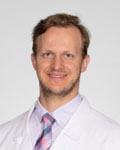
Paul Gagnet, MD
Medical School: The University of Toledo College of Medicine and Life Sciences
Residency: University of Michigan
Fellowship: Mayo Clinic
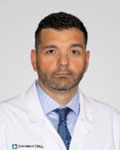
Muhamed Hadzipasic, MD, PhD
Medical School: Yale University
Residency: Massachusetts General Hospital
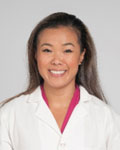
Emily Hu, MD
Medical School: Case Western Reserve
Residency: Cleveland Clinic Foundation
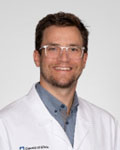
Matthew Philippi, MD
Medical School: U Utah School of Medicine
Residency: University of Utah
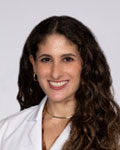
Erisha Tashakori, MD
Medical School: U Texas Houston
Residency: University of Texas at Houston
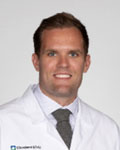
Wyatt Vander Voort, MD
Medical School: U Iowa – Roy J. and Lucille A. Carver College of Medicine
Residency: University of California Davis Medical Center
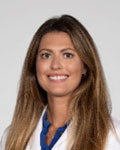
Emily Zielinski, MD
Medical School: Indiana University School of Medicine
Residency: Indiana University Medical Center
Living in Cleveland
Cleveland, a mid-sized city located on Lake Erie, features a host of cultural attractions, recreational activities, major sporting events and an exploding culinary scene. Cleveland is home to the second largest theater district in the U.S., a park system featuring 23,700 acres in 18 reservations, and is the birthplace of rock ’n’ roll, home to the Rock ‘n’ Roll Hall of Fame and Museum. Cleveland Clinic is located near the University Circle area, which is the cultural epicenter of Cleveland. This area features Severance Hall and the world-renowned Cleveland Orchestra, the Cleveland Museum of Art, several other museums, and Case Western Reserve University. Downtown Cleveland, home to all major sports venues and an exploding culinary scene, is approximately two miles from Cleveland Clinic’s main campus.
