

Overview
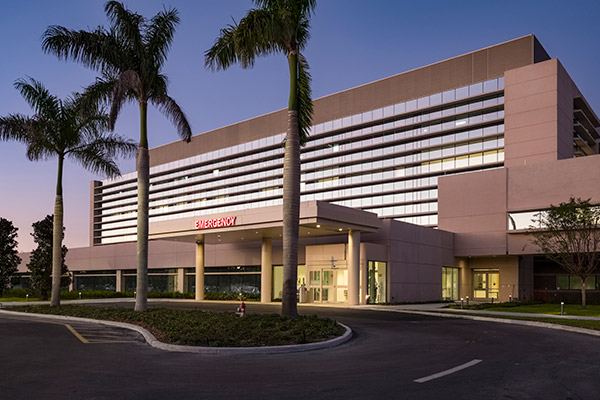
Cleveland Clinic in Florida emergency rooms offer world class emergency care in communities throughout the Treasure Coast and South Florida, providing care for patients experiencing severe medical problems like strokes and heart attacks, to critical injuries such as car accidents and falls. Our emergency departments are staffed by board-certified emergency medicine physicians who have access to multi-disciplinary care teams and the state-of-the-art technology needed to diagnose and treat patients efficiently and effectively, 24 hours a day, seven days a week.
Please note: For Non-Life-Threatening Injuries and Illnesses, consider an Urgent Care or Express Care facility near you. If you have a condition that is a medical emergency such as chest pain, severe shortness of breath or require immediate assistance due to an accident or injury, please call 911.
When Should I Go to the Emergency Room?
When severe medical conditions or life-threatening injuries happen, our emergency departments in Florida are here to treat you quickly — with reduced wait times. If you or a loved one need to be admitted, you'll get seamless care from our hospital and specialty service providers.
Our Cleveland Clinic Florida emergency rooms provide care for the sickest patients — from severe medical problems to critical injuries. Below are examples of when you should seek emergency care:
- Accidents, including falls and car crashes.
- Chest pain.
- Coughing up or vomiting blood.
- Drug overdose.
- Fever.
- Head injury.
- Injuries caused by violence.
- Life-threatening conditions.
- Loss of consciousness.
- Major trauma.
- Poisoning or suspected poisoning.
- Severe burns.
- Severe headache.
- Severe or persistent abdominal pain.
- Shortness of breath.
- Sudden or unexpected paralysis (stroke symptoms).
- Suicidal or homicidal feelings.
- Uncontrolled or excessive bleeding.
Have questions about payment?
Most insurance plans are accepted. Payment, including co-pays, is required at time of service.

Awards & Certifications
Cleveland Clinic in Florida is an accredited Primary Stroke Center, certified by Joint Commission and American Heart Association. This achievement demonstrates that our stroke program follows national standards and guidelines that can significantly improve outcomes for stroke patients.
Cleveland Clinic in Florida has also been designated a Comprehensive Stroke Center by Florida’s Agency for Health Care Association.
In addition, our program has been the recipient of the American Heart Association's Get with the Guidelines® Stroke Gold Plus Achievement Award with Target: Stroke Honor Roll Elite Plus.
Cleveland Clinic Martin North Hospital’s and Tradition Hospital’s Emergency Departments (ED) have been recognized with the 2025 Emergency Nurses Association (ENA) Lantern Award.
