Eye Health

Find information on diabetic retinopathy, retinal detachments, macular degeneration, glaucoma, cataracts, uveitis and strabismus.

Toll-Free: 866.320.4573

Call Us Toll Free:

866.223.2273 x1234


Chat With An Ophthalmologist OnlineMore

Our free online webchats help you get answers to your ophthalmology questions by connecting you with one of our ophthalmology specialists.

Upcoming Chat: Vision Health and Eye Diseases

With comprehensive ophthalmologist Richard Gans, MD
Thursday, August 22, 2013
Noon - 1 p.m. (ET)

Register

VideosMore

Eye Breakthroughs

Lens Information

PodcastsMore

Genetic Testing for Age-Related Macular Degeneration

Cleveland Clinic Cole Eye Institute's landmark CATT study clarifies the relationship between gene risk indicators for age-related macular degeneration, and a person's response to treatments such as Avastin and Lucentis.

Laser Surgery for Cataracts: No. 6 Cleveland Clinic Innovation for 2013

Cleveland Clinic Cole Eye Institute has named the Femtosecond Laser Technology as a top innovation in 2013. This technology, already popularly used for LASIK surgery, is found to have great results when used for cataract surgery. This offers patients with a bladeless option for cataract surgery that also increases incision accuracy, reduces surgery time, causes less inflammation, and offers more stability when implanting a new lens.

The growing epidemic of "eye strain"

Cole Eye ophthalmologist Amy Babiuch, MD, discusses eye strain, a growing medical issue caused by constantly looking at technology such as computer or smart phone screens.

Second-year results of Cleveland Clinic-led study confirms Lucentis and Avastin are equally effective in treating macular degeneration

In a landmark drug-comparison study, Cleveland Clinic researchers found that bevacizumab (Avastin) is equivalent to ranibizumab (Lucentis) in the treatment of wet age-related macular degeneration (AMD) through two years.

New study finds possible link between cognitive problems and damaged retinas

Cleveland Clinic retina specialist Dr. Rishi Singh comments on a new study that discusses a possible link in cognitive problems with retinal diseases in a recent WKYZ news interview.

Peter K. Kaiser, MD appointed Chaney Chair for Ophthalmic Research

Peter K. Kaiser, MD, has been appointed the Chaney Family Endowed Chair for Ophthalmology Research at Cole Eye Institute. A clinical trials specialist, he has chaired five major multicenter international retina trials. Dr. Kaiser serves on numerous study executive committees and was first to treat any patient with a modified small RNA-interfering molecule. Bruce and Virginia Chaney endowed the chair more than a decade ago in gratitude for their care at Cole Eye Institute. With the passing of the Chaneys, their son, with his wife and children, continue the family's support of vision research here.

Cleveland Clinic Cole Eye Institute receives $3 million endowed chair

Cleveland Clinic’s Cole Eye Institute received a $3 million gift from Barbara and A. Malachi Mixon III in recognition of the sight-saving care Mr. Mixon received at the Institute.

Study finds Bevacizumab as effective as FDA-approved Ranibizumab in treating macular degeneration

A new study shows bevacizumab (Avastin) is as effective as ranibizumab (Lucentis) for treating age-related macular degeneration (AMD). The study, led by Cleveland Clinic, was published online today in The New England Journal of Medicine (NEJM).

Premier surgeon announces the PS250 List of leading innovators in the field of premium IOL implant surgery

Ronald Krueger, MD was recently named to the PS250, a list of the nation's top surgeons in the field of premium IOL implant surgery. An intraocular lens (IOL) is an implanted lens in the eye, usually replacing the existing lens because it has been clouded over by a cataract, or as a form of refractive surgery to change the eye's optical power.

About the Cole Eye Institute

Our Doctors »

our_docs

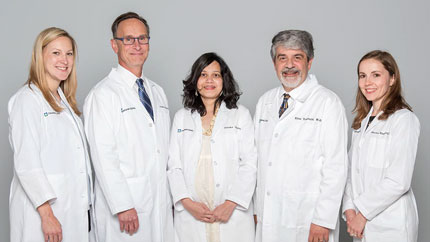
Our physicians are world experts in treating macular degeneration and other eye diseases, as well as performing diabetic retinopathy and refractive eye surgery.

Our Services »

Each year, our physicians see more than 150,000 patients and perform more than 5,000 surgeries—volumes among the highest in the nation.

Treatment Outcomes »

outcomes

Find patient volume and outcomes information in our Outcomes Books.

Becoming a Patient »

become_patient

Patients come to Cleveland Clinic from all over the world for care. Here’s how to make it happen for you.