Overview
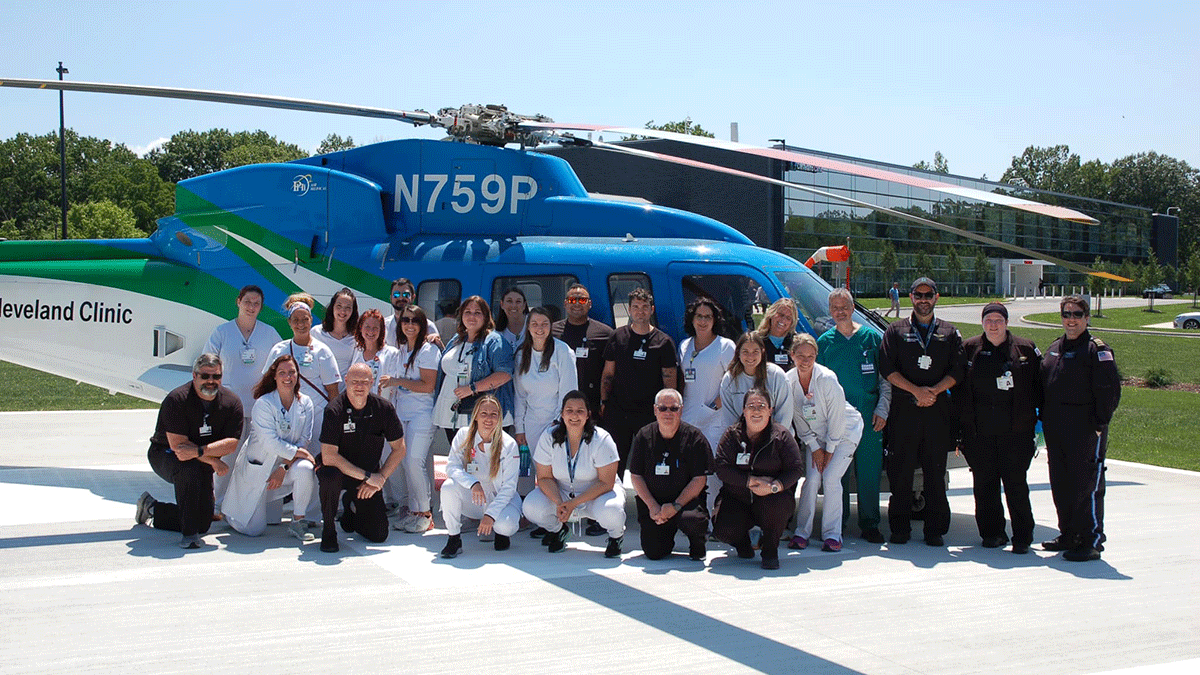
One phone call brings the expertise of Cleveland Clinic physicians, nurse practitioners, critical care nurses, and critical care paramedics to patients in need. Cleveland Clinic's Critical Care Transport (CCT) team is recognized as a world leader in transporting critical patients anywhere around the globe. The CCT team is an expert team of critical care providers available 24/7 to transport critically ill and injured patients of all ages via ground mobile intensive care unit, helicopter or jet aircraft.
Download the Critical Care Transport Brochure
Management capabilities
- Full mechanical ventilation.
- Ventricular assist devices.
- Extracorporeal membrane oxygenation (ECMO).
- Intra aortic balloon pump (IABP).
- Diagnostic imaging.
- Temporary pacemaker.
- Point-of-care lab analysis capabilities including: ABG; blood chemistries; hemoglobin; and hematocrit.
- Invasive line insertion and monitoring including: Swan-Ganz; arterial, central venous and intracranial pressure.
- Neonatal isolate transport.
Volume and statistics
- On average, our Critical Care Transport Team makes more than 7,500 transports a year.
- States visited: 48
- Countries visited: 32
- Territories visited: 2
Modes of transport
We care for and transport critically ill and injured adults and children via the following services:
- Fixed wing (jet).
- Rotor wing (helicopter).
- Ground mobile ICU.
- Mobile Stroke Unit.
Transfer a Patient
How to request a transport
-
Acute Transfer Line*
*For STEMI, ACUTE STROKE, INTRACRANIAL HEMORRHAGE, AORTIC SYNDROMES, TRAUMA, PEDIATRIC/NEONATAL EMERGENCIES and OBSTETRIC EMERGENCIES only. -
Call: 877.379.2633
-
All other Critical Care Transport calls please call 216.444.4846 to speak to the CCT coordinator.
Referring providers please have the necessary information to easily request a transport.
- Patient Information
- Name
- Date of Birth
- Diagnosis
- Cleveland Clinic medical record number (if available)
- Location of patient (ED, ICU, CCU) and phone number of referring location
- Description of patient’s current medications
- Current invasive lines, assistive devices, drips, or needs for telemetry
- Be sure to fax the demographic/insurance sheet to: 216.445.7222
Please have your contact information available: - Name
- Address
- Phone number
- Fax number
How to request a scene and rendezvous
-
Scene Rendezvous Line
FOR ANY EMERGENCY SERVICE AGENCY only.
Call toll-free: 844.CCF.EVAC (223.3822)
Referring providers please have the necessary information to easily request a transport.
Online access to your patient's treatment progress
Whether you are referring from near or far, our new eCleveland Clinic service, DrConnect, can streamline communication from Cleveland Clinic physicians to your office. This new online tool offers you secure access to your patient’s treatment progress at Cleveland Clinic. With one-click convenience, you can track your patient’s care using the secure DrConnect website.
To establish a DrConnect account, visit eClevelandClinic or email DrConnect.
Direct to Physician
Our 216.444.2200 or 800.223.2273 (outside of Cleveland) operator-assisted number will connect you at the physician’s office. You may also call Patient Access Hospital Transfer Services at 877.379.2633 or 866.547.1467. This direct-access, 24-hour phone line can connect you to a Cleveland Clinic physician.
For More Information
Call: 216.445.5580
Visit: Cleveland Clinic - Institute & Departments or Medical Concierge
Landing Zone Information
Print the Landing Zone EMS Card-
Scene Rendezvous Line
FOR ANY EMERGENCY SERVICE AGENCY only.
Call toll-free: 844.CCF.EVAC (223.3822)
If you would like to request our team and/or aircraft for a community event or if you are interested in arranging a speaker at your facility, please contact:
Modes of Transport
Cleveland Clinic Critical Care Transport operates four mobile ICU’s positioned out of Cleveland Clinic Main Campus, CC Twinsburg, CC Avon and CC Medina. Two Sikorsky S-76 helicopters are based out of Burke Lakefront Airport (Cleveland) and Wadsworth Municipal Airport (Wadsworth). Fixed wing transports are also based out of Burke Lakefront Airport. Additionally, a dedicated Mobile Stroke Treatment Unit (MSTU) serves the City of Cleveland and surrounding municipalities by providing and facilitating stroke treatment in the field.
In order to achieve the highest quality of transportation and safety, Cleveland Clinic Critical Care Transport has partnered with the following vendors.


Ground Mobile ICU
Four mobile intensive care units (M.I.C.U.) are staffed 24 hours a day, 7 days a week. Our adult Mobile Intensive Care Units and specialized pediatric /neonatal critical care ground unit are located throughout Northeastern Ohio in order to serve our communities and supporting hospitals. All Mobile Intensive Care Units (M.I.C.U.'s) are staffed to fit the patients needs with the appropriate resources. CCT's adult MICU's and specialized pediatric MICU are comprised of acute care nurse practitioners, critical care nurses, and critical care paramedics.
Rotor Wing (Helicopter)
Cleveland Clinic's Critical Care Transport Team has two Sikorsky S-76 C++ model, dual pilot, IFR-approved, WAAS-capable aircraft with a range of 250 miles with speeds of up to 170 miles per hour. These aircraft are currently based at Burke Lake Front Airport (Cleveland Ohio) and Wadsworth Municipal Airport (Wadsworth Ohio).
This aircraft provides the largest usable interior for medical transport, allowing for the use of cardiac-assist devices while providing room for up to four medical crew members.
Fixed Wing (Jet)
Our fixed wing service eliminates geographic boundaries for access to Cleveland Clinic care and are based out of Burke Lakefront Airport in Cleveland, Ohio.
- Dedicated, medically-configured Cleveland Clinic Aircraft.
- Domestic and International capabilities.
- Cleveland Clinic medical team on every mission.
- Management capabilities include:
- Full mechanical ventilation.
- Ventricular assist devices.
- Diagnostic imaging.
- Temporary pacemaker.
- Point-of-care lab analysis capabilities including: ABG; blood chemistries; hemoglobin; and hematocrit.
- Invasive line insertion and monitoring including: Swan-Ganz; arterial, central venous and intracranial pressure.
Mobile Stroke Treatment Unit
Cleveland Clinic’s mobile stroke treatment unit (MSTU) — one of the first units of its kind in the U.S. — was launched to shorten the time between the onset of a patient’s stroke-like symptoms and the delivery of clot-busting drugs to treat a stroke.
The unit is operated by highly specialized staff who use its advanced equipment to allow Cleveland Clinic stroke physicians to swiftly diagnose stroke and, when appropriate, direct the administration of lifesaving medications while the patient is still en route to an emergency department. Every minute saved before treatment starts is likely to preserve critical brain tissue.
The MSTU, which is integrated into the municipal 911 dispatch system, is operated by the Critical Care Transport team of providers with extensive experience working in collaboration with our local EMS agencies.
Outreach and EMS
Cleveland Clinic’s Critical Care Transport (CCT) is devoted to serving our patients and the communities in which they live. CCT’s outreach program actively engages with our community partners and healthcare professionals to ensure that our resources are understood and utilized and that we continue to promote the best possible care for our mutual patients.
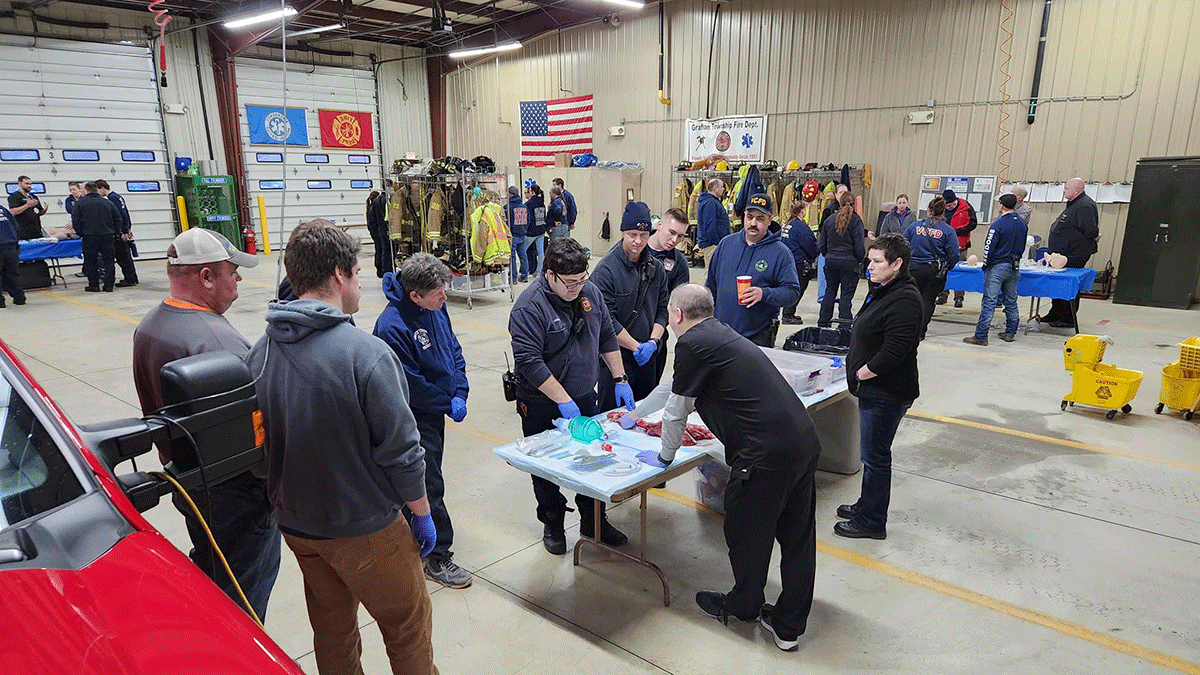
CCT’s outreach initiatives are heavily focused on engaging with our partners in a variety of educational offerings that include hands-on department specific training, simulation labs, didactics and presentations and are adaptable to meet the needs of our community partners.
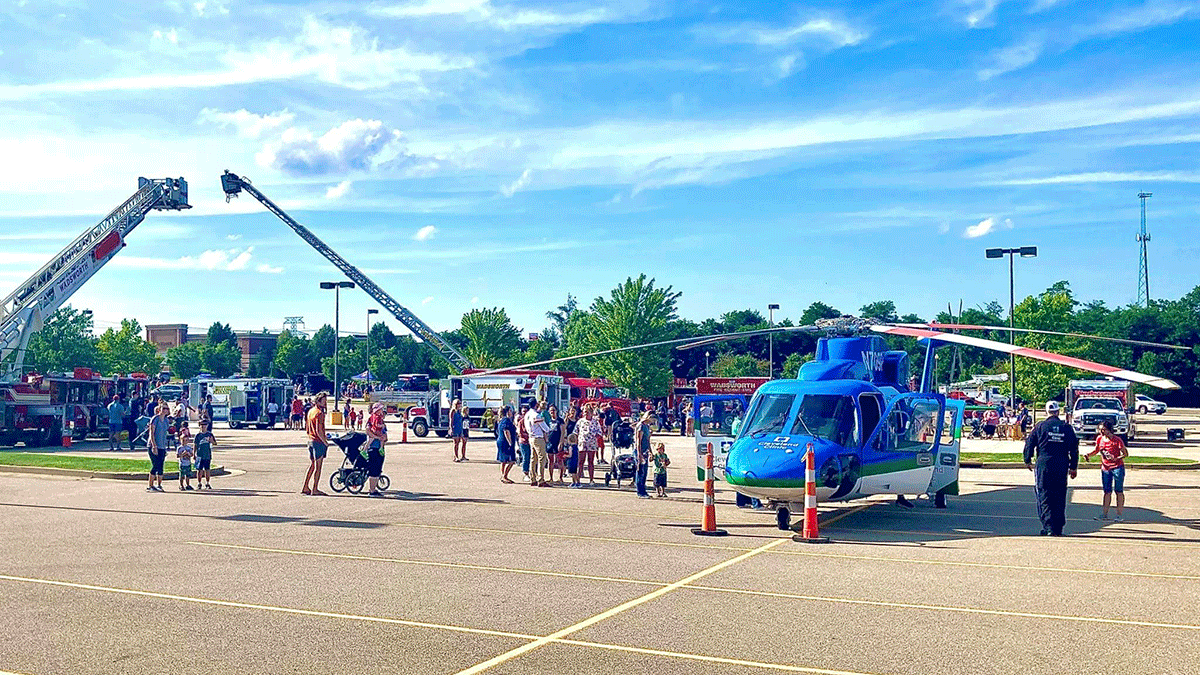
The CCT team is also available to participate in community-focused social events. If our team can participate or if there would be interest in having a helicopter or ambulance present to engage with the community, please reach out to discuss further.
For more information on our educational offerings or community outreach please contact:
CCTpublicrelations@ccf.org