

Laser hair reduction is a noninvasive procedure that uses concentrated light beams (lasers) to damage hair follicles and reduce hair growth. After treatment, your hair will be less noticeable, finer and possibly lighter. The degree of hair reduction depends on the number of treatments. It’s considered a semi-permanent solution, meaning it significantly reduces hair growth in the treated area for a long time (but doesn’t guarantee complete permanent removal).
Our specialists have significant experience in all areas of cosmetic procedures, including laser hair removal. Cleveland Clinic Cosmetic & Plastic Surgery Center can help you explore options to rejuvenate or refine your appearance (and your self-confidence). To get the best results from any cosmetic procedure, you need the highest quality team. You can rely on our experts, who are nationally ranked for their expertise and care.
Learn more about Cleveland Clinic Cosmetic & Plastic Surgery Center.
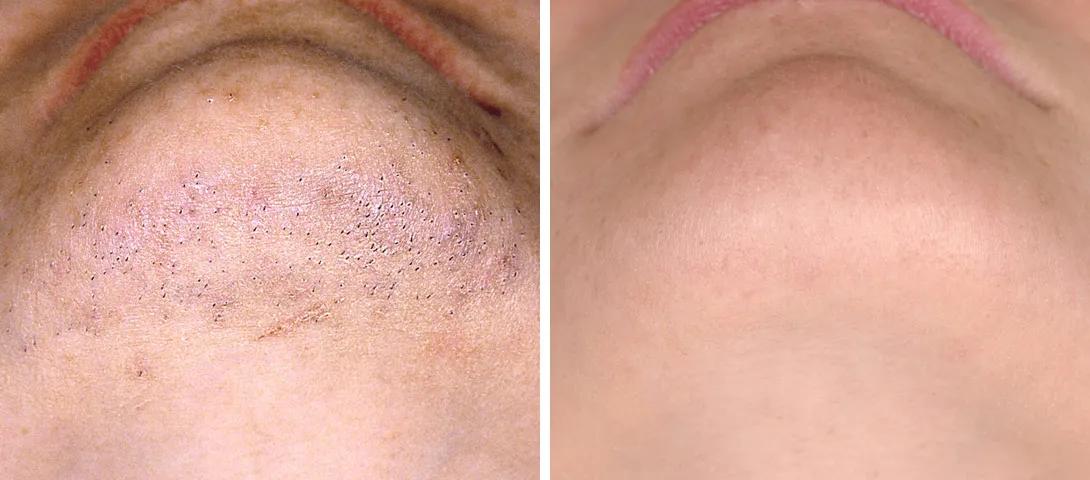
Until recently, laser hair reduction and removal worked best on those with light skin and dark hair. Cleveland Clinic Cosmetic & Plastic Surgery Center now offers the latest in laser technology that allows people with darker skin to be treated safely and effectively.
Preparation for laser and light-based treatment at Cleveland Clinic Cosmetic & Plastic Surgery Center includes:
Experts at Cleveland Clinic Cosmetic & Plastic Surgery Center will also consider your natural skin color and type to determine which treatment is best for you and minimize the risk of developing more pigmentation or losing pigmentation (whitening of the skin).
Laser hair reduction typically requires the use of non-ablative lasers. Before laser hair removal, you’ll be fitted with special goggles to protect your eyes from the laser beam. A topical anesthetic may be applied to your skin to reduce any discomfort during treatment.
During the hair reduction procedure, a handheld laser instrument is pressed to your skin. Depending on the type of laser, a cooling device on the tip of the instrument or a cool gel may be used to protect your skin.
When the laser is activated, a laser beam will pass through your skin to the tiny sacs (follicles) where hair growth originates. The heat from the laser beam damages the hair follicles, which keeps the hair from growing. Treating a small area, such as your upper lip, may take only a few minutes. Treating a larger area, such as your back, may take several hours.
Various types of laser and light-based devices can be used for hair reduction. Experts at Cleveland Clinic Cosmetic & Plastic Surgery Center will choose the best device for your skin and hair, as well as your goals.
Laser hair reduction and body hair removal results vary greatly from person to person. Multiple treatments can prolong the duration of hair loss, but hair regrowth is still likely.
For best results, you may need four to six treatments spaced several weeks apart. People with light skin and dark hair can be treated more aggressively and with fewer treatment times than people with dark skin. More periodic maintenance treatments (generally once every six to 12 months) may be needed, as well.
Following up with an expert at Cleveland Clinic Cosmetic & Plastic Surgery Center is the best way to ensure long-lasting results from ablative and non-ablative laser procedures. View our laser hair removal before-and-after photos to see results from actual patients.
After laser hair reduction or body hair removal, you may notice redness and swelling for the first few hours. A stinging sensation may linger for a day or two, and the treated skin may also become slightly crusty.
While healing from laser hair removal, wash your skin gently with soap and water. Avoid picking at or vigorously scrubbing the affected skin. You should also avoid sun exposure (both natural sunlight and tanning beds) for at least one week after treatment. After this period, use sunscreen whenever you’re in the sun.
All procedures carry some risks. The most common laser hair removal side effects include:
Insurance rarely covers the cost of elective cosmetic surgery and procedures. Please call 216.444.4004 and ask to speak with one of our financial representatives who can explain payment options, including CareCredit financing.

