

Overview
Plastic surgeons and dermatologists at Cleveland Clinic Cosmetic & Plastic Surgery Center use leading-edge hair replacement (implant) surgery techniques that treat hair loss due to genetic or hormonal reasons in androgenic alopecia (male pattern baldness). Hair restoration surgery can also be completed to restore hair loss due to burns, injury or disease of the scalp.
Why choose us?
When considering hair restoration surgery/hair transplant, choose a surgeon with significant experience performing the procedure. Friends, family members or an internist or primary care provider are often helpful in suggesting the best surgeon.
For the best results, choose a cosmetic surgeon who’s affiliated with a major medical center, such as Cleveland Clinic. Make sure to ask your cosmetic surgeon about their credentials, training and how many procedures they’ve performed.
Learn more about Cleveland Clinic Cosmetic & Plastic Surgery Center.
Before & After Photos
Hair Replacement Surgery Hair Transplant Photo Gallery
1 of 3-
-
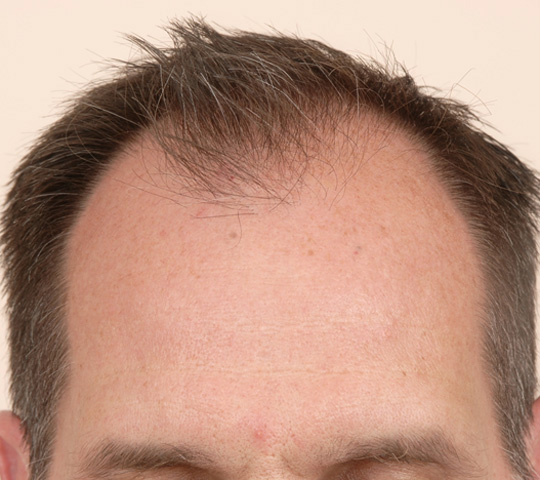
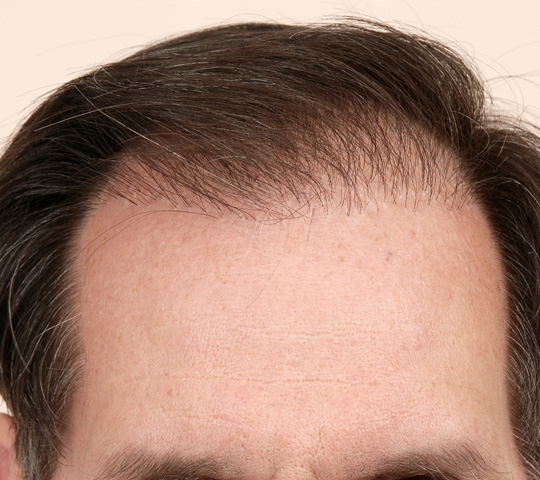
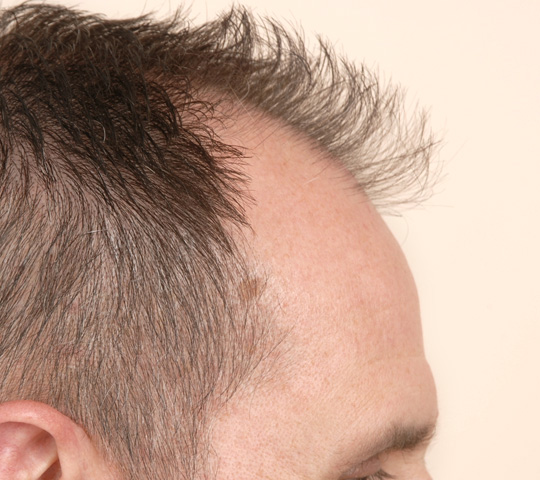
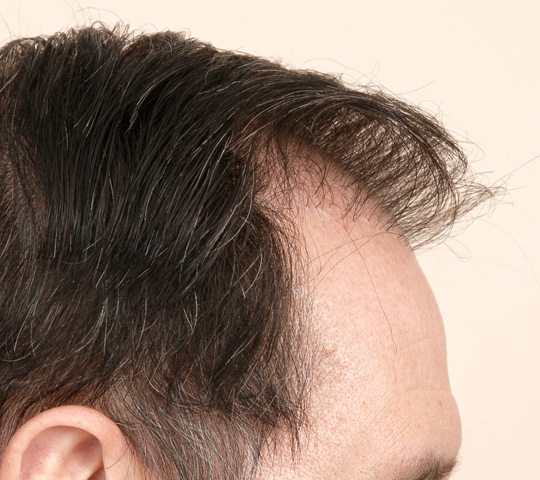
This is a man in his mid-fifties who wished to correct male pattern baldness. He is shown before hair restoration (left) and after (right).
-
This is a man in his mid-fifties who wished to correct male pattern baldness. He is shown before hair restoration (left) and after (right).


How to Prepare
What is hair restoration surgery/hair transplantation?
Hair restoration surgery is a cosmetic procedure performed on men and women who have significant hair loss, thinning hair or bald spots where hair no longer grows. The procedure can enhance your appearance and your self-confidence through hair replacement techniques that use your existing hair.
DHT (dihydrotestosterone) is a natural metabolite of the human body and the main reason for hair loss in both male and female pattern baldness. In male pattern baldness, hair typically grows only in a horseshoe shape around the head. Female pattern baldness is characterized by diffuse thinning of the hair on the entire scalp (although some women have hair loss that mimics male pattern baldness).
Am I a candidate for hair replacement surgery/hair transplantation?
In general, hair restoration surgery is performed once hair loss is stabilized with medical treatments. All hair restoration techniques use your existing hair (from “donor sites”) for transplantation techniques.
Hair transplantation for male pattern baldness depends upon the concept of “donor dominance” of hair follicles. That is, hair taken from the head below the top of the ears is genetically programmed to never fall out. Those hairs can be transplanted to the frontal hairline, never to be lost due to further balding.
Most women have female pattern baldness and don’t have donor sites usable for transplantation. If the thinning pieces of hair and accompanying follicles are removed from one area and transplanted, they won’t be stable enough to grow.
Due to the diffuse affect DHT has on female hair, a very small percentage of women are good candidates for hair transplant. This small group includes:
- Women who’ve had hair loss due to mechanical or traction alopecia (nonhormonal).
- Women who’ve had previous cosmetic or plastic surgery and are concerned about hair loss around the incision sites.
- Women who’ve a distinct pattern of baldness similar to that of male pattern baldness (hairline recession, vertex thinning on the crown or top of the scalp and a donor area that isn’t affected by androgenetic alopecia).
- Women who have hair loss due to trauma, including burn victims, scarring from accidents and chemical burns.
- Women with alopecia marginalis, a condition that looks very similar to traction alopecia.
The best way to determine if you’re a candidate for hair replacement surgery is through a consultation with a dermatologist or plastic surgeon at Cleveland Clinic Cosmetic & Plastic Surgery Center.
How do I prepare for hair restoration surgery/hair transplantation?
Preparing for hair restoration surgery at Cleveland Clinic Cosmetic & Plastic Surgery Center includes discussing a number of questions about your health, desires and lifestyle with your dermatologist or plastic surgeon, including:
- Why you want the procedure, your expectations and desired outcome.
- Your medical conditions, drug allergies and medical treatments.
- Your use of current medications, vitamins, herbal supplements, alcohol, tobacco and drugs.
Your Cleveland Clinic dermatologist or plastic surgeon may also:
- Evaluate your general health and any preexisting health conditions or risk factors.
- Take photos of your hair loss for your medical record.
- Discuss your hair replacement surgery options.
- Discuss likely expected outcomes of hair replacement surgery and risks or potential complications.
What to Expect
How is a hair replacement surgery/hair transplantation performed?
Hair restoration surgery at Cleveland Clinic Cosmetic & Plastic Surgery Center is typically performed in an outpatient setting with the use of local anesthesia or local anesthesia and conscious sedation. There are several different types of hair graft methods, with the actual process generally including:
1. Selecting and harvesting hair from the donor area.
For most people, the hair will be used toward the back area of the head. Your specific level of hair loss plays a vital role. If you don’t have enough naturally growing hair on your head, you may not be an ideal candidate for hair restoration (transplant) surgery. Harvesting hair from the donor area involves removing small pieces of hair-bearing scalp grafts from a donor site and relocating them to a bald or thinning area.
Currently, two forms of graft harvest exist:
- Follicular unit extraction (FUE): Individual grafts of just one or two hairs are removed. This creates tiny scars that are usually not visible.
- Follicular unit transplantation (FUT): A strip of skin with hair is removed. The hair follicles are then processed into individual grafts. This creates a long, fine line scar that’s usually hidden by hair growth.
With either method, once the donor hair is grafted, the transplantation technique is identical.
2. Closing the donor area.
If a strip of hair is removed, the incision must be stitched up. Typically, these stitches are removed about 10 days after surgery and will leave behind a small scar that can be concealed by your own hair.
3. Transplanting the hair grafts.
After the donor strip is removed, tiny hair grafts are then prepared for hair transplant surgery into your balding areas. Most often, the hair grafts at the front hairline will contain between one to three hairs each. As the grafts are transplanted further back from your hairline, the numbers of hairs per graft will increase. Your dermatologist or plastic surgeon at Cleveland Clinic Cosmetic & Plastic Surgery Center will tailor a hair replacement surgery method that’ll best suit your needs.
After the hair replacement (implant) surgery is complete, your scalp will be cleansed and covered with gauze. You may have to wear a pressure bandage for a day or two to help with healing.
In some patients, the hairline can be moved forward with a scalp reduction (also known as advancement flap surgery). Sections of hair-bearing scalp are pulled forward or “advanced” to fill in a bald crown. After the scalp is injected with a local anesthetic, a segment of bald scalp is removed. The pattern of the section of removed scalp depends on your needs.
If a large amount of coverage is needed, providers commonly remove a segment of scalp in a reverse “Y” shape. Excisions may also be shaped like a “U,” a pointed oval or some other figure. The skin surrounding the cut-out area is loosened and pulled so that the sections of hair-bearing scalp can be brought together and closed with stitches.
Is hair replacement surgery/hair transplantation safe?
All surgical procedures carry some risk.
Possible side effects or complications from hair replacement (implant) surgery/hair transplant include:
- Bleeding.
- Infection.
- Numbness or tightness (temporary).
- Pain.
- Swelling of the forehead and/or face.
- Scarring at donor site or recipient site.
- Poor growth of grafts.
- Unnatural appearance of transplanted hair.
Results
What results can I expect?
Hair restoration surgery doesn’t produce an instantaneous head of hair. In most cases, the hairs fall out of the grafts immediately after hair transplant and don’t regrow for approximately three months. The donor sites gradually heal to leave slight scarring, but this is concealed by “lifetime” hair growing around the site. Generally, several surgical sessions may be needed to achieve satisfactory fullness and a healing interval of several months is usually recommended between each session.
The amount of coverage you’ll need depends on the color and texture of your hair, as well as the amount of bald area to be covered. Coarse, gray or light-colored hair affords better coverage than fine, dark-colored hair. The number of large plugs transplanted in the first session varies from person to person. For mini-grafts or micro-grafts, the number can be up to 700 or more per session.
Following up with a dermatologist or plastic surgeon at Cleveland Clinic Cosmetic & Plastic Surgery Center is the best way to ensure the most successful overall results from hair restoration surgery. View our hair implants before and after photos to see results from actual patients.
What is involved in recovery?
Most people feel well within a day or two after surgery, although they may have some facial and eyelid swelling.
Insurance & Financing
Insurance rarely covers the cost of elective cosmetic surgery and procedures. Please call 216.444.4004 and ask to speak with one of our financial representatives who can explain payment options, including CareCredit financing.
