

Syncope is also known as fainting. This is a temporary loss of consciousness with a quick recovery. Usually, syncope isn’t a cause for concern. Most people don’t need follow-up treatment. However, you need treatment for certain causes, such as heart issues.
Syncope (pronounced “sin-ko-pea”) is the medical term for fainting or passing out. It happens when you have a sudden, temporary drop in the amount of blood that flows to your brain. Most of the time, a harmless, short-term cause makes you faint.
Syncope can happen if you have:
If you pass out, you’ll likely become conscious and alert after a few seconds or minutes. However, you may feel confused or tired for a bit. You can recover fully in minutes or hours.
Syncope can be a sign of a more serious condition. It’s important to get treatment right away after you have an episode of syncope. Most people can prevent problems with syncope once they get an accurate diagnosis and proper treatment.
There are several different types of syncope. They are:
Syncope is a common condition. It affects 3% of men or people assigned male at birth (AMAB) and 3.5% of women or people assigned female at birth (AFAB) at some point in life. Syncope is more common as you get older and affects up to 6% of people over age 75. The condition can occur at any age and happens in people with and without other medical issues.
Cleveland Clinic is a non-profit academic medical center. Advertising on our site helps support our mission. We do not endorse non-Cleveland Clinic products or services. Policy
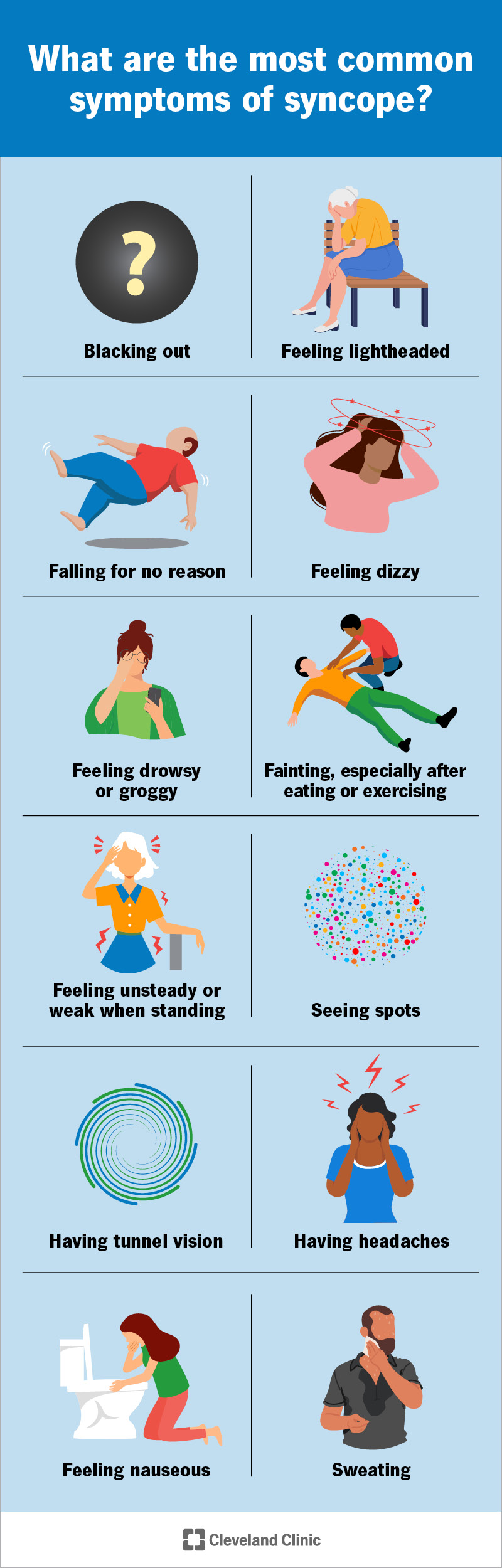
The most common syncope symptoms include:
Syncope, or passing out, happens when you don’t have enough blood flowing to your brain. There are many causes for this, depending on the type of syncope. Many people have a medical condition they may or may not know about that affects their nervous system or heart. You may also have a condition that affects blood flow through your body and causes your blood pressure to drop when you change positions (for example, going from lying down to standing).
Vasovagal syncope happens when you have a sudden drop in blood pressure, which causes a drop in blood flow to your brain. It often occurs after standing for a while or under emotional distress. Normally, when you stand up, gravity makes blood settle in the lower part of your body, below your diaphragm. When that happens, your heart and autonomic nervous system work to keep your blood pressure stable.
In vasovagal syncope, your heart rate and blood pressure inappropriately decrease severely. This causes decreased blood flow to your brain and leads to passing out. Typically, vasovagal syncope is benign.
Situational syncope happens only during certain situations that affect your nervous system and lead to syncope. Some of these situations are:
Postural syncope (also called postural hypotension or orthostatic hypotension) happens when your blood pressure drops suddenly due to a quick change in position, such as standing up after lying down. Certain medications and dehydration can lead to this condition. People with this type of syncope usually have changes in their blood pressure that cause it to drop by at least 20 millimeters of mercury (systolic/top number) and at least 10 millimeters of mercury (diastolic/bottom number) when they stand.
Cardiac syncope can occur if you have a heart or blood vessel condition that affects blood flow to your brain. These conditions can include:
If you have cardiac syncope, it’s important to see a cardiologist for proper treatment.
Neurologic syncope can happen when you have a neurological condition such as a seizure, stroke or transient ischemic attack (TIA). Other less common conditions that lead to neurologic syncope include migraines and normal pressure hydrocephalus.
If you have postural orthostatic tachycardia syndrome, you may have a very fast heart rate (tachycardia) that happens when you stand after sitting or lying down. Your heart rate can speed up by 30 beats per minute or more. The increase usually happens within 10 minutes of standing. The condition is most common in women and people AFAB, but it can also occur in men and people AMAB.
The cause of syncope is unknown in about 33% of people who have it. However, an increased risk of syncope is a side effect of some medications. Be sure to follow up with a provider if you don’t know what caused your syncope.
If you have syncope, you should see a provider who can refer you to a syncope specialist for a complete evaluation.
A syncope specialist will do a physical exam and a careful review of your medical history. They’ll ask you detailed questions about your symptoms and syncope episodes, including whether you have any symptoms before you faint and when and where you faint.
They may measure and record your heart rate and blood pressure while you’re in different positions, including lying down, sitting and standing.
You may then have one or more tests to help determine the cause of your syncope. These tests check things like:
Tests to determine causes of syncope include:
You may need other tests, including electrophysiology studies, autonomic nervous system testing, neurological evaluation and computed tomography (CT) scan. You may need vestibular function testing to rule out issues in the inner ear. If you need any additional testing, your provider will explain what they are and why you need them.
If someone faints, follow these steps:
Treatment options will depend on what’s causing your syncope and the results of your evaluation and testing. The goal of treatment is to keep you from having episodes of syncope.
Syncope treatment options include:
Your healthcare team will develop a treatment plan that’s right for you and talk to you about your treatment options.
Medicines for syncope include:
Side effects of the medicines may include:
To reduce your risk of syncope, you need to know what caused it. Reducing your risk may be as easy as staying hydrated if that was the issue. If you have a heart condition that caused it, you may need medicine or a device to treat abnormal heart rhythms.
Many times, people feel an episode of syncope coming on. They feel lightheaded, nauseous and have heart palpitations (irregular heartbeats that feel like “fluttering” in the chest). You’ll likely be able to keep from fainting if you:
With the proper diagnosis and treatment, you can manage and control syncope. If you’ve had an episode of syncope, there’s about a 30% chance you will have another episode. Your risk of another episode and how the condition affects you depends on several factors, including the cause and your age, sex and other medical issues you have. If you have questions about your risks, talk to your provider.
If you have a syncope diagnosis, check your state laws. Some states require drivers with syncope to contact the license bureau. A provider may recommend you find out the cause and get treatment before driving.
Although most episodes of syncope aren’t dangerous, they can be life-threatening if you have abnormal heart rhythms or a neurologic cause. People with a heart or neurologic issue need to follow up with a provider who can help.
Depending on the cause of your syncope, you should have a follow-up appointment with a provider two to four weeks after you get hospital or outpatient treatment for it. If a provider discovers an issue with your heart’s structure or rhythm, you’ll need more follow-up appointments for that.
Anyone who collapses and is in cardiac arrest needs CPR and an ambulance. People often go to the ER for syncope as well.
Questions to ask your provider include:
A note from Cleveland Clinic
The unexpected and attention-getting nature of syncope can make it seem more dangerous than it is. For most people, it’s a temporary condition that doesn’t point to any serious health issues. Seeing a provider after you faint can give you peace of mind knowing that you don’t have a serious condition. Be sure to get treatment for your heart condition if that caused your syncope.
Last reviewed by a Cleveland Clinic medical professional on 11/03/2022.
Learn more about our editorial process.
Cleveland Clinic is a non-profit academic medical center. Advertising on our site helps support our mission. We do not endorse non-Cleveland Clinic products or services. Policy