Medical ConciergeAccess Our A-Z Phone Directorybenefiting the communityMedical Concierge

Cleveland Clinic Multiple Myeloma Research Center

Research


Print this ContentEmail this Content

Procrit

Phase II of less Frequent Dosing of
Procrit Therapy

Objectives

Primary
  • 1.1 To determine the hematologic response and transfusion requirements of chemotherapy-related moderate anemia to the administration of high, less frequent dose followed by low maintenance dose Epoetin alfa in multiple myeloma patients.
Secondary
  • 1.2 To determine the effect of moderate anemia on patient quality of life.
  • 1.3 to correlate changes in quality of life with changes in anemia associated with treatment with Epoetin alfa
  • 1.4 To determine the effect of Epoetin alfa therapy on transfusion requirements, as well as outpatient hydration procedures
Background

2.1 Multiple Myeloma and Anemia

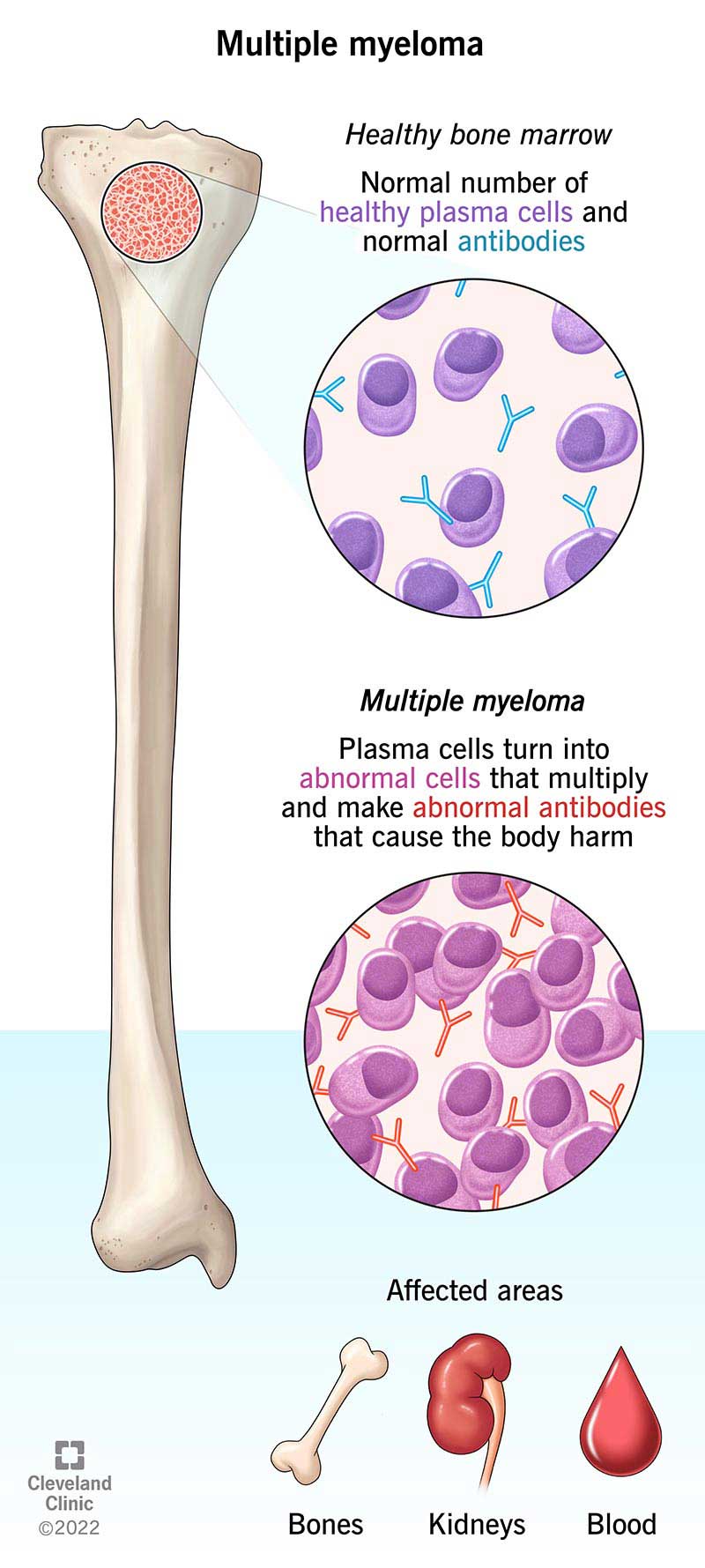
Anemia is present in two-thirds of patients with multiple myeloma at diagnosis, with 8% of patients having Hgb values less than 8g/dL 1. Several mechanisms have been implicated in the pathogenesis of multiple myeloma-associated anemia, most of which result in inadequate erythropoietin production. These include marrow infiltration of plasma cells 2, excessive cytokines production, increased plasma viscosity 3, reduced red blood cell (RBC) survival, tumor proliferation 4, hypervolemic dilution 5, chemotherapy-induced marrow suppression, nutritional deficiency and chronic renal insufficiency.

Fatigue and weakness due to anemia are common symptoms in multiple myeloma 1, as in other types of cancer and correlate with poorer quality of life and inability to work 6. Other consequences include mental confusion, respiratory distress and decreased performance status that may affect chemotherapy options and participation in clinical trials.   More importantly, anemia could hinder tolerance to the new biologic therapeutic agents that are currently being introduced in the management of myeloma. RBC transfusions can potentially treat anemia and its symptoms; however, these are associated with risks of transfusion reactions, viral infections, fluid overload and possibly decreased survival.

2.2 Erythropoietin and Its Mechanism of Action

Erythropoietin (EPO) is a glycoprotein growth factor, produced by peritubular endothelial cells in the proximal renal tubules.  Under normal conditions, EPO is present in the plasma at a concentration that is sufficient for producing erythrocytes to replace senescent red blood cells.   It is regulated by renal oxygen sensing mechanisms, which stimulates EPO production during hypoxia, hypotension, blood loss and anemia.  Red cell production is then promoted by proliferation and differentiation of erythroid progenitor cells, as well as by prolonging their survival.

2.3 Epoetin alfa: Pharmacodynamics
Epoetin alfa (r-HuEPO, Epoetin alfa, PROCRIT) is a recombinant glycoprotein from EPO that has been cloned and expressed in Chinese hamster ovary cells 7. Epoetin alfa mainly increase the number of progenitor cells with the ability to differentiate into mature erythroblasts, augment hemoglobin synthesis, enhance the release of reticulocytes from bone marrow and improve red blood cell viability. Other than its role in red cell production, it also influences tumor regression using a T cell-mediated mechanism 8.

Most of the adverse effects of long-term epoetin alfa have been extensively documented during its use in patients with chronic renal failure. Hypertension, thrombotic events and seizures that are relatively frequent with epoetin alfa treatment in patients with renal insufficiency, are considerably lower in cancer (5.2% vs 30% in renal failure) patients, even in patients with concomitant multiple myeloma and renal insufficiency.  Other adverse events that have been described include pain at the injection site, fever, fatigue, headache, cough, nausea, vomiting, diarrhea, rash, dyspnea, edema, dizziness and asthenia.

2.4 Recombinant Erythropoietin and Multiple Myeloma

Clinical evidence has demonstrated the usefulness of epoetin alfa in anemia associated with different cancers and their chemotherapy 9-11  and non-myeloid malignancies such as multiple myeloma 12-17.

In a large community-based trial of over 2,000 patients 10, 23% of anemic cancer patients in this population had non-myeloid malignancies which included multiple myeloma.   Utilizing a mean  epoetin alfa dose of about 450 IU/kg/wk, Glaspy et al were able to demonstrate statistically significant increase (1.8 g/dL, P<0.001) in hemoglobin levels, reduction in patients needing transfusion (50%, P<0.001), and overall improvement of quality-of-life scores (P<0.001).    The degree of improvement of quality-of-life parameters directly correlated with the magnitude of increase in hemoglobin level from baseline (r=.27-.30, P<0.001), which was observed throughout all tumor response categories.   This was observed in both hematologic and non-hematologic cancers.

Several randomized clinical trials have documented improvement in hemoglobin and blood transfusion requirements in 60-80% of multiple myeloma patients on Epoetin alfa 12-17. Response was significantly predicted by low pretreatment erythropoietin concentrations and not by the degree of marrow infiltration. Even though different hematological response criteria (usually increase> 2 g/dL) and epoetin alfa dosing regimen (3 studies had 150 IU/kg three times a week) were incorporated in these studies, results consistently show greater percentage of patients who received epoetin alfa compared to placebo or no therapy, had improved Hgb levels and transfusion requirements.

Reference

Reference Patients (n) Epo dose and frequency Durations (weeks) Hgb responded (%) Transfusions in epoetin vs no-epoetin (%)
Dammacco et al, 1998 16 71 150,300 IU/kg TIW 24 75 25 vs 45 (p=0.2)
Dammacco et al, 2000 17 145 150,300 IU/kg TIW 12 57.6 27 vs 47 (p=0.017)
Cazzola et al, 1995 12 146 (includes 62 NHL) 1,000, 2,000, 5,000, 10,000 IU daily 8 31-62 28 vs 15 (1,000 vs 10,000)
Garton et al, 1995 13 25 150, 300 IU/kg TIW 12 36 n/a
Osterborg et al, 1996 15 65 (total 121 if included NHL) 2,000, 5,000, 10,000 U qd 24 64-70 58-64 vs 82 (p<0.5)
Silvestris et al, 1995 14 54 150, 300 IU/kg TIW 24 77.7% 0 vs 7 patients

The largest multicenter, randomized, double blind trial of 145 multiple myeloma patients evaluated the efficacy of Epoetin alfa 150 IU/kg three times a week, while patients were receiving concomitant chemotherapy 17. The Epoetin alfa arm, compared to placebo, did not only show significant increase in Hgb values (P<0.001), remarkable reduction in blood transfusion requirements (P=0.017) and minimal toxicities, but also better performance status (P=0.038) at the end of the study. Significant improvements in quality of life scores were demonstrated by univariate analysis within the Epoetin alfa group.

2.5 Epoetin: Pharmacokinetics

Epoetin alfa has been administered subcutaneously up to a maximum single dose of 2400 U/kg and intravenously up to 1500 IU/kg 3 times a week 7, 19.  After subcutaneous administration, absorption of epoetin alfa is slow from the injection site. Peak concentrations are usually about 10% of the equivalent intravenous route, and normally occurs between 8 to 24 hours post dosing. Serum concentrations after subcutaneous administration are more sustained with increased doses.  Metabolism of recombinant EPO is thought to occur mainly by erythrocyte-extraction in the bone marrow, and by other pathways such as urinary excretion (<5%) and possible hepatic degradation (controversial).    The carbohydrate moieties are important in protecting EPO from rapid degradation.  Subcutaneously administered epoetin alfa, when compared to intravenous dosing, has a bioavailability of less than 50% and elimination half life is prolonged, reflecting delayed absorption.  A recent study by Gabrilove et al demonstrated that three-times-a-week epoetin schedule was found to be equivalent to the once-a-week dosing regimen in terms of hematologic response, quality of life scores and tolerability in patients undergoing chemotherapy 18. However, this once weekly regimen still does not coincide with clinic visits for chemotherapy in multiple myeloma patients. Pharmacokinetic studies of epoetin alfa given subcutaneously in healthy volunteers demonstrate decreased mean clearance with increasing dose, thereby increasing  the mean EPO area under the concentration-time curve (AUC). Single doses up to 1,800 IU/kg showed linear correlation between the mean EPO AUC and mean percentage of reticulocytes AUC (correlation coefficient=0.931).  This suggests possible saturation of the EPO receptors after this dose 19.

2.6 Dosing Rationale

In an attempt to further improve the hematologic response of multiple myeloma patients and decrease the frequency of dosing of Epoetin alfa over the long run, a prospective, single arm pilot trial of once-every-2-weeks Epoetin alfa will be conducted in 24 multiple myeloma patients with or without concomitant chemotherapy. The selection of this dose was based on the results of a published study 19 in which percentage of reticulocytes AUC only continued to increase up to dose of Epoetin alfa 1,800 IU/kg. The resulting reticulocytosis was sustained above baseline through day 15 and declined on day 22, when patients did not get further Epoetin alfa. Farrell et all recently presented data demonstrating a 3-4 g/dL increase in Hgb in nonhuman primates using 17,000 or 25,000 IU/kg of epoetin alfa every 2-3 weeks 20. It would be interesting to determine whether it is possible to further increase the time between doses by use of a high single dose of epoetin alfa, thereby improving convenience of administration, and possibly the time to response and this the quality of life.

Patient Eligibility

Inclusion Criteria

Patients:

  1. Must present with Multiple Myeloma  (see Appendix I)
  2. Must have ECOG Performance Index score of 0-3 (see Appendix III) as determined by Investigator
  3. Must be at least 18 years of age
  4. Must be scheduled for active therapy for > 3 months
  5. Must be using effective contraception if of childbearing potential
  6. Must have a hemoglobin < 11.0 g/dL
  7. Must have transferrin saturation of at least 20% and serum ferritin of at least 50 ng/mL If transferrin saturation is < 20% or serum ferritin < 50 ng/mL, the investigator may utilize bone marrow evaluation results or clinical judgment to determine if iron stores are adequate . If inadequate, the patient will be supplemented with iron.
  8. Normal serum B12, RBC folate, methylmalonic acid, and homocysteine, with the latter 2 under the condition of normal renal function. If abnormal vitamin supplementation is allowable, and levels should be documented to normalize with supplementation prior to enrolling and no positive effect on hemoglobin.
  9. Must have a life expectancy of 6 months or greater
  10. Must be able to understand and give informed consent
  11. Must be able to read and understand English at a 6th grade level consistent with comprehending the quality of life questionnaires (see Appendix III)
  12. Must have bone marrow biopsy documentation of extent of disease
3.2 Exclusion Criteria

Patients:

  1. Receiving only biologic therapy
  2. With second active malignancy or history of other malignancy diagnosed within preceding
  3. five years (other than basal cell carcinoma of the skin or cervical cancer in situ)
  4. Who are HIV positive
  5. With uncontrolled hypertension
  6. With uncontrolled infectious process
  7. Pregnant or lactating
  8. With known hypersensitivity to mammalian cell-derived products
  9. With untreated anemia predominantly due to factors other than cancer/chemotherapy (i.e., iron or folate deficiencies, hemolysis, or gastrointestinal bleeding)
  10. Prior total lymphoid, extensive abdominal or inverted Y radiation therapy
References:
  1. Kyle, RA. Multiple Myeloma: Review of 869 Cases. Mayo Clin Proc 1975; 50: 29-40.
  2. Ariad S, Clifford D, Penfold G, MacPhail AP, Bezwoda WR. Erythropoietin response in anemic patients with multiple myeloma and other lymphoid malignancies infiltrating the bone marrow. Eur J Haematol 1992; 49: 59-62.
  3. Singh A, Eckardt KU, Zimmerman A; Gotz KH, Hamann M, Ratcliffe PJ, Kurtz A, Reinhart WH. Increased plasma viscosity as a reason for inappropriate erythropoietin formation. J Clin Invest 1993; 91: 251-256.
  4. Fossa A, Brandhorst D, Myklebust JH, Seeber S, Nowrousian MR. Relation between S-phase fraction of myeloma cells and anemia in patients with multiple myeloma. Experimental Hematology 1999; 27:1621-1626.
  5. Kopp WL, MacKinney AA Jr. Blood volume and hematocrit value in macroglobulinemia and myeloma. Archives of Internal Medicine, 1969; 123: 394-396.
  6. Cella D. Factors influencing quality of life in cancer patients: anemia and fatigue. Seminars in Oncology 1998; 25: 43-46.
  7. Markham A, Bryson HM.  Epoetin alfa: a review of its pharmacodynamic and pharmacokinetic properties and therapeutic use in nonrenal applications.  Drugs 1995; 49:232-254.
  8. Mittelman M, Neumann D, Peled A, Kanter P, Haran-Ghera N. Erythropoietin induces tumor regression and antitumor immune responses in murine myeloma models.  PNAS 2001; 98: 5181-5186.
  9. Henry DH, Abels RI. Recombinant human erythropoietin in the treatment of cancer and chemotherapy-induced anemia: results of double-blind and open-label follow-up studies. Semin Oncol 1994; 21:21-28.
  10. Glaspy J, Bukowski R, Steinberg D, Taylor C, Tchekmedyian S, Vadhan-Raj S, PROCRITO Study Group. Impact of Therapy with Epoetin alfa on Clinical Outcomes in Patients with Nonmyeloid Malignancies During Cancer Chemotherapy in Community Oncology Practice. J Clin Onc 15:1218-1234,1997.
  11. Demetri GD, Kris M, Wade J, Degos L, Cella D for the Procrit Study Group.  Quality-of-life benefit in chemotherapy patients treated with epoetin alfa is independent of disease response or tumor type: results from a prospective community oncology study. J Clin Oncol 1998; 16: 3412-3425.
  12. Cazzola M, Messinger D, Battistel V, et al. Recombinant human erythropoietin in the anemia associated with multiple myeloma or non-hodgkin’s lymphoma: dose finding and identification of predictors of response. Blood 1995; 86: 4446-4453.
  13. Garton JP, Gertz MA, Witzig TE, Greipp PR, Lust JA, Schroeder G, Kyle RA. Epoetin alfa for the treatment of the anemia of multiple myeloma. Arch Intern Med 1995; 155: 2069-2074.
  14. Silvestris F, Romito A, Fanelli P, Vacca A, Dammacco F.  Long-term therapy with recombinant human erythropoietin in progressing multiple myeloma. Annals of Hematology 1995; 70: 313-318.
  15. Osterborg A, Boogaerts MA, Cimino R, et al. Recombinant human erythropoietin in transfusion-dependent anemic patients with multiple myeloma and non odgkin’s lymphoma- a randomized multicenter study. Blood 1996; 87: 2675-2682.
  16. Dammacco F, Silvestris F, Castoldi GL et al. The effectiveness and tolerability of epoetin alfa in patients with multiple myeloma refractory to chemotherapy. International J of Clin and Laboratory Research 1998; 28: 127-134.
  17. Dammacco F, Castoldi G, Rodjer S. Efficacy of epoetin alfa in the treatment of anemia of multiple myeloma.  British J of Hematology 2001; 113: 172-179.
  18. Gabrilove JL, Cleeland CS, Livingston RB et al.  Clinical evaluation of once-weekly dosing of epoetin alfa in chemotherapy patients: improvements in hemoglobin and quality of life are similar to three-times-weekly dosing.  J of Clin Oncol 2001; 19: 2875-2882.
  19. Cheung WK, Goon BL, Guilfoyle MC, Wacholtz MC. Pharmacokinetics and pharmacodynamics of recombinant human erythropoietin after single and multiple subcutaneous doses to healthy subjects. Clin Pharmacol Ther 1998; 64: 412-423.
  20. Farrell FX, Jolliffe LK. Administration of Epoetin Alfa Every Two Weeks Is Able to Sustain Target Hemoglobin in a Nonhuman Primate Alternate Dosing Model. American Society of Hematology 2001 Poster Abstract # 1253.