About Us
The Medical Laboratory Science Program is designed to prepare students for the ever-changing landscape of the field of laboratory science. Medical laboratory scientists serve a more vital role than ever before in the care of patients, thanks to increasingly sophisticated diagnostic technology tools and a better understanding of human pathology. Students in the program will develop the critical thinking skills required to adapt and take advantage of evolving methods to detect and diagnose diseases and monitor patients' progress.
The Medical Laboratory Science Program guarantees placement for up to 16 students each academic year with up to four of the students being placed at Cleveland Clinic Akron General for their clinical experience. If there is a situation where students cannot be placed at a clinical affiliate for their rotation, they will be placed at Cleveland Clinic Main Campus for completion of their clinical experience.
The program welcomes students with enthusiasm for scientific understanding and a personal work ethic conducive to quality laboratory practices.
The program consists of 47 weeks of lecture and laboratory experience:
- Total length: Approximately 50 weeks (including breaks)
- Hours: 7:30 a.m. – 4 p.m., Monday through Friday
- Starting Date: Second Monday in July
- Breaks: Three weeks (week of Thanksgiving, week of Christmas, and spring break)
- Holidays: Labor Day, Independence Day, Memorial Day
The Medical Laboratory Science Program includes seven basic areas of laboratory assignments:
- Chemistry
- Hematology
- Immunohematology
- Immunology
- Laboratory Operations
- Microbiology
- Molecular Diagnostics
The courses include lectures, student lab and clinical lab experience. Cleveland Clinic’s Main Campus Hospital and Akron General are the two locations for the clinical lab experience. Students acquire the basic skills and knowledge needed as they complete the course.
During the rotation, students rotate through various bench assignments either singly or, more commonly, in small groups.
Practical work is supervised by instructors and supplemented by informal discussions, reading assignments and/or other self-study material.
Students work with biohazards, chemical hazards and odorous materials during the course of their training. Safety training is included during the first week of the program. Students are expected to use the safety equipment provided for employees and adhere strictly to laboratory safety procedures.
Academic progress is closely monitored by weekly testing. Tests are scheduled to correlate as closely as possible with the general area of rotation and/or student lab exercises.
Mission and vision
The Mission of the Medical Laboratory Science Program is to provide the highest quality classroom and laboratory education preparing students to be proficient medical laboratory scientists.
The Vision of the Medical Laboratory Science Program is to sustain excellence in the practice of laboratory medicine through the study of contemporary theory and methods supporting world class care.
Accreditation & certification
The Medical Laboratory Science Program at Cleveland Clinic is accredited by the National Accrediting Agency for Clinical Laboratory Sciences (NAACLS):
5600 N. River Rd.
Suite 720
Rosemont, IL 60018-5119
773.714.8880
This accreditation allows any student who successfully completes the program to apply for the Medical Laboratory Science (MLS) national certification examination offered by the American Society for Clinical Pathology, Board of Certification (ASCP-BOC).
Program goals
Behaviors demonstrated by students are expected through their course of training and as they assume a role in the clinical laboratory as a medical laboratory scientist.
- Ethical behavior: Students conduct themselves with honor and do not cheat or falsify academic information or laboratory data at any time.
- Respect: Students make every effort to maintain effective relationships and communication with their peers, instructors and laboratory staff.
- Diligence: Students strive to be on time, prepare daily, complete assignments and apply themselves to study.
- Knowledge: Students assimilate the knowledge required to achieve competency as a medical laboratory scientist.
- Integrity: Students follow required lab practices and maintain an organized work space.
- Judgment: Students exercise their best judgment in analysis and problem-solving.
- Competency: Students sustain grades to remain in good standing in the program.
- Quality: Students are mindful that quality in all phases of school or work is essential and is foundational to accurate diagnostics and the best patient care.
- Certification: Students pass a certification examination on completion of studies and maintain certification throughout their career.
- Continuous learning: Students commit to the personal responsibility of keeping abreast of new information and practice.
Program objectives
Upon successful completion of the Medical Laboratory Science Program, the graduate will be able to:
- Perform specimen collection and processing procedures, evaluate specimen adequacy, and resolve issues related to specimen processing.
- Perform and evaluate pre-analytical, analytical, and post-analytical procedures to ensure quality lab results.
- Perform chemical and biological analytical test procedures on body fluids and tissues, evaluate lab data to correlate test results with clinical significance, and identify and correct problems.
- Explain the methods and principles in the laboratory tests performed in the clinical laboratories.
- Operate laboratory instrumentation with basic proficiency, performing basic maintenance on a routine basis.
- Identify problems with instrumentation and follow the defined process for resolution.
- Identify the physiological functions of each organ or organ system that are evaluated by laboratory testing and correlate them.
- Evaluate test results, identify the probable disease associated with the results, and suggest confirmatory testing.
- Explain sources of error and any effects of interfering substances on test results, including recognizing results that are inconsistent with physiological disease states.
- Use the defined quality assurance programs to ensure the accuracy and reliability of the information being produced, including recognizing out of range quality control results and taking appropriate actions.
- Evaluate new techniques or procedures for clinical usefulness, cost effectiveness, standards of performance, and establishing reference ranges.
- Prepare and present educational material for new employees, support personnel, students, and continuing education programs.
- Understand and apply principles of management and supervision, including lab safety, budgeting, instrument selection, human resource management, and governmental regulations as they apply to the clinical laboratory.
- Participate in laboratory research, assisting with developing protocols, performing data collection, interpreting the results using statistical analysis, and presenting the findings.
- Demonstrate a professional attitude in all interactions, maintain a willingness and enthusiasm to learn and accept instruction and suggestions in a positive, constructive manner, and continue to develop themselves professionally.
- Practice medical and professional ethics.
- Communicate ideas effectively in oral and written form; use electronic methods to communicate, collaborate and disseminate information.
Contact information
Barbara Zingale, MSIT, MLS(ASCP)CM
Program Director
Cleveland Clinic
9500 Euclid Ave, L13
Cleveland, OH 44195
MLSProgram@ccf.org
Admissions
In addition to program-specific requirements and procedures, applicants are encouraged to review requirements and disclosures outlined on the School of Health Professions’ Admissions & Enrollment page.
School of Health Professions catalog
Additional information can be found in the School Catalog, including school-wide policies and procedures, program-specific information, and course descriptions.
Application process
The Medical Laboratory Science Program begins accepting applications March 1. The application deadline each year is December 1 to be considered for the Summer Semester start date. Please select ‘Summer 20XX’ in the ‘Anticipated Starting Semester’ field of the application.
Please note, if the application window of the Medical Laboratory Science Program is closed it will not appear in the ‘Program of Interest’ list within the application. Applicants will only be able to submit their application when the application window is open.
Prior to submitting an application, it is recommended that applicants review the admissions-related information and requirements linked below for the academic year in which they wish to apply. The links include information on the following:
- Technical standards
- Admissions requirements, including prerequisites
- Conditional admittance
- Required admissions documents
- Required enrollment documents
- Selection process
Admission/enrollment overview
- Information when applying for the 2025-2026 academic year
- Information when applying for the 2026-2027 academic year
- Information when applying for the 2027-2028 academic year
*Academic years fall between July 1, 20XX through June 30, 20XX of the following year.
Example: July 1, 2025 - June 30, 2026
Admission related documents
Enrollment related documents
Student supervision
All laboratory testing performed by students will be supervised by laboratory employees. Students will not assume the responsibility, nor take the place of, employees in the clinical laboratory. It is recommended, however, that after demonstrating competency in laboratory procedures, the student be permitted to perform selected laboratory procedures under careful supervision to develop speed, confidence and ability to organize and work efficiently under pressure. At NO time will students be allowed to result any laboratory testing.
Articulation agreements
The Medical Laboratory Science program is offered under the sole sponsorship of Cleveland Clinic. However, students who meet specific articulation criteria may be eligible to apply credits earned in the program to academic programs at other institutions with which articulation agreements exist. Acceptance of transfer credit is at the discretion of the receiving institution and is not guaranteed. Students are encouraged to contact the receiving institution directly to confirm eligibility and acceptance of coursework.
The following institutions currently have articulation agreements in place with this program:
- Ashland University
Ashland, Ohio - Cleveland State University
Cleveland, Ohio - John Carroll University
University Heights, Ohio - Kent State University
Kent, Ohio - Miami University
Oxford, Ohio - Purdue University
West Lafayette, Indiana - University of Findlay
Findlay, Ohio - University of Mount Union
Alliance, Ohio - Ursuline College
Pepper Pike, Ohio - Youngstown State University
Youngstown, Ohio
Tuition & Fees
Tuition for the Medical Laboratory Science Program:
- 4 + 1 students – $7,500 tuition
- 3 + 1 students – consult with institution advisor for tuition details
$300 non-refundable deposit due upon acceptance into the program. This money is used to pay for the ASCP certification examination taken by all graduates.
Students may incur the following additional expenses:
- Textbooks – approximately $800
- Miscellaneous supplies such as notebooks, shoes, etc.
- Medical insurance
Cost of Attendance
The cost of attendance for the Medical Laboratory Science Program is a budget comprised of direct and indirect costs. Tuition is a direct cost charged by the program. All others are indirect costs that a student may incur during the course of the program and is not paid to the program. These costs are subject to change.
|
Tuition |
$7,500 |
|
Books & supplies |
$800 |
|
App fee |
$20 |
|
Food & housing |
$15,870 |
|
Transportation |
$2,242 |
|
Personal |
$2,208 |
|
Total |
$28,640 |
Scholarships
No stipends are available, but a limited number of scholarships are available for students enrolled in the Cleveland Clinic School of Health Professions.
Health insurance
Students are expected to have medical insurance. Cleveland Clinic is not responsible for medical expenses related to disease or injury incurred during the program. Students are responsible for any medical expenses incurred during the program that are not covered by the the student’s the medical insurance.
Housing
The Medical Laboratory Science Program does not provide housing facilities. Students in need of housing opportunities in the area are encouraged to review the Student Housing Program for details about resources available.
Withdrawal policy
Official withdrawals must be submitted by the student through the student information system (SIS). The date the student withdraws through the SIS is considered the date of determination. The amount of tuition and fees to be charged for the student’s enrollment into the program through the withdrawal date is determined by the Tuition Refund Policy.
Unofficial withdrawals can be made by the Program Director or School of Health Professions Registrar. The Program Director or Registrar reserves the right to withdraw the student from the program for violation of the attendance and/or academic policies. The unofficial withdrawal will follow the same Tuition Refund Policy as the official withdrawal by the student.
For official and unofficial withdrawals, the last date of attendance is used to determine the federal financial aid refund. The last date of attendance is recorded for all students that have withdrawn from any School of Health Professions program. The last date of attendance will be considered as the last date that the student actively participated in any required clock hour for the program.
The withdrawing student is responsible for returning any borrowed reference materials belonging to the program. The student must surrender his or her temporary ID badge and parking sticker prior to departure on the last day. The student will be asked to complete a final program evaluation prior to departure.
Students withdrawing from the program after January 31 will be considered incomplete and will be included in the published outcomes measures according to NAACLS Standards.
Students not paying tuition within the agreed upon time frame will no longer be eligible to participate in the program until such time as the tuition is paid. Any decisions regarding tuition payments and due dates are at the sole discretion of the Program Director.
Graduate Information
Transcript requests
Information regarding how to request official transcripts can be found on the School of Health Professions’ Records page.
Graduation requirements
Acceptable performance in all courses must be achieved in order to complete the program. A student must complete the entire program to be eligible to sit for any certification examination. This includes satisfactory academic and laboratory performance along with satisfactory completion of all portions of the comprehensive final examinations. Criteria for acceptable performance are determined by the student’s performance throughout the entire school year.
Successful completion of the program entitles the graduate to a Certificate of Completion from the Medical Laboratory Science Program. It may also be credited toward a baccalaureate degree through affiliated institutions. Neither the Certificate of Completion nor the conferring of a baccalaureate degree from the affiliate educational institution are contingent upon a candidate having passed a Medical Laboratory Science certification examination.
Satisfactory Academic Progress (SAP)
The student’s Satisfactory Academic Progress (SAP) toward graduation will be evaluated after the completion of each term of the program. Failure to maintain SAP may result in the student being dismissed from the program.
Program Outcomes
Program outcomes
| Year | Graduation Rate | Attrition Rate | Board of Certification Pass Rate |
Job Placement | Cleveland Clinic Employment Rate* |
|---|---|---|---|---|---|
| 2025 | 100% | 0% | 100% | 100% | 100% |
| 2024 | 100% | 0% | 92% | 100% | 100% |
| 2023 | 100% | 0% | 94% | 100% | 100% |
*Based on number of graduates desiring employment at Cleveland Clinic
**Academic year-based outcomes reflect July 1, XXXX – June 30, XXXX
+Retention rate is determined by using the following method of calculation:
Retention Rate = (EE + G) / (BE + NS + RE)
EE = Ending Enrollment (Number of students in class, on clinical experience and/or leave of absence on June 30)
G = Graduates
BE = Beginning Enrollment (Number of students in class, on clinical experience and/or leave of absence on July 1)
NS = New Starts
RE = Re-Entries (number of students that re-enter into school who dropped from a previous annual report time period)
#Exam participation rate is determined by using the following method of calculation:
Examination participation rate = GT/GE
GT = Total graduates taking examination
GE= Total graduates eligible to sit for examination
^Exam pass rate is determined by using the following method of calculation:
Examination Pass Rate = GP/GT
GP = Graduates passing examination (any attempt)
GT = Total graduates taking examination
~Job placement rate is determined by using the following method of calculation:
Placement Rate = (P)/(G-U)
P = Placed graduates
G = Total graduates
U = Graduates unavailable for placement
Curriculum
2025 – 2026
2026 – 2027
Additional Information
Frequently asked questions
What is a Medical Laboratory Scientist?
Medical Laboratory Scientists (MLS) work with the healthcare team to gather and provide laboratory information to caregivers that will assist them with patient diagnosis and treatment. This diagnostic data can also provide vital information for disease prevention and health monitoring. MLS use advanced instrumentation to perform testing in various areas of the lab.
What is the difference between a Medical Technologist (MT) and a Medical Laboratory Scientist (MLS)?
MT is an older term for a laboratorian and MLS is the newer terminology. All certified laboratorians, regardless of the certification exam they took, should be called an MLS.
What is the difference between a 3 + 1 and a 4 + 1 student?
A 3+1 student is still enrolled at an affiliated university and their degree will be granted upon successful completion of the MLS program. A 4+1 student has been granted their degree prior to the first day of the MLS program and does not have to be a graduate of an affiliated university.
What is the career outlook for a medical laboratory scientist?
According to the Bureau of Labor Statistics (BLS.gov), employment for an MLS is expected to grow 12% from 2016 – 2026 which is faster than the average for all occupations. This is due to the aging baby boomer population requiring more medical care as well as a large number of MLS retiring from the field.
What is the current starting pay for a medical laboratory scientist?
According to BLS.gov, the median annual wage for MLS and Medical Laboratory Technicians (MLT) is $57,800 (May 2021). This figure is generally higher for MLS and can vary depending on the facility and geographic location.
About the program
How long is the MLS program?
The Medical Laboratory Science Program lasts approximately 50 weeks and includes three weeks of breaks as well as days off for all major holidays.
Are students expected to report on a daily basis?
Students are expected to attend Monday through Friday unless otherwise notified.
How long is a typical school day?
Students are expected to be in attendance from 7:30 a.m. –- 3 p.m. This may change slightly depending on the operational needs of the department and learning opportunities that may present during the clinical experience.
Is there a uniform requirement?
There is no uniform requirement. Students can either wear scrubs or business casual. There are color restrictions for the scrubs. Contact the program director for additional information.
What is the cost of the MLS program?
The current program cost for 4+1 students is $7,500 plus the cost of books, health insurance, and living expenses.
The program cost for most 3+1 students is handled with the affiliate university. See your advisor or the program director for details. Books, health insurance and living expenses are additional.
Are there financing options or financial aid available to help pay for the program?
Tuition payments can be made in one lump sum or in two payments. At least half of the balance of tuition must be paid by the end of the first week of the program and the remainder of the balance must be paid by January 31 of the clinical year.
There are scholarships available. The program director gives current and incoming students alternative sources of funding to help defray the cost of the program. Because the MLS program is not a part of a degree granting institution, Federal Financial Aid cannot be used to pay for the program.
Can a student work while enrolled in the Medical Laboratory Science Program?
Students are allowed to work while enrolled in the Medical Laboratory Science Program, but it is not recommended to work more than about 20 hours per week to allow for enough time for study.
About application to the program
What are the program prerequisites?
3+1 applicants:
- Must be enrolled at an affiliated university.
- Must be able to graduate from that university at the completion of the program.
- Must follow the graduation roadmap provided by the MLS program advisor at the affiliated university.
4+1 applicants:
- Must have their degree conferred in a biological, chemical, or medical lab science prior to the first day of the program.
All applicants:
- Biology, chemistry, math and overall GPAs must be greater than 2.5 to apply. GPAs greater than 2.80 are considered competitive.
- Have at least 16 semester credits of biology, 16 semester credits of chemistry, a math course as well as enough credits to complete the degree.
What if my college grades do not meet the minimum requirements listed?
If your GPA does not meet the minimum requirements listed, you will not be granted an interview. However, if you retake courses to improve low grades, the higher grade may be used to calculate your GPAs. For additional information, contact the Program Director.
How do I apply?
Please refer to the Admissions tab for information on how to apply to the Medical Laboratory Science Program.
What is the application deadline?
All application materials and transcripts must be received electronically by 12/1 at midnight. Transcripts and other mailed items must be postmarked by 12/1 to be accepted.
Can I tour the facilities prior to an application submission?
All applicants selected for an interview and choose the face-to-face option will get a tour as part of the process.
Tours are available for any prospective students that are in their freshman or sophomore years of college.
If I have a scheduled tour, how do I get to Cleveland Clinic?
Visit Locations & Directions to get directions from your specific location to our location. You will also be given directions and a campus map when your interview or tour is scheduled.
About the selection process
How is the selection process conducted?
Applicants who meet the minimum GPA and have submitted all the required materials by the 12/1 deadline may be scheduled for an interview.
All interviewed students are then evaluated on their application, interview and academic performance. The final selection is based on the composite score.
Where is the interview and how do I get there?
If the applicant is selected for an interview and chooses to have a face-to-face interview, they will be sent directions and a campus map. They can drive a personal vehicle, get dropped off by someone else, or take public transportation.
Can I schedule an online interview?
Based on visitor restrictions at Cleveland Clinic facilities at the time the interviews are scheduled, the interview may be done virtually or face-to-face. Applicants will be given more details when it is scheduled.
How many students are selected for the program?
Currently, the program accepts up to 16 students for the Cleveland Clinic Main Campus.
Program leadership
Brian Rubin, MD, PhD
Chair, Pathology and Laboratory Medicine Institute
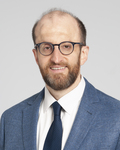
Sean Williamson, MD
Vice Chair, Education

Susan Harrington, PhD, D(ABMM), MLS (ASCP)CM
Medical Director
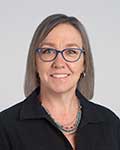
Barbara Zingale, MSIT, MLS(ASCP)CM
Program Director
Program faculty
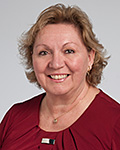
Sonja Bruketa, MLS(ASCP)
Cleveland State University
Immunology Lead Education Specialist
Cleveland State University alumna and graduate of Cleveland Clinic Medical Technology program class of 1993. Sonja loves to host pig roasts and holiday parties where family and neighbors get together and connect over homemade meals. Cherishes time spent with family, life’s simple beauties such as fresh cut flowers, and a good cup of coffee. Enjoys the occasional vacation to Siesta Key featuring heavy doses of beach reading and relaxing under the umbrella shade.

Ryan Collison, MLS(ASCP)CMSC
Shippensburg University
Chemistry Lead Education Specialist
Ryan has been with the Clinic since 2013. In his spare time Ryan enjoys computer gaming, cooking (especially smoking meat), and practicing sterile technique while brewing homemade beer. He also enjoys chemistry jokes that make people groan and maybe accidentally learn something.
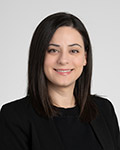
Rita Khongphatthana, MLS(ASCP)CM
Kent State University
Molecular Diagnostics Education Specialist
Rita graduated in 2020 from Kent State University and the Cleveland Clinic's Medical Laboratory Science program. Following graduation, she spent 3 years performing histocompatibility testing at the Cleveland Clinic Allogen Lab, before transferring to the Cleveland Clinic Cytogenetics Lab. Rita enjoys trying new foods, spending time with her family, reading and spoiling her cats.
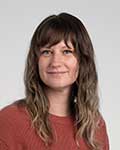
Hilary Klenjoski, MLS(ASCP)CM
Baldwin Wallace University
Immunohematology Education Specialist
Hilary is a Baldwin Wallace University graduate with a Bachelor’s Degree in Biology. In 2018, Hilary graduated from Cleveland Clinic's Medical Laboratory Science program and spent five years in Transfusion Services before becoming an Education Specialist. Her favorite pastimes include camping with her family, birding, playing table top games with her kids and when in season, tending to her vegetable garden.
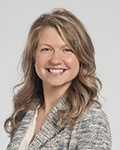
Kaitlin Landfried, MLS(ASCP)CM
Clarion University of Pennsylvania
Microbiology Education Specialist
Kaitlin is a 2017 graduate of the Rochester General Hospital Clinical Laboratory Technology Program. Prior to this, she attended Clarion University where she majored in Molecular Biology. Kaitlin loves spending time with her cat, Oliver, and walking her golden retriever, Jax. Kaitlin enjoys making crafts with her Cricut and practicing her macramé skills. Occasionally, she takes pleasure in running, spending time on nature trails, reading fiction novels, and baking.
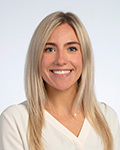
Amy Miller, MLS(ASCP)CM
Miami University
Hematology Education Specialist
Amy is a graduate of Miami University, where she majored in both Biology and Medical Laboratory Science. She is a 2020 graduate of the Cleveland Clinic Medical Laboratory Science Program. Amy enjoys hanging out with her friends and family and exploring Cleveland. In her free time, she likes to attend sporting events, try new restaurants, and go on walks with her Goldendoodle, Sadie.

Pinal Patel, MT(AMT), MLS(ASCP)CM
Gujarat State University
Hematology Education Specialist
Pinal Patel, MT (AMT), is a Laboratory Education Specialist at Cleveland Clinic Foundation in Cleveland, Ohio. She has been with Cleveland Clinic since 2005 and worked as Medical Technologist in Pathology and Laboratory Medicine and transitioned to Educational Specialist role in 2016. She received Bachelor degree in Science major in Microbiology from Gujarat State University, India. She is a member of American Society of Clinical Laboratory Science (ASCLS). She enjoys reading, walking and spending time with her family.
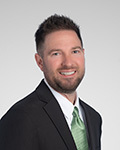
Erick Tobin, M(ASCP)CM
Bowling Green State University
Microbiology Education Specialist
Erick is a 2005 graduate of BGSU with a Bachelor’s degree in Applied Health Science with a specialization in Microbiology. Erick has been working in the Cleveland Clinic’s clinical microbiology lab since 2006! He held the role of Lead Technologist over the Bacteriology section for 5 years before transitioning to the role of Lab Education Specialist. Erick enjoys spending time with his family, roller coaster training his children at Cedar Point, and playing or watching sports. (Especially the Cavs!)
Program Resources
American Society for Clinical Pathology

American Society for Clinical Laboratory Science
American Society for Clinical Pathology Board of Certification