How to know when your child’s ready to face front, switch to a booster seat and more

Gone are the days of young ‘uns loaded in the back of the station wagon (seat belts optional). We’re experiencing a car seat renaissance, and like it or not, you should strap your kid in for the long haul.
Cleveland Clinic is a non-profit academic medical center. Advertising on our site helps support our mission. We do not endorse non-Cleveland Clinic products or services. Policy
“It can be hard not to graduate your child out of their car seat,” notes William Mudd, DO. “But it’s important to keep your child in the right car seat for their size. The key is staying in the current car seat for as long as possible.”
From the moment you leave the hospital, your bundle of joy should be safely strapped into a rear-facing infant car seat with a five-point harness. A five-point harness has two straps that go over your child’s shoulders and snap into a buckle around their waist. The five points are the two shoulders, two hips and in between the legs. Mount infant car seats in the backseat of your vehicle, facing the rear window.
Dr. Mudd recommends parents try to prepare for their first car ride home from the hospital by having the car seat installation checked by a local fire station or children’s hospital. Also be sure to read the car seat manual or try watching a YouTube video of how to use that specific car seat. Having the car seat set up correctly and ready to go ahead of time can reduce stress and help parents feel more confident about taking their little ones home for the first time.
Choose: Rear-facing-only car seats with a five-point harness or rear-facing convertible car seats with a five-point harness
When to switch to a forward-facing car seat: It’s about weight and height, not age. Look at the height and weight limits on your infant car seat. Rear-facing-only seats typically range from 26 to 36 inches and 22 to 35 pounds.
Convertible car seats tend to have higher limits. That’s because you can eventually turn them around to be forward-facing when your child’s ready, so they grow with your kid.
“Kids generally reach the weight and height limits for rear facing around age 2 or older. But keep them rear facing for as long as possible. Try to reach the maximum size allowed by the manufacturer,” says Dr. Mudd. “Even if your child’s legs touch the back seat of the car, that doesn’t automatically mean it’s time to move on. Legs bend.”
If you’re tempted to switch early, remember that rear facing is safest for your child. “Car crashes usually involve front-end collisions. Facing the back protects children’s heads, necks and spines because they push into — and not away from — the seat during a crash.”
Your child can finally drive through life facing forward once they outgrow the height and weight limits of their rear-facing car seat. But that doesn’t mean they’re ready for a simple booster using the car buckle. You can often switch the rear-facing seat to forward mode. Or invest in a forward-facing car seat with a five-point harness.
Choose: Front-facing convertible car seats with a five-point harness or front-facing-only car seats with a five-point harness
When to switch to a booster seat: “As your child grows, you may be tempted to move to a booster or nothing at all. But your child should stay in a car seat for as long as possible,” says Dr. Mudd. “That may mean holding off on the transition until your child weighs 65 pounds or more in some cases, depending on the manufacturer.”
When your child is too big to use the five-point harness on the forward-facing car seat, but still fits in the car seat, you can use the vehicle’s seat belt with the car seat. This offers the continued protection of the car seat for a little while longer.
Finally, it’s booster seat time! This rite of passage should only happen when your child has outgrown the height and weight limits of their forward-facing car seat.
“You’re more likely to be too soon than too late. Some kids just aren’t developmentally ready for a booster seat, even if they look physically ready,” says Dr. Mudd. “If your child can’t sit still or is an escape artist, stick with the forward-facing seat.”
Choose: Front-facing convertible car seats with a five-point harness, front-facing-only car seats with a five-point harness and booster seats
When to move on from a booster seat: Transitioning out of a booster seat is all about how your vehicle’s seat belt fits your child. The seat belt should cover the strongest parts of their body.
“Carmakers size seat belts to properly protect adults, not kids. That means your child should be 4 feet 9 inches or taller and between the ages of 8 and 12 before you make the switch — most kids will be between 10 and 12 years old,” adds Dr. Mudd. “Kids should still sit in the backseat, however, until they’re 13.”
Learn more about our editorial process.

Babies born preterm may need special precautions to ride safely in a car
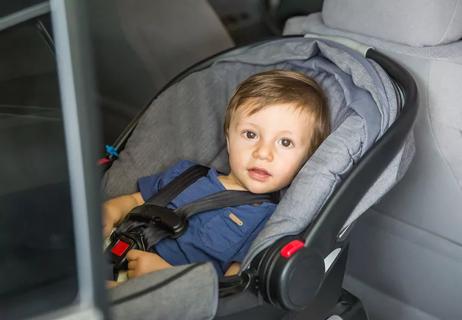
Keep your child rear-facing as long and possible, and ensure proper fit and installation

A pediatrician debunks myths and shares tips to keep your kids safe

You can help strengthen your child’s immune system by focusing on hand washing and staying up-to-date on their vaccines

Lanugo — the soft, fine hair that develops in utero — is harmless and will shed within a few weeks

Crossed eyes in a newborn are fairly common, typically harmless and usually go away

A dental emergency, quick action is key to preventing long-term damage

Severe and debilitating headaches can affect the quality of your child’s life

Your metabolism may torch 1,300 to 2,000 calories daily with no activity

A gentle touch in all the right places may help drain your sinuses