Departments & Centers

Call Us Toll Free:

866.588.2264

Toll-Free: 866.588.2264


Multiple Sclerosis (MS)

Multiple sclerosis (MS) is thought to be an autoimmune disease in which the body's own immune system mistakenly attacks normal tissues of the body. In MS, these attacks are aimed at the myelin in the Central Nervous System (CNS).

The Central Nervous System, which includes the brain and spinal cord, is made up of nerves that act as the body's messenger system. Each nerve has a fatty covering of myelin that serves as insulation, which helps in the transmission of nerve impulses (messages) between the brain and other parts of the body. Once myelin in a certain area has been damaged, normal nerve function is disturbed and a number of symptoms can be experienced.


There has been extensive research about MS over the past 50 years. While we still do not know the cause of MS, we know that it is an inflammatory disorder of the central nervous system that occurs in people with a tendency to such a problem. We know that about 350,000 people in the United States have MS, about 1 in a thousand people. We know that it is more common further north and south of the equator, though we are still unsure why this is. Females tend to get MS about 3 times as often as males, a rate which is similar to other immune diseases. It is more common in Caucasians, but can occur in other populations. It is not contagious nor is it infectious. There may be a link with reduced vitamin D levels and perhaps with decreased sun exposure.

We know that there is a genetic component to MS. Having a mother or father with MS increases the risk of having MS to about 3-5% lifetime, and having an identical twin with MS increases the risk to about 30%. However, many people with MS have no close family members with the disease.

There is nothing that an individual with MS either did to cause the disease to happen, or can avoid to stop the disease from following its natural course. We know that emotional stress may increase the symptoms of MS. We also know that attacks of MS are more likely after infections. There does not seem to be any association with physical trauma or surgical procedures and MS, nor do these seem to make MS worse.

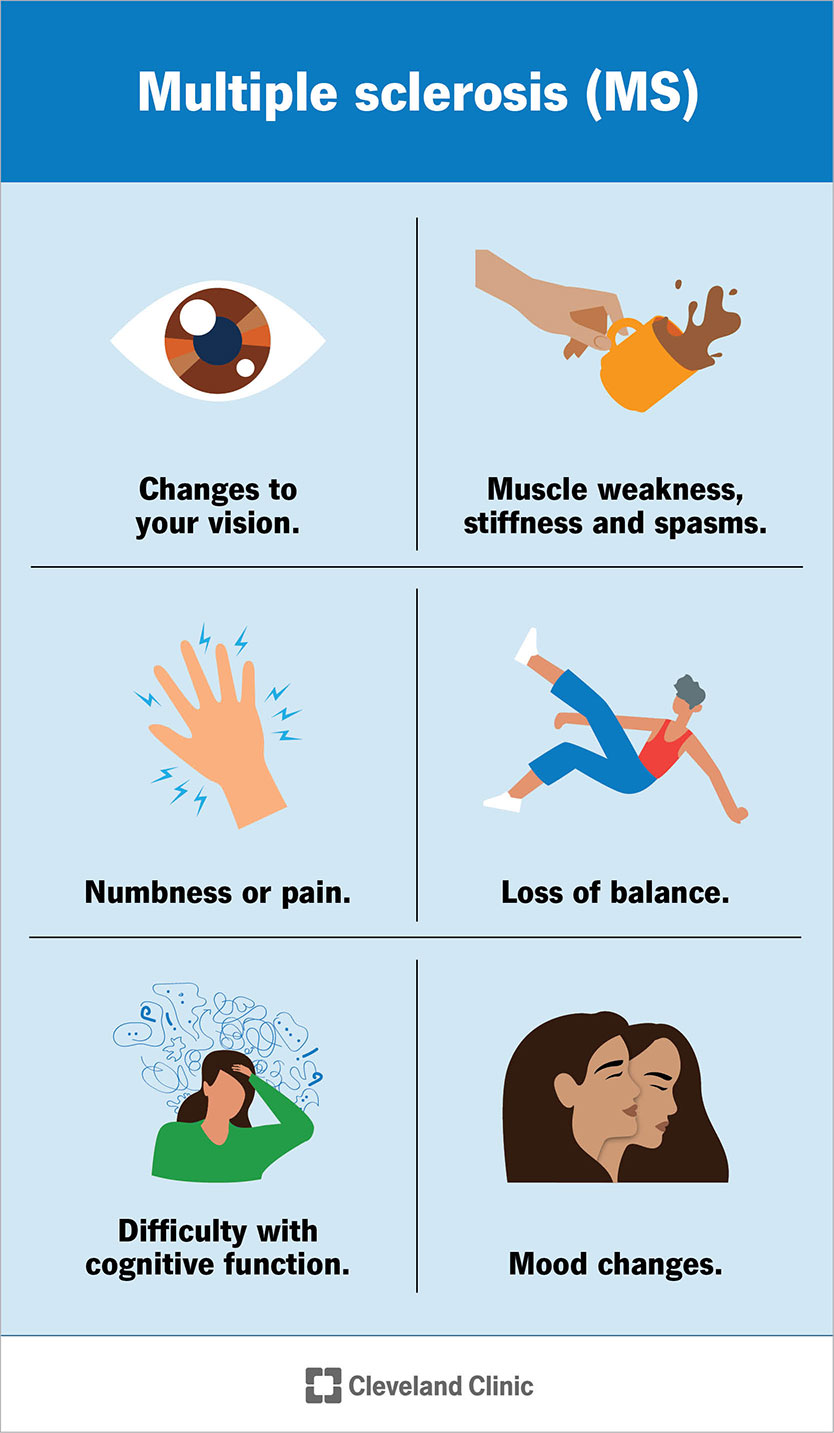
MS varies from person to person so there is no ‘standard’ set of symptoms for MS. However we know that common symptoms of MS include numbness or tingling in various parts of the body, weakness of one or more part of the body, walking difficulties, dizziness, fatigue, visual blurring, and occasionally double vision.

Patients may also have a symptom called Lhermitte’s phenomenon, in which they feel electrical tingling or shocks down their back, arms or legs when they bend their neck forwards. Sometimes people notice hesitancy when they try to urinate or may find that ‘when they have to go, they have to go’. There is no way to predict which symptoms one person might develop. The usual course of MS is to have periods of time where things are relatively stable, followed by times when, over a few days or weeks, new symptoms occur or old symptoms worsen. This relatively rapid worsening is known as an exacerbation (also known as an attack, or a relapse). In others with MS, there may be a tendency to progress in that symptoms gradually worsen over time (months to years).

Sensory Symptoms

(changes in sensation)

  • Numbness
  • Tingling
  • Other abnormal sensations
  • (“pins & needles,” pain)
  • Visual disturbances
  • Dizziness

Motor Symptoms

(changes in muscle function)

  • Weakness
  • Difficulty walking
  • Tremor
  • Bowel/Bladder problems
  • Poor coordination
  • Stiffness

Other Symptoms

  • Heat sensitivity
  • Fatigue
  • Emotional changes
  • Cognitive changes
  • Sexual symptoms

MS varies from patient to patient so that each individual has their own set of symptoms, problems, and their own course. There are people who have MS so mildly that they never even know that they have it. Of course, there are also others that have it severely. It is really a spectrum that ranges from mild to severe. An international panel of experts developed a classification of MS in 1999 that most neurologists use today.

  • Relapsing-remitting: Patients have attacks of symptoms/signs, with or without recovery, but between attacks have no interval worsening
  • Secondary progressive: This is often after a few years of relapsing-remitting MS. The pattern changes from a relapsing pattern to progressive in between attacks, usually with fewer attacks
  • Primary progressive: Gradual onset from the beginning, no attacks
  • Progressive relapsing: This is a rare form, and begins with a progressive course, while later developing attacks
  • Fulminant: Very severe, rapidly progressive MS. This is a rare form of MS

Multiple sclerosis is often difficult to diagnose. This is because there is no single test or finding on the examination that makes the diagnosis, and because the disorder varies from person to person. In most cases there is a history of neurological symptoms that come and go over years.

The neurological examination may show changes that suggest problems with the spinal cord or brain. The MRI may show areas of abnormality that suggest MS, thought the MRI in itself does not ‘make the diagnosis’. Spinal fluid testing may show that the immune system is active in and around the brain and spinal cord, supporting the diagnosis. Evoked potentials may assist in diagnosis. All of these need to be put together by the physician to determine if MS is the actual diagnosis. Even when all the tests are done, some people cannot be diagnosed for years after the beginning of symptoms.

An international panel of MS experts recently revised the ways that MS is diagnosed, providing a framework for clinicians to use in making the diagnosis. These new diagnostic criteria (The McDonald criteria) allow the diagnosis of MS if MRI scanning shows new lesions forming over time, making even earlier diagnosis possible. Even with these advances, there are some people where the diagnosis may be uncertain for years, due to the complexity and variation of MS.

The Mellen Center staff believes in developing lifetime partnerships with its patients.

At the Mellen Center, patients may meet with one or more members of the care team, depending on individual needs. On the first visit, patients typically meet with a neurologist, who is primarily responsible for managing the patient’s medical care. At future visits, patients will also meet with a clinical nurse specialist or physician assistant, who will discuss any concerns about MS and offer suggestions for special problems related to the disease, including spasticity, pain, bowel, bladder or skin problems. The clinical nurse specialist or physician assistant works closely with the neurologist to carry out the individual’s care plan.

After a thorough medical history and complete physical evaluation, the Mellen Center team develops an individualized care plan to meet the patient’s specific needs. In addition to elements recommended by each member of the Mellen Center team, a care plan also may include specific components requested by the patient, family members or a family doctor.

Follow up visits are scheduled with one of the clinical nurse specialists or physician assistants who will evaluate your current medical status and discuss treatment plans and options with you and one of the Mellen Center physicians. Additional appointments may be scheduled with a physical or occupational therapist, a psychologist, or a social worker, if necessary.

Medical treatments include medications to alleviate symptoms and control the progression of the disease. Experimental therapies involving new drugs also are available. Most of the time, the staff provides treatments in the outpatient setting. Of the 15,000 patient visits annually, only about 150 require hospitalization.

Team members meet regularly to discuss the individual’s progress and fine-tune care plans as needed. Team meetings are an effective means to monitor the flare-ups and remissions that are characteristic of MS. Team members help patients and their families prepare for these changes.

Disease Modifying Agents

Since the first FDA approved medication became available in 1993, a total of 6 medications have been FDA approved for use in multiple sclerosis. Each of these medications in some way alters the course of MS. Each medication is available in injection form only. In general the medications reduce the frequency of exacerbations of MS, reduce the amount of activity seen on MRI scanning, and may slow progression of MS.

Each medication has its own side effects and risks. All of the approved medications have information materials to guide patient education provided by the manufacturer. In addition, the National Multiple Sclerosis Society provides information on all of these medications:

In general, one of four medications is used as a first choice medication for MS: interferon-beta-1a (Either in an intramuscular once a week dosing or in a subcutaneous three times a week dosing); interferon-beta-1b (every other day subcutaneous dosing); and copolymer (daily subcutaneous dosing). In large research trials in patients with relapsing MS, each of these medications showed a similar reduction of attack frequency which was the primary measure of effect in these trials. Each differs in the frequency and route of administration, as well as in the side effect profile.

For example, the interferons in general may cause flu-like symptoms (fever, chills, muscle aches, fatigue) after each injection. This side effect may be treated with medications such as acetaminophen or ibuprofen, and in general tends to become less over time. Copolymer tends to give injection site reactions such as swelling, redness, itching, and occasionally an atrophy of the tissues under the skin at the injection site causing indentation of the skin. The interferon medications require monitoring of blood work every 3-6 months to ensure that liver function and blood counts do not change significantly. Interferon-beta-1b may rarely cause a breakdown of the skin at the injection site which requires the medication to be stopped. All of these medications have been used in thousands of patients over years and have a good safety record. Rare side effects of the interferons include immune inflammation of the liver, altered kidney function, and occasionally an increase in symptoms of depression. In general copolymer does not have major risks other than skin reactions.

Mitoxantrone and natalizumab are powerful medications which are usually reserved for patients with more severe MS or MS that does not respond to standard front line agents. Both have significant side effect profiles.

Other medications have been used in MS that are not FDA approved at this time. For example, sometimes medications that alter the immune system are added to one of the standard agents. Azathioprine, methotrexate, mycophenolate mofetil, and other agents have all been used either alone or in combination with standard injectable agents. These are usually used when the injectable agent alone does not seem to be effective. Choosing to do this is complex and should be done by a physician experienced in treating MS.

There are other medications which have been used from time to time in MS, usually after other standard agents have failed. IVIG is a blood product that in some studies was shown to be helpful in relapsing MS. Cyclophosphamide is a chemotherapy which has been used on and off in MS for many years and which may be used in difficult to treat MS. Rituximab is an antibody treatment that recently has been shown to have a powerful effect in multiple sclerosis, but with a risk of causing infections due to suppression of the immune system. All three of these medications are used under the guidance of a physician experienced in the care of patients with multiple sclerosis.

Plasmapheresis is a technique of cleaning antibodies out of the blood stream. It has been used in a number of neurological and immunological diseases. A recent study showed that plasmapheresis is helpful for patients with a severe attack of MS not responding to standard steroid therapy. It requires specialized equipment and is not generally used as a long term treatment.

Symptom Management

Spasticity

Spasticity is an increased muscle tension and tightness. It may interfere with useful movements. It is often present when people have had MS for a few years, and tends to be more prominent in the legs than in the rest of the body. Phasic spasms are rapid movements of limbs that occur suddenly, such as sudden flexing of a leg. Tonic spasms are a tightening of limbs in place. Spasticity may be painful and it may interfere with function (walking, transferring, sitting). In general we treat spasticity when it gets in the way of function. While patients with spasticity may be weak, the two are not the same and strength may be preserved in someone with spasticity. There are a variety of treatment for spasticity which may be of great benefit to patients.

  1. Regular stretching, exercise such as swimming, tai chi, yoga: regular stretching and toning exercises are key to the effective treatment of spasticity. At the Mellen Center we encourage activity as an integral part of treatment of spasticity.
  2. In general we use medications when spasticity interferes with function.
  3. One medication for spasticity is lioresal (Baclofen), which is usually started at about 10 milligrams orally three times a day. It may be gradually increased to an effective dose, though as the dose gets higher side effects such as fatigue, dizziness, rubbery feeling legs, and weakness all may become more frequent.
  4. Another medication is tizanidine (Zanaflex). This is usually begun at about 2-4 milligrams three times a day and gradually titrated by 2-4 milligrams weekly to a maximum 32 milligram per day dose. Side effects of this medication include lightheadedness, low blood pressure, and fatigue. It rarely affects liver function tests.
  5. On occasion the physician may consider adding small doses of a medication such as diazepam to the above medication. Medications in this class may become addictive and have to be used with caution.
  6. Another medication which can be used at times is gabapentin (Neurontin). This is usually started with a low dose and gradually titrated to a dose that is effective. Side effects include dizziness, fatigue, and weight gain.
  7. Physicians usually consider an implantable Baclofen pump for patients not achieving effect on oral agents without significant side effects. The pump is an electronic device with a storage area. It is placed under the skin of the abdomen surgically. A catheter goes from the device to near the spinal cord. A small amount of medication, usually lioresal (), is placed in the pump and a very small dose is then continuously delivered at the spinal cord level. This dose can be varied electronically. This procedure is costly, sometimes covered by insurance. Risks include the risk of surgery, risk of infections, and the discomfort of surgery and an implanted device under the skin. At the Mellen Center we have an active program of placement and monitoring of Baclofen pumps for a variety of diseases that cause spasticity.
  8. Botulinum toxin (botox) may be used for patients with spasticity as well. Usually this is reserved for patients with localized problems with spasticity. For example, if one muscle group is either causing pain or altered mobility, direct injection of Botox into this muscle group may provide increased range of motion or pain relief.

Fatigue

Fatigue, a sensation of being tired all the time, is very common in MS. Most patients with MS feel tired more than they used to, despite getting sleep at night. While fatigue in MS can be due to a lack of sleep or poor sleep, it is often just one of the symptoms of MS. It may be due to activation of the immune system, like fighting off an infection. It may be due to having to work harder to re-route information in the brain because of the MS. In any case, it can be treated. Taking naps helps with afternoon fatigue. Regular exercise actually improves fatigue symptoms. Avoiding very heavy meals may help. Making sure that night time sleep is good is also useful. There are medications that have been shown to be helpful in MS related fatigue.

At the Mellen Center, when we assess patients with fatigue, we consider the following things:

  1. We assess sleep, and consider disorders such as restless leg syndrome, obstructive sleep apnea, medications that interfere with sleep in our evaluation.
  2. Review meds for fatiguing meds which may be common in people with MS.
  3. We may consider blood tests for low thyroid or low blood count to check for medical causes of fatigue.
  4. We encourage regular exercise which has been shown to reduce fatigue in people with MS.
  5. Judicious naps may be helpful in relieving fatigue, particularly early afternoon fatigue.
  6. We will assess patients for depression. People who are suffering from depression may have fatigue as a specific component of their depression.
  7. If the above measures are not effective we will consider medications. There are a number of medicines which have been shown to have some effect in the fatigue related to MS. No one medication works in everyone.
  8. We might consider aspirin 650 mg twice a day which in a Mayo clinic protocol was found to be effective in MS related fatigue.
  9. We might suggest amantidine 100 milligrams twice a day. This is a medicine which has been used for years in MS fatigue with some benefit. Occasionally patients develop a vein-like rash on their legs known as livido reticularis.
  10. On occasion stimulant medications may be helpful. However these must be used with caution and are a risk for addiction as well as cardiac side effects.
  11. Modafinil is a medication which is FDA approved for a condition called narcolepsy but which has been shown to be helpful in MS related fatigue. It is relatively costly and not all insurances will cover it for this indication. It may cause headaches and increase blood pressure.

Pain

In the past physicians thought that MS did not cause pain. However recent studies have shown that up to one third of people with MS will have pain related to their MS at some time during their course. This pain comes in a variety of forms. Occasionally people have trigeminal neuralgia, a syndrome where they get sharp, stabbing pain in the side of the face or the jaw. It may come and go for days, weeks or even longer. Various medications may help with this. Some people develop back or neck pain, which is hard to distinguish from the pain that many other people get. In addition, patients may get burning or tingling pain in the legs, arms or their body which may stay or come and go. Pain is an important part of MS and should be treated appropriately.

At the Mellen Center, when treating pain in MS, we try to make sure that there is no focal or localized cause of the pain. Patients may have other disorders causing pain, and may have problems such as hip or shoulder joint injury related to steroid treatments in the past which might cause pain. We would consider imaging the area of pain and examining this site closely.

  1. For pain that appears to be from joint or bone, anti-inflammatory medications, acetaminophen or tramadol may all be useful. Physical measures such as stretching and therapy are also useful.
  2. For pain that appears to be from the nerves, some medications known as tricyclic antidepressants may be beneficial. Medicines such as amitryptiline and nortriptyline have been shown to be effective in such pain syndromes. Both can cause weight gain, sedation, and fatigue. At high dose both may cause cardiac arrhythmias so must be used cautiously. Similarly, medications in a class known as anti epileptic drugs are beneficial in neuropathic pain (pain beginning in nerves). Medicines such as gabapentin, carbamazepine, lamotrigine, and others have been used for such pain. Tramadol is another medication which has been shown to be useful for neuropathic pain. There is a topical patch (Lidocaine 5% patch) which has also been shown to be useful for such pain. Finally opiate analgesics may occasionally be necessary for chronic neuropathic pain, but must be used only after a full discussion of the monitoring, risks and benefits of such medication.
  3. For trigeminal neuralgia, medications such as carbamazepine, gabapentin, lamotrigine, lioresal and others may be useful. Occasionally more than one medication needs to be used in combination. If medicines fail, surgical approaches such as percutaneous balloon compression of the Gasserian Ganglion may be beneficial. This is a surgical procedure in which a small balloon is introduced near to the nerve which is affected in trigeminal neuralgia and blown up to partially injure the nerve. Gamma knife therapy has also been used for trigeminal neuralgia.

Depression

Depression has been shown to be very common in people with MS, affecting approximately 30% of patients some time during their course of MS. It interferes with activities, causes emotional distress, and may affect how the patient is able to cope with their disorder. At the Mellen Center we try to be aware of the role of depression in MS and work with our colleagues in psychiatry, psychology and neuropsychology to reduce the burden of depression in our patient population. Symptoms of depression include fatigue, sleep disruption, sadness, a sense of hopelessness, a sense of helplessness, lack of interest in usual activities, negative thoughts, and occasionally suicidal thoughts or acts.

At the Mellen Center we will ask about the presence of depression and further assess this if necessary. We will consider counseling and psychiatric assessment. If medications are necessary, some medications which may be preferable in the MS population include bupropion (Wellbutrin) ( which has a limited effect on sexual function and may not cause fatigue), venlafaxine (May improve fatigue), and other selective serotonin re-uptake inhibitors. All such medication should be used with caution and under a careful program of monitoring. Occasionally patients with depression may require stimulant medications for a lack of interest in their activities or for a slowing of thinking and action (psycho-motor slowing). All patients with depression need evaluation for the risk of suicidal activity.

Cognitive problems

Some patients with MS find that they have cognitive problems. This may range from the nuisance of not being able to remember names or ‘where you put things’ to more severe problems with organizing your day or being able to function at work or at home. This may occur independently of depression and tends to be more common after years of MS. While there are no specific treatments for this, there are a number of things that can be done to combat this.

At the Mellen center we would evaluate the cognitive problem, and consider testing such as neuropsychological measurement to fully evaluate the cognitive problem. We would review the medications that the patients is on to make sure that they are not causing some component of the cognitive problem. We will often suggest that people write things down, and try to simplify their day to day activities. It is a good idea to have one place to put things and try to be consistent when putting things away. We will assess sleep, pain, and depression, all of which may negatively affecting the ability to focus and remember things. If necessary, we may consider trials of medications such as donepezil (Aricept), or memantine (Namenda) in memory disorder related to MS. Both of these medications have been shown to improve measures of cognition in small trials in MS.

On occasion for trouble with inattention or distractibility we might consider Ritalin, Adderal, Concerta; all of these medications need to be closely monitored for safety. Occasional patients have trouble controlling their emotions. They may begin crying or laughing suddenly and inappropriately. This is a problem with the reflexes of emotion, not necessarily related to the person’s mood at the time. A low dose of a tricyclic antidepressant may be beneficial for this symptom (known as involuntary emotional expression disorder, or IEED). A recent medication (Neurodex) has been shown to be effective for this disorder but is not yet FDA approved.

Tremor

Some people with MS develop tremors, often affecting the arms. They may have trouble reaching for things or handling objects, and this may affect day to day function. Sometimes this tremor is what is known as an action tremor, where the tremor is worse with holding the hands out and not as bad with use. This can be helped with medications such as beta-blockers and mysoline, and sometimes by reducing caffeine use.

Another tremor which is more difficult to treat is an intention tremor. This is a tremor that is worse when one is trying reach for objects, and the hand being used swings from side to side. This is more a problem with coordination than a tremor. As with other problems, reviewing medications is useful and may help uncover something that is worsening the tremor. Occasionally wearing light weights on the wrists (i.e. 1 pound strap on weights) may reduce the amount of tremor. There are no medications which have been reliably shown to reduce this tremor. Medication which have been used for such tremors in the past include primidone (Mysoline), clonazepam (Klonopin), topiramate (Topamax), levetiracetam (Keppra) and others. There are case reports of using a deep brain stimulator for such tremors in MS patients. For leg tremor therapy, tai chi, and occasionally therapeutic horseback riding have been used with some success.

Bowel and bladder disorders

People with MS may have problems with the control of the bladder or bowel. Both of these are under the control of the nervous system and signals to and from these structures go through the spinal cord before they arrive at the brain. The most common bladder symptoms for MS include urgency, a feeling that you have to go right away, and hesitancy, when you get there you have to wait for things to happen. Some people find that they have accidents either during the day or night, and may not realize when they have to go to the bathroom.

Similarly with bowel, people may have urgency, hesitancy, altered sensation, and occasional accidents. At the Mellen Center our advanced practice clinicians (nurse practitioners and physician assistants) have develop a counseling program specifically aimed at improving bowel and bladder function. Below are some of the patient education points that are reviewed in this program:

Patient education for bladder:
  • Continue to drink 1 1/2- 2 quarts of fluid a day
  • Caffeine, aspartame, alcohol and cigarettes are bladder stimulants and should be avoided
  • Drink fluids all at once, i.e., drink 6-8 oz. at a time. If you sip, sip, sip you will feel the urge to urinate, urinate, urinate
  • Try to void about 1 ½ -2 hours after you drink
  • Stop drinking fluids about 2 hours before bedtime
  • Void right before bedtime
Patient education for bowel management:
  • The goal is a comfortable bowel movement either every day, every other day or every 2 -3 days
  • For regular bowel movements you need fluid (1 ½-2 quarts a day), fiber (20-30 grams a day) and activity
  • 1/3 cup Fiber One, All Bran or 100% bran buds gives you half the fiber you need for the day
  • Greasy foods, spicy foods, or food intolerance (lactose) may cause loose stool and may result in involuntary bowel
  • Eat regularly for regular bowel habits
  • If necessary, use a glycerine suppository daily
  • Plan for a bowel movement each day about ½ hour after eating or drinking something warm (the activity of the bowel nervous system is increased at this time)
  • Sit on the toilet about 10 minutes and try to have a BM. You may want to gently rock back and forth on the toilet. If nothing happens, leave the bathroom and try again later
  • It may take 2-3 months to develop a pattern for bowel habits

What is MS?

Multiple sclerosis is a central nervous system disorder, that is, it affects the brain and spinal cord and spares the nerves and muscles that leave the spinal cord. It is an inflammatory disorder, where white blood cells that usually are important in fighting infections enter the nervous system and cause injury. It is a demyelinating disorder in that during this inflammatory process the myelin sheath that protects nerves is stripped off. When this happens the nerves cannot conduct electricity as well as they should, causing various symptoms to occur. Symptoms can either come and go over time (this is called relapsing-remitting MS) or progress over time (progressive MS). It can happen to just about anyone and is a long-term disorder.

How is MS diagnosed?

Multiple sclerosis is often difficult to diagnose. This is because there is no single test or finding on the examination that makes the diagnosis, and because the disorder varies from person to person. In most cases there is a history of neurological symptoms that come and go over years. The neurological examination may show changes that suggest problems with the spinal cord or brain. The MRI may show areas of abnormality that suggest MS, though the MRI in itself does not make the diagnosis. Spinal fluid testing may show that the immune system is active in and around the brain and spinal cord, supporting the diagnosis. Evoked potentials may assist in diagnosis. All of these need to be put together by the physician to determine if MS is the actual diagnosis. Even when all the tests are done, some people cannot be diagnosed for years after the beginning of symptoms.

What are some early symptoms of MS?

MS varies from person to person so there is no ‘standard’ set of symptoms for MS. However we know that common symptoms of MS include numbness or tingling in various parts of the body, weakness of one or more part of the body, walking difficulties, dizziness, fatigue, visual blurring, and occasionally double vision. Patients may also have a symptom called Lhermitte’s phenomenon, in which they feel electrical tingling or shocks down their back, arms or legs when they bend their neck forwards. Sometimes people notice hesitancy when they try to urinate or may find that ‘when they have to go, they have to go’. There is no way to predict which symptoms one person might develop.

What is demyelination?

In MS, patients develop various areas in the brain and spinal cord where the myelin is stripped off of the nerves. These areas are called plaques or sometimes lesions. When this happens the electrical conduction of these nerves is altered. It’s like getting a fuzzy signal on a television set. When this happens it may affect any aspect of central nervous system function causing symptoms. These may vary over time depending on how extensive the demyelination is and depending on factors such as fatigue and heat.

What do we know about MS?

There has been extensive research about MS over the past 50 years. While we still do not know the cause of MS, we know that it is an inflammatory disorder of the central nervous system that occurs in people with a tendency to such a problem. We know that about 350,000 people in the United States have MS, about 1 in a thousand people. We know that it is more common further north and south of the equator, though we are still unsure why this is. Females tend to get MS about 3 times as often as males, a rate which is similar to other immune diseases. It is more common in Caucasians, but can occur in other populations. It is not contagious nor is it infectious.

Did anything I do bring on the MS or worsen it?

As far as we know there are no activities that specifically cause MS or worsen it. People with MS may not tolerate heat as well as they used to and may need to avoid particularly hot or humid situations. There is evidence that having infections makes it more likely to have an exacerbation of MS. There does not appear to be a link to trauma. However, emotional stress has been linked to a worsening of MS symptoms. Having MS is not the fault of people who have it; it could happen to anyone.

Is there anything new that we know about MS?

MS is actively being studied in many research institutions around the world. We have learned many new things about MS in the past few years and expect that the field will be constantly changing. For example, we now know that even with early MS the nerve fibers themselves, the ‘axons’, are affected more than we were aware of before. We know from MRI studies that new MRI lesions (abnormal areas in the brain or spinal cord) occur about 5-10 times as often as people with MS have new symptoms; that is, much of the disease occurs ‘under the radar scope’. We know that myelin repair occurs in the central nervous system all the time. And some groups feel there are different types of immune or pathological processes going that we call MS, and perhaps MS may be many different disorders that we have lumped together.

Do any other diseases look like MS?

When neurologists evaluate MS they are also considering other diagnoses. While MS is the most likely cause of typical white matter changes and symptoms in an otherwise healthy young person, there are some other diseases that we consider and occasionally diagnose. For example, occasionally a vitamin B12 deficiency can cause an MS like illness, and rarely a disease called Lupus may have symptoms suggestive of MS. The MRI is very useful in ruling out many other disorders that could be confused with MS, and the blood tests and spinal fluid may also be helpful in diagnosing other diseases.

What does the MRI show in MS?

Magnetic resonance imaging (MRI) has become the single most useful test for the diagnosis of MS. It is a magnetic test that is sensitive to changes in the brain which are seen in MS. Classically the MRI shows lesions (localized changes) in the white matter deep in the brain near the fluid spaces of the brain (the ventricles). It may also show changes in the cortex or near the cortex. It can show changes in the brainstem and in the spinal cord too. There may be a loss of brain or spinal cord volume, a change which is called atrophy. Neurologists will occasionally use gadolinium, a heavy metal dye, to look at the brain more carefully. In a lesion that is active (a new plaque) this dye will leak out into the brain and show abnormalities. It’s unclear how useful repeated MRIs are for following MS. However many neurologists will repeat an MRI about a year after starting treatment for MS, or when there are unexplained changes in the patient’s course that make it important to take another look. In MS the MRI may not make the diagnosis, as sometimes the changes are not specific for MS. Other times the appearance may be characteristic of MS.

What are evoked potentials and what are they used for?

Evoked potentials are tests where different sets of nerves are stimulated and the activity of the brain, spinal cord, or nerves is measured electrically. Visual evoked potentials are done by flashing a checkerboard image in front of the patient and recording the brain’s response at the back of the head. Auditory evoked responses are stimulated with a clicking noise in the ears, recording the brain’s response. Somatosensory evoked responses are recorded after stimulation of the nerves usually in the arms or legs and are a measure of the nerve activity coming up the nerves and into the spinal cord.

In MS these tests may be normal, but they may show changes such as slowing of conduction of electricity along these nerve pathways in the central nervous system. In MS visual evoked potentials are the most useful as they may show evidence of injury to the optic nerve not suspected clinically.

What is the lumbar puncture (spinal tap) for?

The lumbar puncture helps the neurologist look for signs of inflammation and immune system activity in and around the brain and spinal cord. It is really the only direct measure of immune activity that we can use clinically. In people with MS there may be an increase in white blood cells in the spinal fluid. There may be an increase in antibody formation in the spinal fluid. There may be ‘oligoclonal’ bands, which are a measure of immune activity found in MS but also in other immune disorders. Spinal fluid is very helpful in the diagnosis of other diseases such as Lyme disease and lymphomas of the nervous system. Not everyone needs a lumbar puncture, but it is very useful in completing the picture of MS.

Are there different types of MS?

MS varies from patient to patient so that each individual has their own set of symptoms, problems, and their own course. There are people who have MS so mildly that they never even know that they have it. Of course, there are also others that have it severely. It is really a spectrum that ranges from mild to severe. An international panel of experts developed a classification of MS in 1999 that most neurologists use today.

  • Relapsing-remitting: Patients have attacks of symptoms/signs, with or without recovery, but between attacks have no interval worsening.
  • Secondary progressive: This is often after a few years of relapsing-remitting MS. The pattern changes from a relapsing pattern to progressive in between attacks, usually with fewer attacks
  • Primary progressive: Gradual onset from the beginning, no attacks
  • Progressive relapsing: This is a rare form, and begins with a progressive course, while later developing attacks
  • Fulminant: Very severe, rapidly progressive MS. This is a rare form of MS.

Is there such a thing as benign MS?

The term benign MS is not part of the international classification. It is used when people have had MS for many years without developing significant measurable disability. Recent studies have shown that it cannot be predicted early in disease and so the term can only really be used retrospectively, after people have done very well with MS for many years.

What is an attack?

An attack of MS is also known as a ‘relapse’, an ‘exacerbation’ or a ‘bout’ of MS. All of these terms mean the same thing. It is usually defined as a worsening of MS symptoms or new MS symptoms lasting more than 48 hours and not due to infection or fever. It may be mild or severe. It may or may not correlate with MRI changes at the time of the attack, though neurologists do not usually perform MRI imaging as part of an attack evaluation. Many patients have a daily variation of their symptoms; this is not an attack. Similarly, some patients may develop transient symptoms lasting only seconds such as twitching in an arm or a leg. This is also not an attack. Attacks are one marker of disease activity.

What is the prognosis of MS?

Most people when they hear about MS think that it is a rapidly disabling disorder. In fact, for most people with MS this is not the case. A recent study of people with MS in the Olmstead county area near the Mayo clinic showed that most people did well even without treatment. An older study showed that after 25 years without treatment most people were still able to walk. However, only a small percentage of people followed for years do not show some measurable signs of MS on examination.

Will the medications for MS make me feel better?

There are now 6 FDA approved medications to control the course of MS, 4 of which are for use in relapsing patients with active disease, and 2 of which are for people with more severe MS or for those failing standard therapy. In general the medications do not ‘make you feel better’, but reduce the activity of the MS. People with MS on treatment are less likely to develop new attacks, have fewer new MRI changes, and tend not to progress as much as those on no treatment. So while the medications may not make people feel better, they help in preventing people feeling worse in the future.

What is spasticity?

Spasticity is an increased muscle tension and tightness. It may interfere with useful movements. It is often present when people have had MS for a few years, and tends to be more prominent in the legs than in the rest of the body. Phasic spasms are rapid movements of limbs that occur suddenly, such as sudden flexing of a leg. Tonic spasms are a tightening of limbs in place. Spasticity may be painful and it may interfere with function (walking, transferring, sitting). In general we treat spasticity when it gets in the way of function. While patients with spasticity may be weak, the two are not the same and strength may be preserved in someone with spasticity.

Do people with MS get pain?

In the past physicians thought that MS did not cause pain. However recent studies have shown that up to one third of people with MS will have pain related to their MS at some time during their course. This pain comes in a variety of forms. Occasionally people have trigeminal neuralgia, a syndrome where they get sharp, stabbing pain in the side of the face or the jaw. It may come and go for days, weeks or even longer. Various medications may help with this. Some people develop back or neck pain, which is hard to distinguish from the pain that many other people get. In addition, patients may get burning or tingling pain in the legs, arms or their body which may stay or come and go. Pain is an important part of MS and should be treated appropriately.

Do people with MS get bladder problems?

Some people with MS will have problems with bladder function. This is due to injury to the nerves that tell the bladder and the sphincters what to do, as well as the nerves that help the bladder sense when it is full. The most common symptom of bladder problems in MS is urgency, a feeling that “when you have to go, you have to go.” Sometimes people find it is hard to start going, and have to wait for the urine to flow. Some people cannot tell when they have to go, or may have accidents (incontinence). Many of these symptoms can be treated either with medication or with approaches such as self-catheterization, which allows the bladder to be emptied whenever it needs to be. People with MS and bladder problems are at a higher risk of urinary tract infections. Bladder problems in MS may range from a nuisance to a major problem with health and should be taken seriously.

Is fatigue part of MS?

Fatigue, a sensation of being tired all the time, is very common in MS. Most patients with MS feel tired more than they used to, despite getting sleep at night. While fatigue in MS can be due to a lack of sleep or poor sleep, it is often just one of the symptoms of MS. It may be due to activation of the immune system, like fighting off an infection. It may be due to having to work harder to re-route information in the brain because of the MS. In any case, it can be treated. Taking naps helps with afternoon fatigue. Regular exercise actually improves fatigue symptoms. Avoiding very heavy meals may help. Making sure that night time sleep is good is also useful. There are medications that have been shown to be helpful in MS related fatigue.

Pregnancy Q & A

Does having MS affect my fertility?

Having MS does not seem to affect fertility in any significant way. Women with MS have a normal fertility rate and no increase in fetal abnormalities or spontaneous miscarriage. The standard immunomodulating agents for MS (the interferons and copolymer) do not affect fertility itself, though they are not recommended during pregnancy. Mitoxantrone (Novantrone), an FDA approved medication for progressive MS, may affect fertility in the same way that other chemotherapies may. It is probably a good idea to discuss fertility with your neurologist before going on such medications.

Does having children alter the long term course of MS?

In the past doctors often advised women with MS to avoid getting pregnant. It’s unclear how they decided to do this, but over the past 20 years we have learned a lot about the interaction of pregnancy and MS. We now know that having children doesn’t have a major impact on the course of MS in the long-term. One study from Sweden in the 1990’s indicated that having children may in fact improve the course of MS in the long run. A well-designed follow-up study of pregnancy in MS (the PRIMS study) showed that while the relapse rate increased post-partum, there was no change in the overall course of MS during a 3-year follow-up period.

How does pregnancy affect the short term course of MS?

There are many follow-up studies of women with MS going through pregnancy. We now know that during pregnancy there is a significant reduction in attacks, particularly in the third trimester. In the PRIMS study relapse rate dropped 70% during the third trimester. We don’t know yet which changes during pregnancy cause this reduction, but there are many factors that are altered in pregnancy. There are elevated hormonal levels during pregnancy. One of these hormones, estriol, has been shown to reduce MRI activity in women with MS. Other hormones may also be important. We also know that levels of some immune chemicals such as IL-12 and TNF-alpha are reduced during pregnancy. In addition, cells that make interferon-gamma, an interferon that worsens MS, are reduced during pregnancy compared with the post-partum period. Finally there appears to be an increase in certain immune cells (regulatory T cells) that may also suppress MS activity in pregnancy. These and other changes may help protect against attacks of MS.

What about after pregnancy?

We know that in the first 3-6 months after delivery there is an increased risk of MS attacks. The overall rate of attacks during the pregnancy and post-partum period does not differ from the attack rate before and after the pregnancy year. In the largest prospective study of pregnancy in MS (the PRIMS study) 72% of women followed did not experience a relapse during the first 3 months post-partum. There are no specific factors that predict a relapse after delivery.

Is the outcome of pregnancy any different for a mother with MS?

Using data from a Medical Birth Registry in Norway, Dahl and colleagues found that mothers with MS had a higher proportion of small for gestational age babies. They also had a higher rate of induction of labor and operative interventions during delivery. Another study of mothers who had become pregnant while on interferon therapy showed an increased rate of miscarriages and stillbirths compared with controls. This study also found low birth weight compared with controls. In another study from Seattle, mothers with MS were twice as likely to need to be re-hospitalized compared with controls; however in this study there was no increase in small for gestational age infants, preterm infants, or infants with fetal malformations. Differences among such studies may reflect different populations, obstetrical practices, and differences in the MS disease course. In general these differences were not major and did not appear to affect the long term health of the baby.

What about breastfeeding?

Studies done in the 1980’s showed that breastfeeding does not have an impact on MS. As with any medication, there is little or no information on the standard MS medicine and breastfeeding, so in general it is best to avoid medications during breastfeeding if possible. How long to breastfeed before restarting immune modulating medications is an individual decision.

Are immunomodulating medications OK in Pregnancy?

There are a variety of registries that have reported on women using immunomodulating medications in pregnancy. The interferons as a class (Avonex, Betaseron, Betaferon, Rebif) are contraindicated in pregnancy. In animal models they cause miscarriages. In women who have become pregnant while on these agents, there is an increased risk of stillbirth and miscarriage as well as small for gestational age babies. Limited data on copolymer (Copaxone) indicates that it has little or no impact on infant outcomes. In general, it is recommended that women stop such medications about 3 months before trying to become pregnant to avoid problems during pregnancy. Chemotherapeutic agents such as mitoxantrone are contraindicated in pregnancy.

Will pregnancy affect my symptoms from MS?

There are no well-designed studies of symptoms of MS during pregnancy outside of attack rate and progression of MS. Anecdotally, women often feel well during pregnancy, but there are no good measures of this. One study looked at urinary function during pregnancy in MS and showed no effect of vaginal delivery on urinary function after pregnancy in women with MS.

Can I have an epidural if I need it?

In the past there were concerns that various anesthetic agents might affect MS negatively, and women were often encouraged to avoid anesthetics such as an epidural. However, the best evidence we have indicates that there is no special risk for an epidural in women with MS. It is an individual choice as to whether to have an epidural or not.

What about having a caesarian section?

Prospective studies have shown that in general women with MS are more likely to have a caesarian section than other women. It is unclear why this is. It may reflect a delay in labor in women with muscular weakness. It may reflect heightened concerns by physicians and nurses when caring for a woman with MS. However, what is known is that a caesarian section does not have an impact on the MS course. There is no evidence that having a caesarian section will cause a relapse or progression of MS beyond the already established course of the disease. In addition, there is no evidence for a benefit of caesarian section over vaginal childbirth; each birth decision is an individual one.

What are my children’s chances of getting MS?

It is known that MS has some genetic features. Children of women with MS have a 3-5% lifetime chance of developing MS. In other words, they have an approximately 96% chance that they won’t develop MS, or 24 to one odds against having MS

Can I breast-feed after pregnancy?

There is no evidence that breast-feeding is a problem for patients for MS or their children. Breast-feeding may be important for many reasons for the developing child. A major question in women with MS is when to start back on immunomodulating medications. There is no specific timeline for weaning.

If I have a relapse during pregnancy can I have steroids?

The best evidence we have shows that steroids can be used during pregnancy without a major risk to the mother or baby. In general we try to avoid using steroids during the first trimester, and then use them only when necessary during the rest of pregnancy. Usually they will be needed only when the mother has an attack that affects her ability to function.

Should I take anything else after pregnancy?

In general women who have needed immunomodulating medication before pregnancy are started back on their medication after they finish breastfeeding. One study showed that using IV steroids once a month for the first six months after delivery seemed to reduce the relapse rate compared with controls. However, there was no difference in neurological function or progression, and steroids have their own side effect profile. Using IV steroids or other medications such as IV immunoglobulin after delivery are at present not standard approaches in the United States in the postpartum period.