



A brain (cerebral) aneurysm is a bulge in a weak area of a blood vessel in or around your brain. Most aneurysms are small and don’t cause issues. But a ruptured brain aneurysm is life-threatening. The first sign of a ruptured brain aneurysm is usually a severe headache — the worst headache you’ve ever had. Seek medical care immediately if you have symptoms of a brain aneurysm rupture.
Advertisement
Cleveland Clinic is a non-profit academic medical center. Advertising on our site helps support our mission. We do not endorse non-Cleveland Clinic products or services. Policy
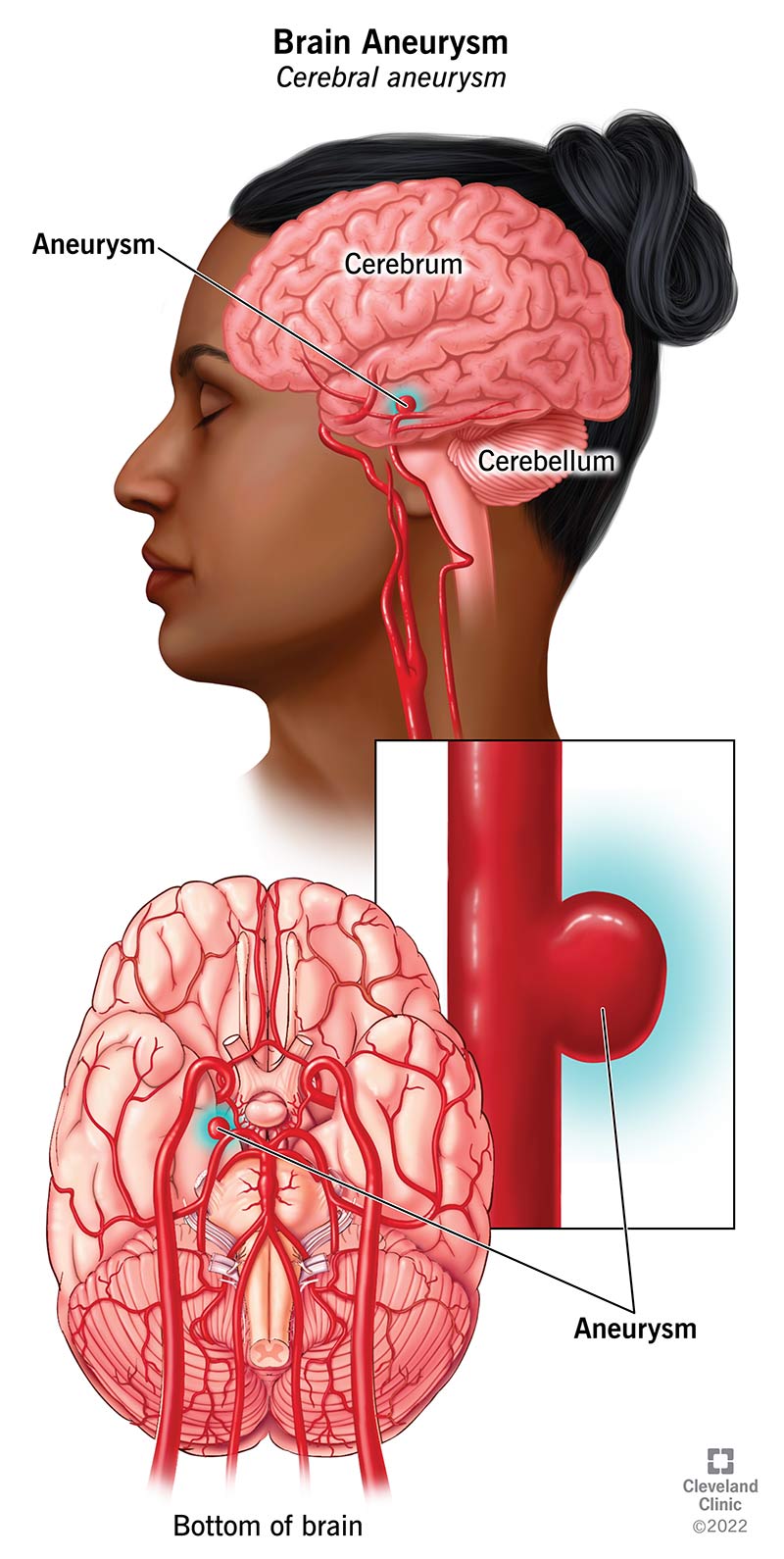
Image content: This image is available to view online.
View image online (https://my.clevelandclinic.org/-/scassets/images/org/health/articles/16800-brain-aneurysm)
A brain aneurysm, also called a cerebral aneurysm, is a bulge in a weak area of an artery in or around your brain. The constant pressure of blood flow pushes the weakened section outward, creating a blister-like bump.
Advertisement
Cleveland Clinic is a non-profit academic medical center. Advertising on our site helps support our mission. We do not endorse non-Cleveland Clinic products or services. Policy
When blood rushes into this bulge, the aneurysm stretches even farther. It’s similar to how a balloon gets thinner and is more likely to pop as it fills with air.
Brain aneurysms can occur anywhere in your brain, but most of them form in the major arteries along the base of your skull. Approximately 10% to 30% of people who have a brain aneurysm have multiple aneurysms. The majority of brain aneurysms are small and don’t cause symptoms.
An aneurysm can cause symptoms if it puts pressure on nearby nerves or brain tissue. If the aneurysm leaks or ruptures (bursts open), it causes bleeding in your brain. A ruptured brain aneurysm can be life-threatening and requires emergency medical treatment. As more time passes with a ruptured aneurysm, the likelihood of death or disability increases.
When it ruptures, blood spills (hemorrhages) into your surrounding brain tissue. The blood can put excess pressure on your brain tissue and make your brain swell. It usually causes a severe headache called a thunderclap headache, in addition to other symptoms.
A ruptured brain aneurysm can cause serious health problems such as:
Advertisement
This can result can in permanent brain damage or other complications such as:
Brain aneurysms can affect anyone and at any age. But they’re most likely to affect people between the ages of 30 and 60. They’re also more common in women.
Up to 6% of people in the U.S. have an aneurysm in their brain that isn’t bleeding (an unruptured aneurysm). Ruptured brain aneurysms are less common. They occur in approximately 30,000 people in the U.S. per year.
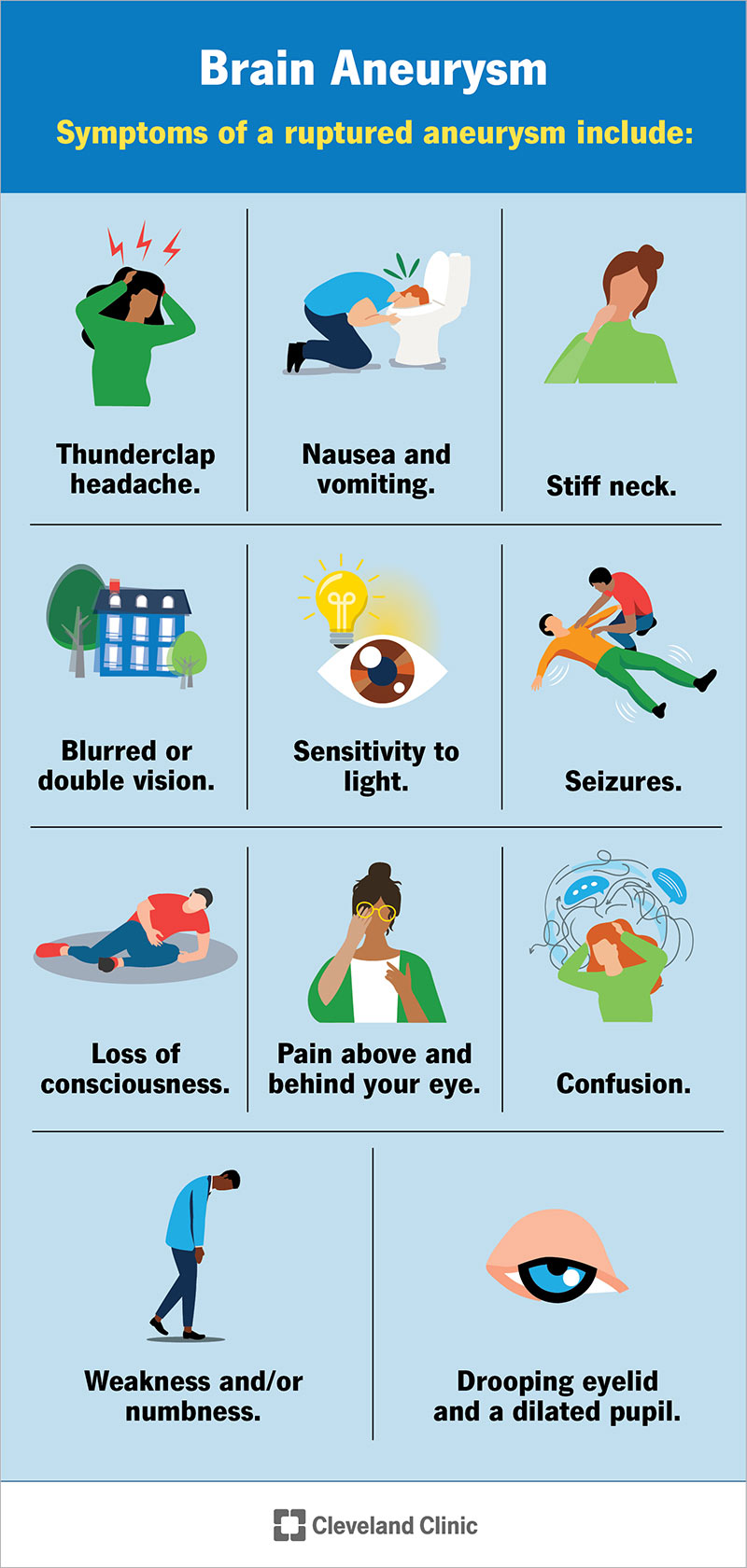
Image content: This image is available to view online.
View image online (https://my.clevelandclinic.org/-/scassets/images/org/health/articles/16800-brain-aneurysm-infographic)
Brain aneurysm symptoms vary based on whether it’s unruptured or ruptured.
Symptoms of a ruptured aneurysm include:
Call 911 or get to the nearest emergency room as soon as possible if you have these symptoms.
When a brain aneurysm leaks a small about of blood it’s called a sentinel bleed. You may experience warning headaches (called sentinel headaches) from a tiny aneurysm leak days or weeks before a significant rupture.
Most unruptured (intact) brain aneurysms don’t cause symptoms. If they become large enough, the bulge in your artery can put pressure on nearby nerves or brain tissue, causing the following symptoms:
See a healthcare provider as soon as possible if you’re experiencing these symptoms.
Brain aneurysms develop when the walls of an artery in your brain become thin and weak. They usually form at branching points of arteries. Sometimes, you can be born with a brain aneurysm. This is typically due to an abnormality (birth defect) in an artery wall. Several other factors can contribute to the weakening of an artery.
The following inherited factors affect the health of your arteries and can increase your risk of developing a brain aneurysm:
Advertisement
The following conditions and situations can weaken your artery walls over time:
The factors that contribute to the development of a brain aneurysm can also cause it to rupture (burst) and bleed.
Researchers think high blood pressure is the most common cause of a rupture. Higher blood pressure makes blood push harder against blood vessel walls. Situations that can increase blood pressure and lead to a brain aneurysm rupture include:
Many factors determine whether an aneurysm is likely to burst, including:
Advertisement
People who have multiple brain aneurysms or who’ve had a previous aneurysm bleed are at the highest risk of a brain aneurysm rupture.
Most people with an unruptured brain aneurysm don’t know they have one. A healthcare provider may find one during an imaging test of your brain, such as an MRI or CT scan that you got for a different medical reason.
If you have symptoms of a brain aneurysm, such as a severe headache, call 911 or go to the emergency room. A healthcare provider will order tests to see if a brain aneurysm has ruptured. These tests may include:
Advertisement
Video playlist content: This video playlist is available to watch online.
View video playlist online (https://cdnapisec.kaltura.com/p/2207941/sp/220794100/playManifest/entryId/0_6e7lygkx/flavorId/1_5f3sgelj/format/applehttp/protocol/https/a.mp4)
Learn more about brain aneurysm and treatment options.
The main goal of brain aneurysm treatment is to stop or reduce the flow of blood into the aneurysm. A leaking or ruptured brain aneurysm requires emergency surgery. You may or may not need treatment for an unruptured aneurysm depending on your circumstances.
Your healthcare team will recommend the best treatment option(s) for you based on your vascular anatomy, aneurysm size and location and several other factors.
In general, recovery takes longer for ruptured aneurysms than for unruptured aneurysms.
During this surgery, a neurosurgeon cuts a small opening in your skull to access the aneurysm. Using a tiny microscope and instruments, the neurosurgeon attaches a small metal clip at the base of the aneurysm to pinch it off. This blocks blood from flowing into the aneurysm. The surgery can stop a brain bleed or keep an intact aneurysm from enlarging or breaking open.
Recovery time is different for ruptured (several weeks to months) and unruptured (usually two to four weeks) aneurysms. Aneurysms that are completely clipped usually don’t bleed again (recur).
For this procedure, a neurosurgeon or an interventional neuroradiologist inserts a catheter (a flexible tube) into a blood vessel, usually in your groin or wrist, and threads it to your brain. Through the catheter, the provider places a tiny coil of soft wire into the aneurysm.
Once the provider releases the coil into the aneurysm, it changes the blood flow pattern within the aneurysm, resulting in a clot. This clot prevents blood from entering the aneurysm, providing a seal in a similar way as a clip.
For this procedure, a neurosurgeon or an interventional neuroradiologist inserts a catheter into a blood vessel in your groin or wrist and threads it to your brain. Through the catheter, the provider places a mesh tube in the part of the blood vessel that contains the aneurysm. The mesh encourages or diverts your blood flow away from instead of into the aneurysm.
For this procedure, a neurosurgeon or an interventional neuroradiologist inserts a catheter into a blood vessel in your groin or wrist and threads it to your brain. Through the catheter, the provider places a metal mesh-like cube or sphere into the aneurysm. This works similar to a coil, as it provides a seal-like effect on the aneurysm, not allowing blood into it anymore to prevent it from enlarging or rupturing.
If you have a ruptured aneurysm, your healthcare team will use additional treatments to manage your symptoms and try to prevent complications. These treatments may include:
People who have a ruptured aneurysm often need physical, speech and occupational therapy to regain function and learn new ways to function with any permanent disability.
If you have a small unruptured brain aneurysm that isn’t causing symptoms and you don’t have other relevant risk factors, your healthcare provider may recommend not treating it.
Instead, your provider will order regular imaging tests to monitor it for any changes or growth over time. They’ll also recommend you quit smoking (if you smoke) and make sure your blood pressure is well managed.
You’ll need to get help right away if you develop symptoms or if the aneurysm changes on follow-up imaging.
If you have symptoms, positive risk factors and/or the aneurysm is large, you and your healthcare provider will discuss the benefits, risks and alternatives of surgical and/or endovascular treatment. The decision depends on several factors, including but not limited to your:
The prognosis (outlook) for a ruptured brain aneurysm depends on several factors, including:
About 25% of people who experience a brain aneurysm rupture die within 24 hours. Around 50% of people die within three months of the rupture due to complications.
Of those who survive, about 66% experience permanent brain damage. Some people recover with little or no disability.
Many people who have a small unruptured brain aneurysm never develop symptoms and it doesn’t affect their health.
However, the mortality rate of ruptured brain aneurysms is very high.
You can’t prevent or change certain brain aneurysm risk factors, like your age or genetic conditions. But you can lower your risk of developing a brain aneurysm by:
If you have an unruptured brain aneurysm, you’ll need to see your healthcare provider regularly to monitor the size of the aneurysm and to manage any contributing risk factors, like high blood pressure.
If you’ve had a ruptured brain aneurysm, you’ll need to see your healthcare team regularly to monitor any complications and to make sure you don’t develop another aneurysm.
A sudden, severe headache with or without stroke symptoms could be a sign of a brain aneurysm. Call 911 or go to an emergency room if you’re having these symptoms. The sooner you can get medical attention, the greater your chance of survival. If you have an unruptured brain aneurysm, talk with your healthcare provider about the risks and benefits of different treatment and management options. They’re available to help you.



Sign up for our Health Essentials emails for expert guidance on nutrition, fitness, sleep, skin care and more.
Learn more about the Health Library and our editorial process.
Cleveland Clinic’s health articles are based on evidence-backed information and review by medical professionals to ensure accuracy, reliability and up-to-date clinical standards.
Cleveland Clinic’s health articles are based on evidence-backed information and review by medical professionals to ensure accuracy, reliability and up-to-date clinical standards.
Learning that those horrible headaches might be a brain aneurysm can be scary news. At Cleveland Clinic, we craft a treatment plan that’s personalized to you.
