Strep throat is an infection in your throat and tonsils caused by a type of bacteria called group A Streptococcus (group A strep). Strep throat causes severe inflammation and a sore throat. A healthcare provider can typically diagnose the condition with a rapid strep test or a throat culture. Treatment usually includes antibiotics.
Advertisement
Cleveland Clinic is a non-profit academic medical center. Advertising on our site helps support our mission. We do not endorse non-Cleveland Clinic products or services. Policy
Strep throat is an infection in your throat and tonsils (the lymph nodes in the back of your mouth). With strep throat, your tonsils become very inflamed. This inflammation typically affects the surrounding area of your throat as well, which causes a sore throat (pharyngitis).
Advertisement
Cleveland Clinic is a non-profit academic medical center. Advertising on our site helps support our mission. We do not endorse non-Cleveland Clinic products or services. Policy
Strep throat gets its name from the type of bacteria that causes it — group A Streptococcus. There are more than 120 strains of group A Streptococcus bacteria. Strep throat is a type of group A streptococcal (GAS) infection.
Strep throat rarely causes more serious illnesses such as rheumatic fever, a disease that can cause permanent damage to your heart and heart valves. Therefore, it’s important to see a healthcare provider for a prompt diagnosis and treatment. With proper treatment, your strep throat should resolve within seven to 10 days.
Strep throat is most common in school-aged children between the ages of 5 and 15. But it can affect siblings, parents, teachers and other caregivers that have direct contact with a school-aged child.
In addition, people in group settings have a higher risk of getting strep throat. Group settings may include households, daycares, schools (including colleges) and military barracks.
Healthcare providers see more than 616 million new cases of strep throat around the world each year. Strep throat is the most common cause of sore throat in adults and children. The condition accounts for 5% to 15% of new cases of sore throat in adults in the U.S. It accounts for 15% to 35% of new cases of sore throat in children in the U.S.
Advertisement
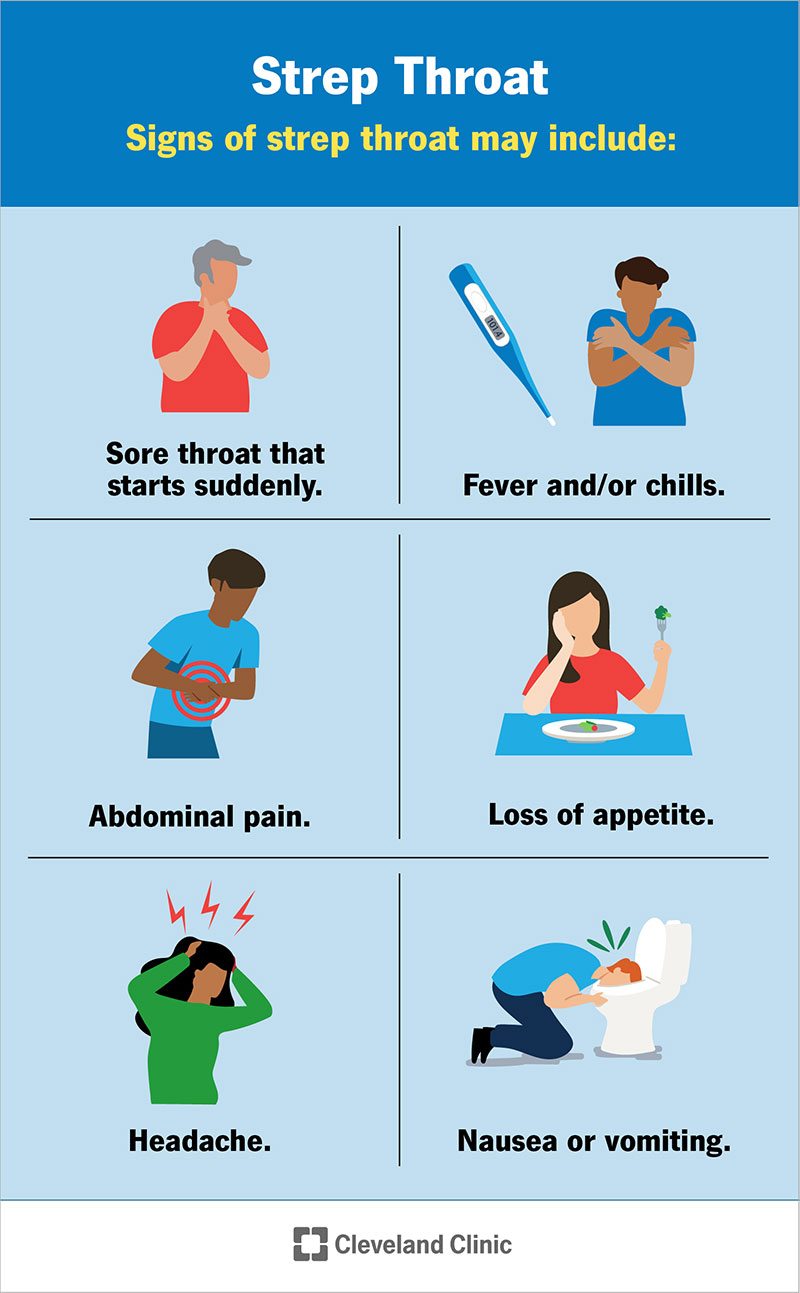
Image content: This image is available to view online.
View image online (https://my.clevelandclinic.org/-/scassets/images/org/health/articles/4602-strep-throat)
Early strep throat symptoms include a sore throat that starts suddenly. In addition, you may develop a fever very quickly, with your highest temperature on the second day of infection.
Other signs of strep throat may include:
One symptom that strep throat doesn’t normally cause is a cough. If you have a cough and other cold symptoms, you probably have a viral infection, not strep throat.
In addition, some people with strep throat may not develop any symptoms.
If you have strep throat, your throat and tonsils may appear red, sore and swollen. You may also have white patches, spots or streaks of pus on your throat and tonsils. In addition, you may develop tiny, red spots on the roof of your mouth called petechiae.
Depending on the strain of bacteria, you may also develop a strep throat rash known as scarlet fever. It shows up on your neck and chest first, but it may spread to other parts of your body.
Group A Streptococcus bacteria can also infect your skin and cause sores. When this occurs, the infection is called impetigo.
Strep throat is typically a mild condition, but the infection can be very painful. Your sore throat may be severe and very uncomfortable. The lymph nodes in your neck may be very tender and swollen. You may have pain when swallowing. If you have a sore throat rash, it may feel rough like sandpaper.
A type of bacteria known as group A Streptococcus (group A strep) causes strep throat. This makes strep throat different from most other cases of sore throat, which occur due to viruses.
Yes. Strep throat is very contagious. Some people with the infection don’t have symptoms or look sick. But even if you don’t have symptoms, you can still easily spread the infection to others. However, people who exhibit symptoms or appear sick are more contagious than people who don’t have symptoms.
Strep throat spreads from person to person very easily, especially among members of the same household. You can spread the bacteria that causes strep throat to other people through respiratory droplets and direct contact.
The bacteria that cause strep throat often live in your nose and throat. When you sneeze, cough or talk, you can spread the infection through respiratory droplets. Other people can get the infection if they:
The bacteria that cause strep throat may live in infected sores on your skin. Other people can get the infection if they touch your sores or come into contact with the fluid from them.
Advertisement
The incubation period for strep throat is two to five days. An incubation period is the time between when you get infected and when symptoms develop. You can spread the infection to others during this time. If you’re taking antibiotics, you won’t be contagious after the first 24 to 48 hours of treatment.
If you think you may have strep throat, you should see a healthcare provider. The provider will ask about your symptoms and perform a physical exam. They may also give you a strep test. Viral illnesses can have the same symptoms as strep throat. That’s why it’s important that you take a strep test to confirm the presence of group A Streptococcus bacteria in your throat.
A strep throat test will check for group A Streptococcus bacteria in your throat. The test is painless — although it can be uncomfortable for some — and takes very little time. A healthcare provider will use the tip of a specialized long cotton swab to wipe the back of your throat. Then, the provider will either use the swab to perform a rapid strep test or send the swab to a laboratory for testing (throat culture).
A rapid strep test takes about 20 minutes. If the test is positive (the swab contained Streptococcus bacteria), you have strep throat. If the test is negative (no signs of Streptococcus on the swab), you may not have strep throat. However, the provider may send the throat swab to a laboratory to double-check the results with a throat culture.
Advertisement
With a throat culture, a lab technician smears your swab onto a culture dish. It takes one to two days to see if Streptococcus bacteria grow from it. Throat cultures can sometimes find bacteria that rapid strep tests miss.
Strep throat treatment includes antibiotics. An antibiotic is a type of medicine that kills the bacteria that cause an infection.
Penicillin and amoxicillin are common antibiotics healthcare providers use to treat strep throat. If you’re allergic to penicillin, the provider can prescribe another antibiotic.
A healthcare provider may give you an antibiotic shot, or they may prescribe an antibiotic in either pill or liquid form. You’ll usually take the pills or liquid for 10 days. Follow your provider’s instructions. You should take all of the medication, even if you feel better. The bacteria can still be alive even if you’re feeling well.
Unfortunately, you can’t cure strep throat overnight. A type of bacteria causes strep throat. Therefore, you need an antibiotic to clear it up. After starting on an antibiotic, you should start to feel better within a day or two. Until then, there are things you can do to manage your symptoms, such as drinking warm liquids and taking pain relievers.
Advertisement
You should start to feel better within a day or two of beginning an antibiotic. Most symptoms of strep throat should be gone within seven to 10 days.
If you don’t have a fever, you can return to regular activities 24 hours after taking your first dose of an antibiotic.
No, strep throat won’t go away on its own. A type of bacteria causes strep throat, and antibiotics treat infections caused by bacteria. Strep throat can lead to more serious illnesses if not treated, so it’s important to start on antibiotics immediately.
Left untreated, the bacteria that cause strep throat can spread to other parts of your body. This can cause serious complications, including:
The best way to prevent strep throat is by practicing good hygiene. You should wash your hands frequently with soap and water for 20 seconds. It’s especially important to wash your hands before eating (to protect yourself) and after coughing and sneezing (to protect others). There are other steps you can take to prevent strep throat, including:
There are many sore throat home remedies that can help relieve your symptoms. Strep throat self-care tips that you can try include:
Don’t give your child aspirin. Aspirin can cause a life-threatening illness called Reye’s syndrome in children and adolescents who have fevers.
If you’re not getting better, let your healthcare provider know right away. You shouldn’t stop taking your antibiotic unless directed by your provider.
Call your provider if you aren’t improving one to two days after starting the antibiotic. You should also call if you have any of the following symptoms:
Strep throat usually affects your throat and tonsils. But you can still get the infection if you don’t have tonsils — it doesn’t make you immune. However, if you’ve had your tonsils removed, your risk of getting strep throat decreases. You may get the infection less often. In addition, your symptoms may not be as severe.
Viruses cause most sore throats, and medicine (like antibiotics) can’t cure viruses. You can only relieve your aches and pains. Viruses heal without antibiotics on their own with time. Because strep throat is a bacterial infection, you need antibiotics to clear it up.
No. You should never take medicines left over from an earlier illness or give leftover medicine to anyone else. Leftover antibiotics can also make strep throat more difficult to treat and can cause serious side effects.
Tonsillitis occurs when your tonsils are inflamed or infected. The condition can be viral or bacterial. Viruses cause most cases of tonsillitis. Bacteria such as group A Streptococcus cause the remaining cases.
Only group A Streptococcus bacteria can cause strep throat. It’s never viral.
Strep throat can cause fever, inflammation and a severe sore throat. While the infection can be painful, it’s easily treatable. But don’t try to treat strep throat at home. A type of bacteria causes strep throat, so you’ll need an antibiotic to clear it up. It’s important that you receive a proper diagnosis and treatment. So speak with a healthcare provider to get started on antibiotics. With proper treatment, your strep throat should be gone within 10 days.



Sign up for our Health Essentials emails for expert guidance on nutrition, fitness, sleep, skin care and more.
Learn more about the Health Library and our editorial process.
Cleveland Clinic’s health articles are based on evidence-backed information and review by medical professionals to ensure accuracy, reliability and up-to-date clinical standards.
Cleveland Clinic’s health articles are based on evidence-backed information and review by medical professionals to ensure accuracy, reliability and up-to-date clinical standards.
Need care fast? Cleveland Clinic’s Express Care and Urgent Care locations treat everything from sprains to sinus infections — no appointment needed.