


Overview
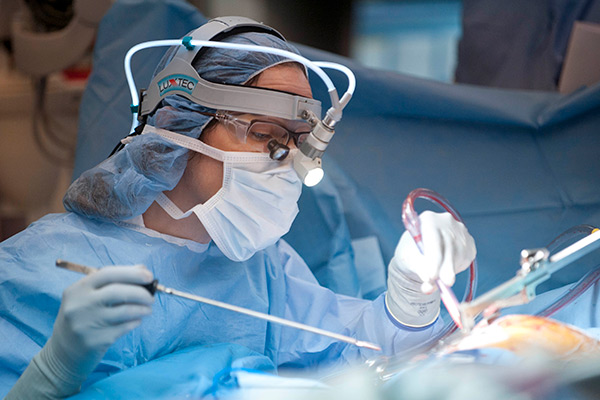
Why choose cardiothoracic anesthesiology?
The Department of Cardiothoracic Anesthesia at Cleveland Clinic stands apart from many programs in the United States in terms of both quality and quantity. From a quantity perspective, the size of the clinical operations of Cleveland Clinic brings many unique opportunities within the scope of our clinical practice. These include a tremendous breadth and depth of clinical exposure for the anesthesia care team that includes both severity of patient clinical presentation and high clinical volumes. Both dimensions have helped to create a depth of clinical skill and expertise that is unique to Cleveland Clinic and would be hard to replicate in other programs.
The size of Cleveland Clinic’s cardiovascular clinical mission predicts for a fairly large and specialized cardiothoracic anesthesia care model to meet the needs and demands of this nationally recognized dimension of Cleveland Clinic. The Department of Cardiothoracic Anesthesia has attracted some of the brightest and most accomplished cardiac anesthesiologists in the country. They bring a wide range of education and practice to the group that supports Cleveland Clinic’s commitment to exceptional care of the patient, advancement of medical education and research, and preparation for health care issues in the 21st century.
History
The history of cardiothoracic anesthesia at Cleveland Clinic begins in 1969 with the first saphenous vein aortocoronary bypass surgery performed by Dr. Rene Favaloro. Immediately following that landmark surgical achievement, the Section of Cardiothoracic Anesthesiology was established in October by Dr. John Viljoen. During the pioneering days of cardiothoracic surgery, Cleveland Clinic anesthesiologists monitored central venous pressure and left atrial pressure using water manometers, and the administration of intravenous nitroglycerin (produced by dissolving tablets in sterile water in the operating room) and nitroprusside, neither of which were available commercially.
With an increase in demand for bypass surgery and more cardiac surgery operating rooms, Cleveland Clinic's Board of Governors in 1970 granted Department status to Cardiothoracic Anesthesiology, and appointed Dr. Fawzy G. Estafanous as the first Chairman.
Cardiothoracic anesthesiology constantly evolves to parallel changes in cardiac surgery procedures, such as those for heart failure and complex valve procedures.
The Department of Cardiothoracic Anesthesiology is housed in state-of-the-art facilities, which opened in October 2008. The balance of cases are combined CABG and/or valve and/or aortic procedures. Case complexity and acuity has continued to increase along with case volume.
Our group of 27 cardiothoracic anesthesiologists and 15 certified registered nurse anesthetists are involved in increasing numbers and types of “hybrid” cases that feature fluoroscopic and angiographic techniques which are helpful in confirming diagnoses and monitoring intraoperative results. The anesthesiologists involved with these cases are faced with the anesthetic implications related to remote monitor location, and technical challenges involving radiation, large fluoroscopy machines and confined space. Because the trend in cardiac surgery is to minimize the impact on the patient and to decrease the hospital stay, more novel and experimental procedures are introduced. For example, robotic surgery and transfemoral or transapical aortic valve replacement surgeries are becoming frequent. The majority of the cardiac procedures performed utilize intraoperative transesophageal echocardiography (TEE); that challenge is met by the Cardiothoracic Anesthesiologists who are certified in perioperative echocardiography and also receive advanced training in echocardiography through collaboration with the Department of Cardiology.
What does the future hold for the Department of Cardiothoracic Anesthesiology? With the increasing age of the general population, and the still remarkable prevalence of ischemic and valvular disease, the number of cardiac surgery cases will continue to grow. The number of cases is paralleled by increased complexity requiring a constantly evolving knowledge base and range of techniques. Minimally invasive and hybrid procedures require adaptability, an innovative spirit in clinical management, and are supported by evidence-based knowledge.
Leadership
Department Leadership
- Nikolaos Skubas, MD, DSc, FASE, FACC - Chairman
- John Apostolakis, MD - Vice Chairman
Independent Units
Quality and Operations
- Anand Mehta, MD - Operations Management
- Andrej Alfirevic, MD - Imaging
- Donn Marciniak, MD - Thoracic & Pain Management
- Mariya Geube, MD - Lung Transplant
- Jia Lin, MD, PhD - Vascular Anesthesia
Research & Education
- Andra Duncan, MD - Promotions, Advancement & Research Publications
- Jennifer Hargrave, DO - Fellowship Program
- Carlos Trombetta, MD - Education & Simulation
- Sergio Bustamante, MD - Education & Simulation
Education
Advanced education
Our Cardiothoracic Anesthesiology staff is committed to education both inside and outside the operating room and CVICU. Didactics changed this year with more emphasis on case-based learning, simulation and content experts. The breadth of case exposure and educational offerings has made our Cardiothoracic Anesthesiology fellowships a much sought-after training program.
Contact
- Nikolaos Skubas, MD, DSc, FASE, FACC - Chairman - Department of Cardiothoracic Anesthesiology.
- John Apostolakis, MD - Vice Chairman - Department of Cardiothoracic Anesthesiology.
- Andra Duncan, MD - Vice Chairman Research and Education - Department of Cardiothoracic Anesthesiology.
- Jennifer Hargrave, DO - Program Director, Cardiothoracic Anesthesiology Fellowship.
- Eric Kaiser, MD – Chief of the Center for Critical Care.
- Carol Ratcliff, CRNA - Chief Nurse Anesthetists.
- Lou Campiri, BS, RRT - Manager, Respiratory Therapy.
- Kathryn Piccolo, DNP, ACNP-BC - Manager, Acute Care Nurse Practitioners.
